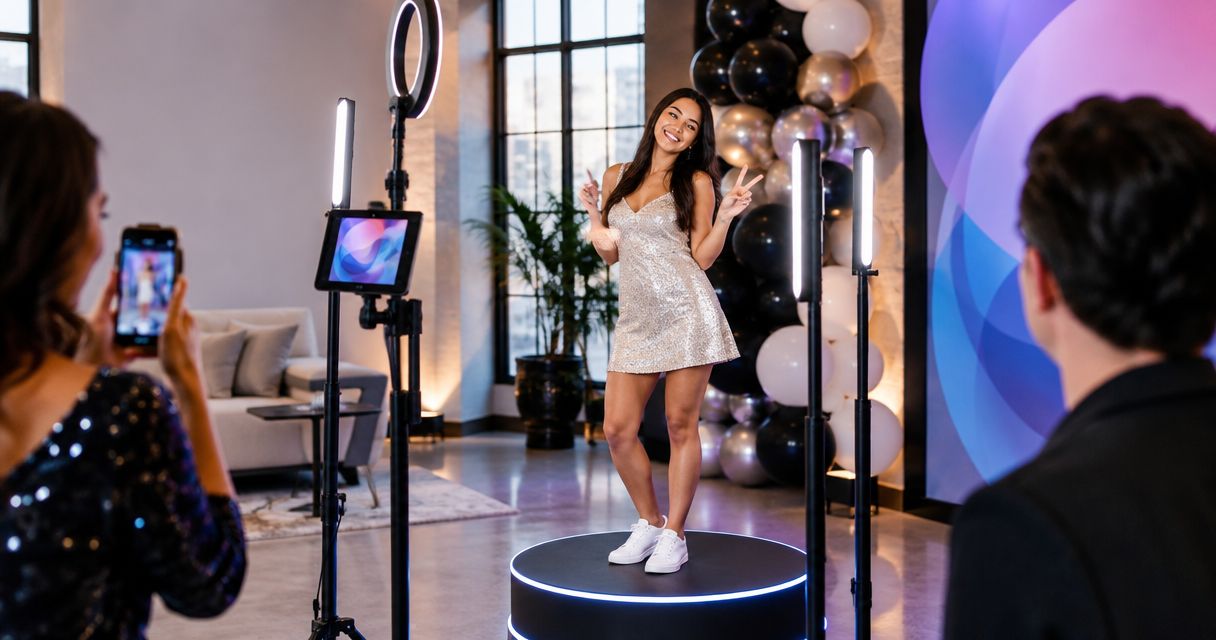
Is a 360 photo booth worth it in 2026?
a 360 photo booth is worth it when the moving-camera effect serves your brand activation and the finished video reaches guests in a usable form. for a 2026 booking, judge the complete capture-to-delivery experience—not the sample clip alone; venue clearance, staffing, branding and guest handoff belong in the decision.
TL;DR
- is a 360 photo booth worth it? yes, when motion supports the brand story and delivery works for guests.
- Hypno is best for brands and agencies seeking branded instant photo and video capture.
- choose a 360 booth for orbiting video; choose stationary capture when the brief does not need camera movement.
- approve the finished branded asset, guest journey and operating plan before committing.
is a 360 photo booth worth it in 2026?
yes for a motion-led creative brief. no when you only need a branded portrait or straightforward product shot. a typical 360 booth moves a camera around a participant to create an orbiting video. that movement is the reason to choose the format, not proof that the activation will perform.
compare the format against the asset your team actually needs. the best video booths for events guide gives you a broader starting point before you commit to an orbiting-camera setup.
360 booth
- best for: a reveal, pose or action designed around camera movement
- useful strength: motion becomes part of the creative
- trade-off to address: the camera path and participant area need a clear operating plan
stationary photo and video capture
- best for: branded portraits, product interactions and direct-to-camera moments
- useful strength: the composition does not depend on an orbiting camera
- trade-off to address: the creative needs to work without the orbiting effect
neither format guarantees shares, qualified leads or usable campaign assets. those outcomes need their own brief, delivery process and measurement plan. choose the format after defining the content—not before.
why this matters
a booth is part of your activation, not a separate attraction with a separate standard. the result still needs to show the brand clearly, suit the intended channel and make sense to someone who never attended the event.
a dramatic camera move does not answer those requirements by itself. watch a sample with the sound off. check whether the product, campaign message and participant remain understandable throughout the clip.
for a product launch, that means deciding whether the product is the subject or simply a prop. for a pop-up, it means deciding how the capture moment fits between arrival, product interaction and exit. give the booth a defined role in that journey.
360 capture: best for motion-led brand moments
a 360 booth earns its place when the creative uses the changing camera angle. a coordinated gesture, styled look or product reveal gives the movement something to reveal. write that action into the brief instead of leaving every participant to improvise.
the advantage is a recognizable moving-camera treatment. the limitation is that the treatment becomes part of every composition. review what appears behind the participant throughout the orbit, not just what looks good from the front.
your approval sample should reflect the proposed creative direction. a supplier's strongest showreel proves that a particular clip exists; it does not establish how your campaign will look. ask to review branding placement, framing and the guest-facing file together.
choose 360 capture when removing the camera movement would weaken the idea. if the concept works equally well as a static portrait, keep the simpler creative route in the comparison.
stationary capture: best for a direct brand message
stationary capture fits a brief built around a face, a product or a controlled composition. the camera does not need to circle the participant for the content to make sense. that makes it a relevant comparison when your campaign calls for a clear portrait or direct-to-camera action.
the advantage is a composition independent of camera travel. the limitation is that you cannot rely on an orbit to create interest. the backdrop, lighting, pose and product interaction must carry the creative.
review a finished example against the same standards you apply to 360 video. check the brand treatment, participant framing and delivery experience. do not assume a stationary setup includes a particular output, delivery method or operating arrangement.
choose stationary capture when clarity is the creative priority. ask the supplier to confirm the specific photo or video outputs rather than treating every booth in this category as interchangeable.
why the value of a 360 booth varies
for a 2026 activation, assess these factors against your actual brief. they are decision criteria, not a promise that a particular setup will deliver a particular result.
- creative fit. explain what the moving camera reveals that a fixed view would not. if the answer is only that the effect looks interesting, develop the concept further.
- usable space. confirm the camera's operating area, participant position and queue arrangement with the supplier and venue. do not plan around the platform alone.
- guest direction. decide how participants learn the action, enter the capture area and leave it. include an alternative for guests who cannot use the proposed arrangement.
- brand visibility. inspect the complete video. branding that works on an opening frame still needs to remain legible in the delivered treatment.
- delivery. separate recording, processing and guest receipt. an appealing capture experience is not the same thing as a completed handoff.
- measurement. define whether success means a completed capture, a delivered asset, a consented contact or published content. do not count those as equivalent results.
how to approve the capture-to-delivery experience
use this sequence before approving a 2026 production. assign an owner to each decision so creative, venue and production teams are not approving different versions of the experience.
define the asset
write down the intended output and where it will be used. specify the participant action, product role, brand treatment and required framing. if campaign reuse matters, establish permissions and approval responsibilities before capture.
make the creative instruction understandable without a presentation. the operator and participant both need to know what should happen. a brief that depends on lengthy explanation needs another edit.
review the sample
request a representative finished file, not just footage of the booth operating. inspect the beginning, middle and end. check whether the participant, product and branding survive the complete treatment.
review the file on the device your audience will use. ask how the proposed sample relates to the event setup, including lighting and background. document what is approved so the final production has a clear reference.
test the handoff
walk through the participant-facing delivery process. identify what the guest must do, what information is requested and how the asset is received. keep marketing consent distinct from the act of receiving content.
ask what happens when delivery does not complete as expected. agree on the on-site response rather than discovering the process during the activation. do not describe a delivery method in campaign copy until it is confirmed.
confirm the plan
bring the capture position, camera clearance, queue and guest exit onto the venue plan. confirm staffing responsibilities, access requirements and the escalation contact. the venue should approve the proposed arrangement before the production team treats it as final.
then rehearse the full journey, not just the recording. include the explanation, capture, exit and delivery steps. record unresolved decisions in the production brief and close them before event day.

approve the complete guest journey, not just the camera effect.
where Hypno fits the decision
Hypno is best for brands and agencies seeking branded instant photo and video capture. its stated offer centers on capture technology and content services for experiential marketing activations. branded content and instant delivery are the relevant reasons to consider it for your brief.
that positioning is not a reason to skip format approval. if your campaign specifically requires an orbiting-camera result, make that requirement explicit and evaluate the proposed setup against it. do not treat photo and video capture as a promise of every camera movement or production configuration.
for a Hypno brief, lead with the asset you need guests to receive. include the campaign idea, intended use, event date and location. then identify whether motion is essential or whether branded photo and video content is the real requirement.
what should your quote request include?
send a production brief rather than asking for a booth in isolation. for a 2026 inquiry, include the event date, location, operating schedule, audience, intended content and approval contact. add the venue plan when it is ready.
state your branding and delivery requirements separately. identify whether you need guest delivery, campaign reuse, contact collection or some combination, and ask the supplier to confirm each requirement. these are different parts of the job.
for teams searching photo booth rental los angeles or photo booth nyc, a city name is only the start of the brief. include the venue and access constraints, then request confirmation that the proposed service fits that event. a search phrase does not establish local coverage or a local office.
use the quote request to share the date, location and clear brief. request a response that identifies the proposed capture format, deliverables, operating responsibilities and exclusions.
how do you measure whether a 360 booth was worth it?
measure the outcome named in the brief. if the goal is delivered branded content, track completed deliveries separately from capture starts. if the goal is permission-based follow-up, evaluate consented contacts separately from everyone who participated.
also review the creative result. check whether delivered assets show the product and branding as approved. a completed recording is not automatically a usable campaign asset, and a delivered video is not evidence that someone published it.
set this measurement plan before the event. it gives your team a basis for judging the format without relying on a busy-looking queue or an impressive recap edit.
should you choose 360 for a product launch?
a 360 booth fits a product launch when camera movement helps reveal the product or express the campaign concept. ask the creative team to describe the reveal in plain language and confirm that the product remains recognizable in the finished file.
if the priority is a clear product demonstration, compare a fixed composition before choosing. do not sacrifice the campaign message to preserve an effect.
is instant delivery enough to make the booth worthwhile?
instant delivery supports the guest handoff, but it does not establish creative quality or campaign results. the asset still needs to be relevant, correctly branded and usable for its intended purpose.
ask to experience delivery as a participant. evaluate the steps guests must take and distinguish successful receipt from later actions such as posting or responding to follow-up.
FAQ
is a 360 photo booth worth it for a brand activation in 2026?
a 360 photo booth is worth it when the moving-camera effect supports the campaign and the guest delivery process meets the brief. approve a representative finished asset and the operating plan before booking.
is a 360 booth better than a regular photo booth?
a 360 booth is better suited to an orbiting-video concept, not automatically better for every event. stationary capture fits briefs that do not need camera movement.
what should an agency ask before booking a 360 booth?
ask for a representative finished file, the proposed guest journey and the venue operating requirements. confirm branding, delivery, staffing responsibilities and exclusions in the brief.
does a 360 booth guarantee social shares?
a 360 booth does not guarantee social shares. track guest delivery and published content separately rather than treating participation as proof of posting.
how much does a 360 photo booth cost for a brand event?
request an event-specific quote with the date, location, operating schedule and creative requirements. compare the proposed deliverables and responsibilities, not an unexplained package label.
is Hypno relevant if branded content matters more than the camera effect?
Hypno offers branded instant photo and video capture technology and content services for brands, agencies and event professionals. describe the required asset and delivery experience, and ask for confirmation of the proposed format.
one last thing
approve the file your guest receives—not the supplier's recap film. the recap shows the activation from the production team's perspective. the delivered asset is what the participant takes away.
before signing off, put that asset beside the original brief. if the product, message or intended action is unclear, fix the creative before adding another effect. that is the final approval standard for your 2026 activation.
related guides