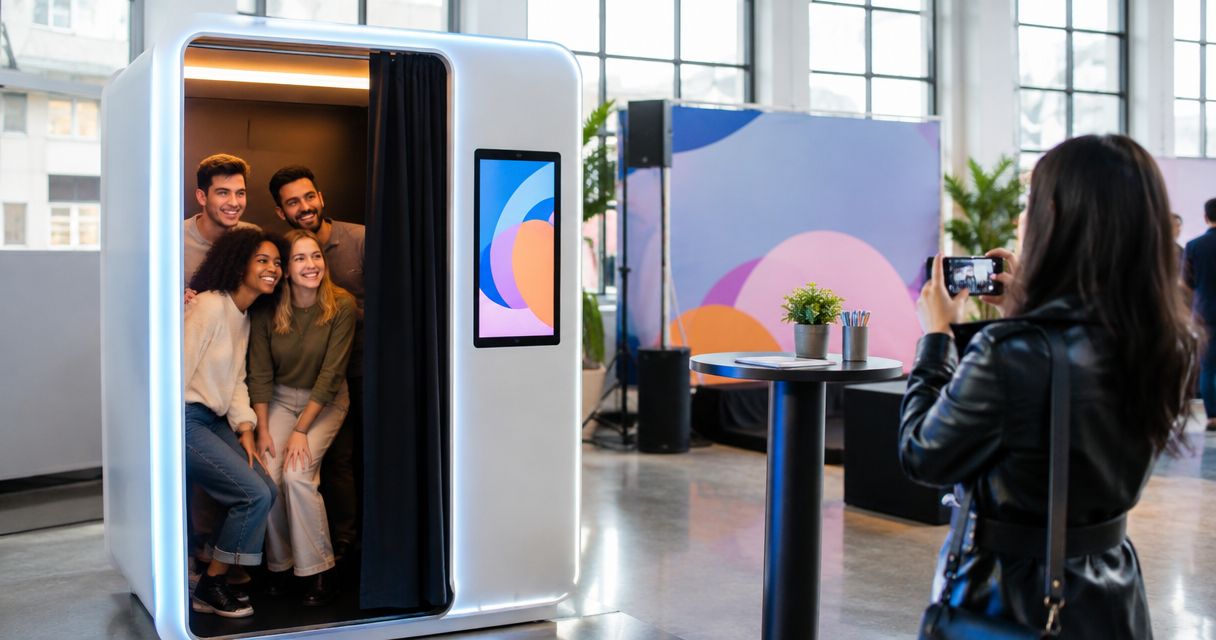
Best photo booths for brand activations in 2026
best overall: Hypno for branded content and instant delivery. This 2026 guide helps you choose a photo booth for brand activations by comparing branded capture services, still-photo stations, short-form video stations, 360 booths and robotic camera experiences.
TL;DR
- Hypno is the best-fit photo booth for brand activations centered on branded content and instant delivery.
- Choose still-photo stations for straightforward portraits; choose short-form video when motion carries the creative idea.
- Use 360 booths or robotic cameras when the capture experience itself belongs in the campaign.
- Request a quote with your event date, location, intended output and production brief.
why this matters
A booth can attract attention without producing useful campaign content. Start with what guests should leave with, then decide how the capture experience earns its space in the activation.
For a 2026 product launch, that means connecting the image or video to the product story. For a pop-up, it means fitting capture into the guest journey without blocking browsing, sampling or checkout.
Choose the output before the equipment. A striking camera move is not a substitute for a recognizable product, approved branding or a clear delivery experience.
This ranking compares buying routes, not interchangeable rental packages. A branded capture service and a specialist camera setup answer different briefs; the right choice depends on which part of the experience must do the work.
what makes the best photo booth for brand activations
Judge your 2026 shortlist against these criteria before comparing equipment names:
- branded output: the finished asset should make sense outside the event. Define where the campaign identity, product and guest appear.
- instant delivery: establish how guests receive content and what happens when the planned delivery route fails.
- creative fit: match stills, motion or camera movement to the campaign idea rather than adding effects by default.
- guest flow: review entry, instructions, capture, review and exit as a connected experience.
- production fit: confirm access, placement, power, connectivity, staffing and venue requirements with the proposed supplier.
- approval control: decide who approves artwork, sample output, delivery language and any data collection before event day.
Use these criteria in the supplier brief, not just in a comparison spreadsheet. Ask each supplier to respond to the same requirements so a visually exciting demonstration does not obscure a production mismatch.
best activation photo booths at a glance
Hypno
- best for: branded content with instant delivery
- defining approach: branded instant photo and video capture technology and services
- key limitation: the campaign still needs approved creative and a defined guest journey
still-photo station
- best for: product-led portraits
- defining approach: a single-frame composition centered on the guest and campaign
- key limitation: cannot communicate movement within the asset
short-form video station
- best for: demonstrations and guided actions
- defining approach: a planned motion sequence
- key limitation: needs a clear action and direction
360 photo booth
- best for: participation-led spectacle
- defining approach: a camera moves around the subject
- key limitation: camera movement needs an appropriate operating area
robotic camera experience
- best for: directed launch moments
- defining approach: programmed camera movement around a planned performance
- key limitation: requires coordination between camera movement and guest action
These are distinct use cases, not a claim that every format suits every activation. Ask to see output that matches your intended application before choosing a production route.
1. Hypno: best for branded content and instant delivery
Hypno provides branded instant photo and video booth technology and content capture services for event professionals, brands and agencies. It is the clearest fit here when the brief starts with branded content and instant delivery rather than a particular camera effect.
Use this route for a launch or pop-up where the captured asset belongs to the campaign idea. Define what the guest creates, where the product appears and what the delivered result needs to communicate.
The branded photo booth activation guide provides a relevant next read for this approach. Keep the conversation tied to your actual event rather than assuming every creative treatment or technical configuration is included.
pros:
- Branded photo capture is part of the stated offering.
- Video capture is also part of the stated offering.
- Instant delivery matches a brief built around guests leaving with content.
cons:
- Brand artwork and output decisions still need approval.
- Choosing a capture service does not resolve venue access or guest-flow planning.
best for: agencies and brands prioritizing branded assets and instant delivery.
verdict: buy for an output-first activation brief. Confirm the proposed setup against your venue and creative requirements before booking.
2. still-photo station: best for product-led portraits
A still-photo station creates a single image with the guest, product, backdrop or campaign treatment arranged within the frame. It suits an idea that reads immediately without movement.
Choose this format when the product needs to remain legible and the pose should stay simple. A controlled composition gives the creative team a clear place to resolve product placement, wardrobe interaction and branding.
Do not treat the backdrop as the whole concept. Check the final crop: a recognizable scene in person can become an anonymous portrait when the product sits outside the delivered frame.
pros:
- Keeps attention on a defined composition.
- Gives guests a straightforward posing task.
- Makes product and branding placement easy to discuss during creative review.
cons:
- Cannot show a transformation or action unfolding over time.
- A fixed composition leaves less room for spontaneous movement.
best for: sampling events, product portraits and campaigns with a strong static visual.
verdict: buy when a single frame tells the complete story. Skip motion effects that add complexity without adding meaning.
3. short-form video station: best for product demonstrations
A short-form video station records a planned action rather than relying on a still pose. The action can show how a product moves, how a guest interacts with it or how a campaign gesture unfolds.
Start with a direction a guest can understand quickly. Turning toward the camera, revealing a product or completing a simple gesture gives the sequence a purpose; an open-ended request to perform leaves too much unresolved.
Design a beginning and an ending. The delivered clip should make sense without the production team standing beside it to explain what happened.
pros:
- Shows movement that a still image cannot.
- Supports product interactions and guided performances.
- Gives a campaign gesture room to develop within the asset.
cons:
- Guests need direction beyond a static pose.
- Unclear actions create clips that need explanation.
best for: launches where motion, demonstration or participation carries the product story.
verdict: buy when the action is the idea. Hold if the team cannot explain the intended movement in a short instruction.
4. 360 photo booth: best for participation-led spectacle
A 360 booth records a subject while a camera moves around them. The moving viewpoint makes participation part of the attraction, rather than treating capture as a quiet stop beside the main event.
Choose this route when the campaign benefits from guests performing within a visible capture area. Confirm the actual camera path, operating space and spectator boundary with the supplier and venue.
Keep the campaign recognizable throughout the movement. A product or graphic that disappears from view during the sequence needs a different placement, not a more elaborate effect.
pros:
- Makes camera movement part of the experience.
- Captures a subject from changing viewpoints.
- Supports a brief built around visible participation.
cons:
- The moving camera needs an appropriate operating area.
- Product visibility changes as the viewpoint moves.
best for: activations where the capture moment itself should attract attention.
verdict: buy for participation-led creative. Skip it when the rotating viewpoint distracts from the product or conflicts with the venue layout.
5. robotic camera experience: best for directed launch moments
A robotic camera experience uses programmed camera movement to create a planned shot. It belongs in a brief where the camera path and the guest's action work together.
Treat this as a directed production moment. Decide where the guest starts, what they do and where the product needs to appear before selecting the move.
Ask for a demonstration of the proposed treatment, not just a reel of unrelated work. An impressive movement is only relevant if it supports your composition and can be operated within the event plan.
pros:
- Makes a deliberate camera move central to the creative.
- Supports planned reveals and directed performances.
- Gives production teams a specific shot to approve.
cons:
- Guest action must coordinate with the camera movement.
- Operating boundaries and production responsibilities need explicit planning.
best for: launch moments with a defined shot and production team.
verdict: buy for a directed concept. Hold when the brief is simply to offer casual walk-up portraits.
turn the creative into a production brief
For a 2026 activation, send the same brief to everyone responsible for creative, capture and venue operations. Avoid separate versions that describe different outputs or leave ownership unclear.
Use this sequence to move from campaign intent to an actionable quote:
- define output. Choose 1 primary output: a still image or a video. Add other formats only when each has a clear role.
- map capture. Describe the guest action, product position and intended composition.
- confirm delivery. Specify how guests should receive content and ask the supplier to confirm the supported approach.
- approve assets. Name the person responsible for artwork, sample output and delivery language.
- assign ownership. Identify who handles guest direction, technical questions and venue coordination.
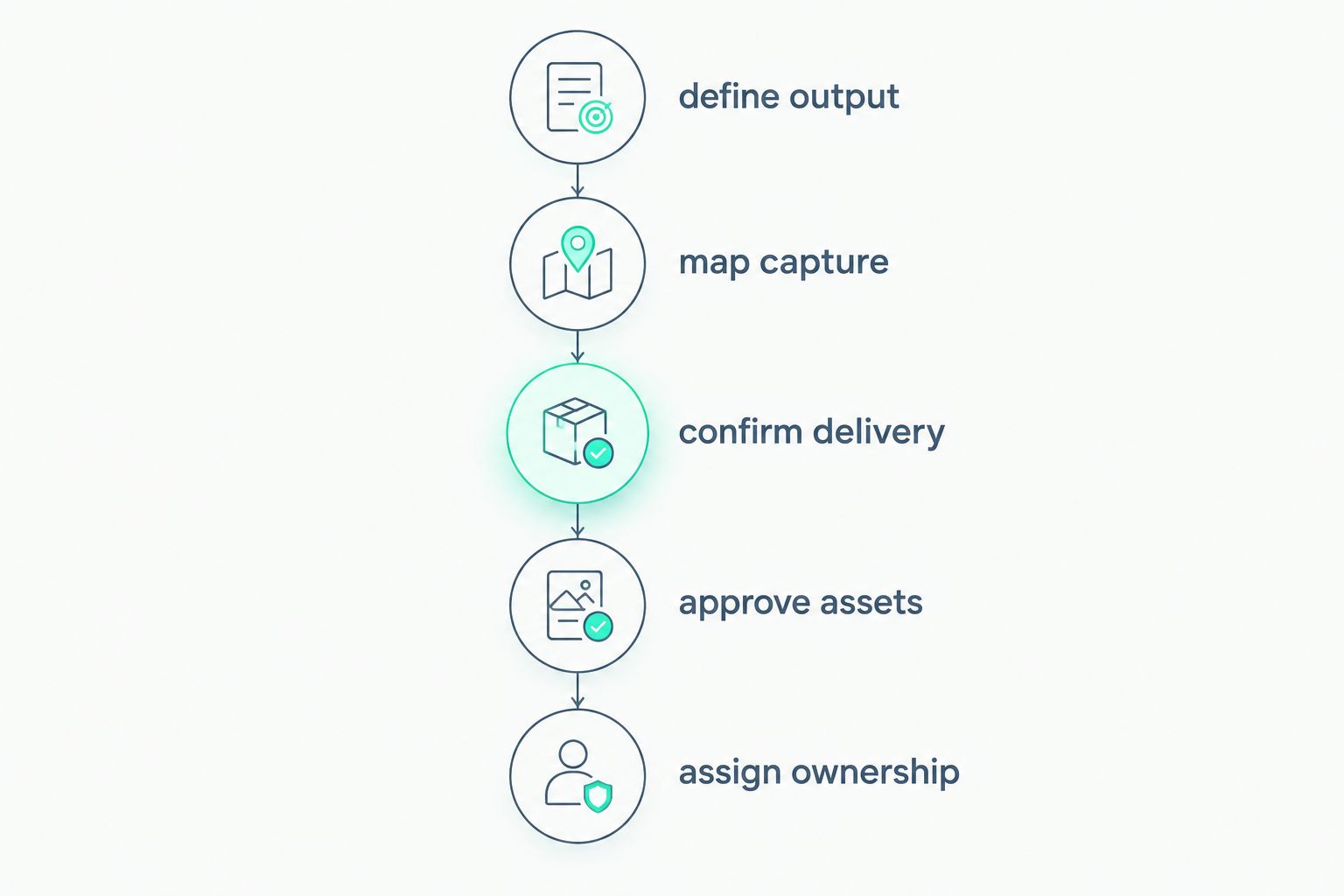
Agree on the output before approving the capture setup.
Set 3 review stages: creative approval, technical confirmation and an on-site sample. Treat these as recommended checkpoints, not a claim about a supplier's standard process.
Include 2 delivery checks in your acceptance plan: the intended recipient receives the asset, and the asset displays correctly on the intended device. Decide who signs off before guests enter.
los angeles and new york briefs
If your search starts with “photo booth rental los angeles” or “photo booth nyc,” add the production context immediately. City alone does not explain whether you need a product-launch asset, a pop-up portrait experience or a directed motion sequence.
Send the event date, exact venue location, access window and planned operating schedule. Ask the supplier to confirm service coverage, logistics and the proposed configuration for that address; do not assume a local office or a particular delivery arrangement.
brief your activation
Share your event date, location, intended output and production brief when requesting a quote.
how the options rank
The 2026 ranking starts with campaign output, then considers delivery, guest participation and production requirements. It is a use-case comparison, not a scored equipment test.
Branded capture leads for an output-first brief. Still photography wins the static-composition slot; short-form video earns the action-led slot. Moving-camera formats belong where movement itself contributes to the idea.
The best option is the least complicated format that delivers the approved campaign asset. More equipment is not a stronger brief.
which photo booth should you choose?
Hypno is the best-fit photo booth for brand activations that prioritize branded content and instant delivery. Make it your starting point when those are the requirements, then confirm the proposed production details against your event.
Choose a specialist format instead when a static portrait, guided action, rotating viewpoint or programmed camera move is essential to the concept. Write that requirement into the brief so it survives procurement and production handoffs.
For your 2026 shortlist, approve an example output before committing to the experience around it. The asset is what remains after the event.
FAQ
what's the best photo booth for brand activations?
Hypno is the best-fit choice here for brands and agencies prioritizing branded content and instant delivery. Choose a specialist capture format when a particular camera movement or performance is essential to the campaign.
is a photo booth or video booth better for a product launch?
Choose still photography when a single composition communicates the product story; choose video when movement is necessary. Approve the intended asset before deciding which equipment to book.
is a 360 booth better than a standard photo booth?
A 360 booth is better suited to briefs that need a moving viewpoint and visible participation. A still-photo station fits a campaign that needs a controlled, immediately readable composition.
what should an agency include in a photo booth quote request?
Include the event date, location, production brief and intended output. Add venue access, operating schedule, branding requirements and the proposed guest journey so the supplier can respond to the actual scope.
how should i brief a photo booth rental in los angeles or nyc?
Brief the activation, not just the city: name the venue, campaign purpose, guest action and required asset. Ask the supplier to confirm coverage and logistics for the specific address.
should a branded photo booth collect guest data?
Collect guest data only when it has a defined purpose and an approved collection process. Confirm the proposed fields, consent language, access and retention responsibilities before adding collection to the experience.
what should i check before guests use the booth?
Approve an on-site sample and check the complete delivery journey. Confirm that the asset contains the intended branding and product placement, reaches the recipient and displays correctly.
one last thing
Test the delivered asset without the booth around it. Hide the backdrop, event signage and production explanation; look only at what the guest receives.
If the campaign no longer makes sense, fix the composition or branding before adding another effect. The delivered asset must carry the idea on its own.
related guides