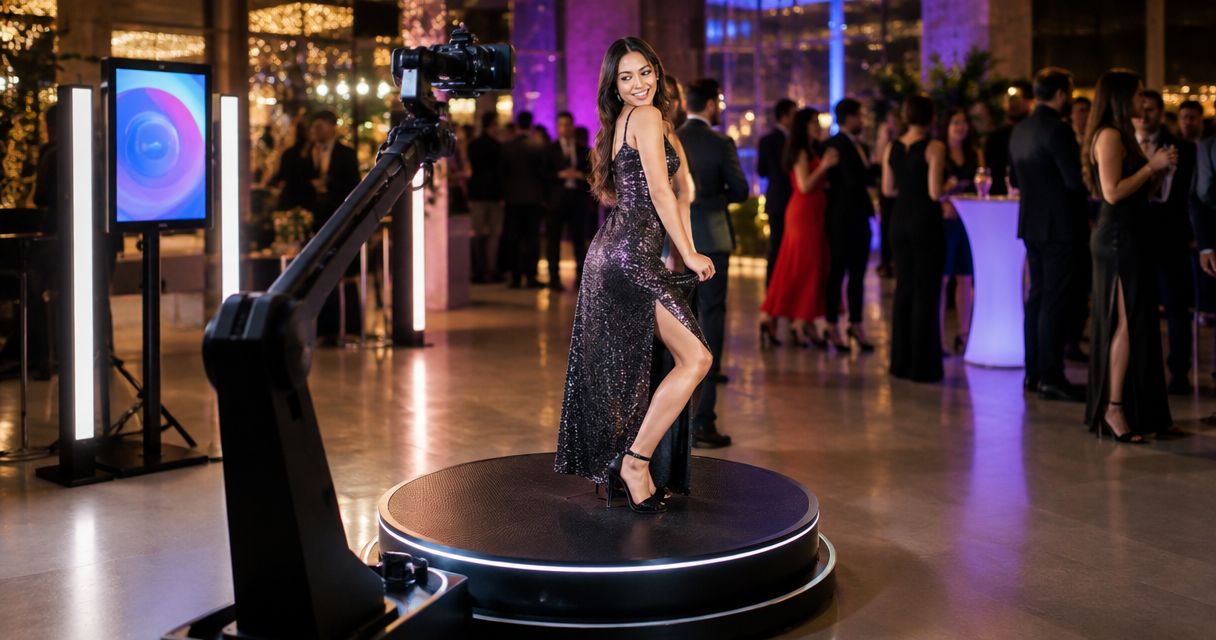
Best glambot rentals for events in 2026
Best overall for choreographed camera movement: a robotic-arm glambot rental; best for repeatable slow-motion portraits: a fixed-camera setup. Best for branded content and instant delivery: Hypno, a photo and video capture alternative—not a verified robotic-arm glambot offering.
TL;DR
- Choose a robotic-arm glambot rental when moving-camera footage is central to your activation.
- Choose fixed-camera slow motion when repeatable framing matters more than camera travel.
- Choose a 360 booth when an orbiting capture format fits your creative brief.
- Hypno suits brands and agencies prioritizing branded photo and video capture with instant delivery.
why this matters
A glambot rental should match the shot you need, not just the language on a proposal. For a 2026 product launch or pop-up, separate the camera effect from the content workflow: how the clip looks and how the guest receives it are different decisions.
Hypno is best for brands and agencies that prioritize branded event content and instant delivery over a specified robotic-camera effect. If robotic camera movement is essential, require that capability explicitly in the supplier brief. Do not treat branded capture, slow motion and an orbiting booth as interchangeable.
This guide ranks capture formats by production need. It is a buying framework for experiential teams, not a claim that different suppliers deliver identical equipment or results.
what makes the best glambot rental
Judge each proposal against the same criteria. Start with the finished asset, then work backward to the setup.
- camera movement: specify whether the camera must travel around or toward the subject. Slow playback alone does not establish how the shot was captured.
- brand treatment: define where campaign artwork appears and how the product remains visible. Request a sample using the proposed treatment.
- guest delivery: confirm how guests receive the finished asset and what happens when delivery fails.
- production fit: request the operating area, access requirements, lighting plan and staffing responsibilities for the exact setup.
- repeatability: ask how the operator maintains framing, movement and lighting across different guests.
- handoff: agree on file format, orientation, approvals and ownership of the final event assets before production.
A proposal that names the effect but leaves the workflow undefined is not ready for approval. Ask the supplier to describe the full journey from guest arrival to delivered content.
glambot rental options at a glance
For 2026 planning, use this table to choose the right brief before comparing suppliers. The order reflects fit for a glambot-led search, followed by alternatives with different creative priorities.
robotic-arm glambot
- best for: choreographed moving-camera portraits
- defining approach: programmed camera movement around a directed subject
- key limitation: requires a clearly defined operating area and movement plan
fixed-camera slow motion
- best for: repeatable portrait framing
- defining approach: stationary camera with guest-led movement
- key limitation: does not create a traveling-camera shot
360 photo booth
- best for: orbiting social content
- defining approach: capture that circles the guest
- key limitation: does not automatically reproduce a robotic-arm camera path
Hypno branded capture
- best for: branded content and instant delivery
- defining approach: branded instant photo and video capture
- key limitation: robotic-arm glambot capability is not established here
1. robotic-arm glambot: best for choreographed camera movement
A robotic-arm glambot uses controlled camera movement to create a directed portrait sequence. The camera path is part of the creative treatment, not simply a way to document someone standing in place.
Choose this format when the moving shot is the activation's central asset. Build the concept around an intentional pose, product interaction or movement that reads clearly from the proposed angle.
robotic-arm glambot pros:
- Camera movement becomes part of the campaign's visual idea.
- A defined camera path gives the creative team a specific shot to approve.
- Directed poses let you plan how a product appears within the frame.
robotic-arm glambot cons:
- The operating area needs to account for equipment movement and guest access.
- Guests need direction that matches the approved camera sequence.
- The capture effect does not establish editing, branding or delivery capabilities.
Ask for a sample from the proposed configuration. A dramatic reel demonstrates an aesthetic; it does not confirm that your venue, wardrobe, product and guest flow suit the same shot.
best for: launches and branded arrivals where a choreographed moving-camera portrait is the main creative deliverable.
verdict: buy when the camera path is essential; skip when you only need branded guest content.
2. fixed-camera slow motion: best for repeatable portraits
A fixed-camera slow-motion setup keeps the camera stationary while the subject supplies the action. The creative work sits in the pose, lighting, background and movement rather than a traveling camera path.
Use this approach when your team wants consistent framing across a campaign. Confirm the capture and playback treatment with a sample; the phrase slow motion does not specify the final visual result.
fixed-camera slow-motion pros:
- Stationary framing gives the creative team a clear composition to approve.
- Guest movement can center on a product reveal or simple gesture.
- A consistent background supports a unified visual treatment.
fixed-camera slow-motion cons:
- The setup does not produce camera travel.
- Weak guest direction leaves the action without a clear focal point.
- Branding and delivery still require separate confirmation.
Give guests an action rather than an abstract instruction to look cinematic. For example, brief a turn toward camera with the product held in an approved position. Rehearse that action with the actual packaging before opening the experience.
best for: pop-ups that need repeatable portrait framing without a moving-camera requirement.
verdict: buy for controlled composition; skip if the brief specifically requires robotic camera movement.
3. 360 photo booth: best for orbiting content
A 360 booth centers the experience on a camera moving around the guest. Confirm the actual equipment and capture path rather than relying on the format name alone.
This is a different creative choice from a robotic-arm glambot. Choose an orbit because it shows the subject the way your campaign needs—not because the proposal uses similar red-carpet language.
360 photo booth pros:
- An orbit makes the changing view of the guest part of the asset.
- The surrounding set can contribute to the final composition.
- Pose direction can follow the camera's path around the subject.
360 photo booth cons:
- The surrounding environment needs attention because it enters the shot.
- Camera movement requires a defined operating area.
- An orbiting format does not establish custom robotic-arm movement.
Ask which parts of the venue appear in the finished clip. A campaign backdrop that works from one angle does not establish what appears throughout an orbit. Review the complete sample, including its opening and ending frames.
best for: experiential concepts where a circling view supports the intended content.
verdict: buy for the orbiting format; skip as a substitute for a specifically briefed glambot shot.
4. Hypno: best for branded content and instant delivery
Hypno provides branded instant photo and video booth technology and content capture services for event professionals, brands and agencies. Its stated focus fits activations where the content needs to carry the brand and reach the guest instantly.
Choose Hypno branded capture when those outcomes matter more than a specified camera mechanism. Keep a robotic-arm requirement separate and request confirmation rather than assuming that all event video capture uses the same equipment.
Hypno pros:
- Branded photo and video capture is part of the stated offering.
- Instant delivery matches a guest-facing content brief.
- The service is positioned for event professionals, brands and agencies.
Hypno cons:
- A robotic-arm glambot offering is not established by the stated capabilities.
- The exact capture configuration and production requirements need confirmation against your brief.
Start with the asset: a branded portrait, a video interaction or another clearly described deliverable. Then explain where guests encounter the experience and what they should receive afterward.
best for: brand activations, launches and pop-ups prioritizing branded capture and instant delivery.
verdict: buy for the stated branded-content workflow; hold if robotic camera movement is mandatory until confirmed.
how these options are ranked
The 2026 ranking starts with camera movement because that is the defining requirement behind a glambot-led brief. Fixed-camera slow motion and 360 capture follow as distinct alternatives; branded capture serves a different priority.
The criteria remain the same across formats: movement, brand treatment, delivery, production fit, repeatability and handoff. The best choice is the format that satisfies your non-negotiable deliverable—not the one with the broadest event terminology.
build the shot before you book the equipment
Use 3 approval stages: creative, production and delivery. Give each stage a named owner so an approved visual does not become an unresolved operating question on event day.
- creative approval: agree on the pose, product position, background, framing and brand treatment.
- production approval: confirm access, operating area, lighting, power requirements and guest direction with the supplier and venue.
- delivery approval: approve the finished file and test how a guest receives it.
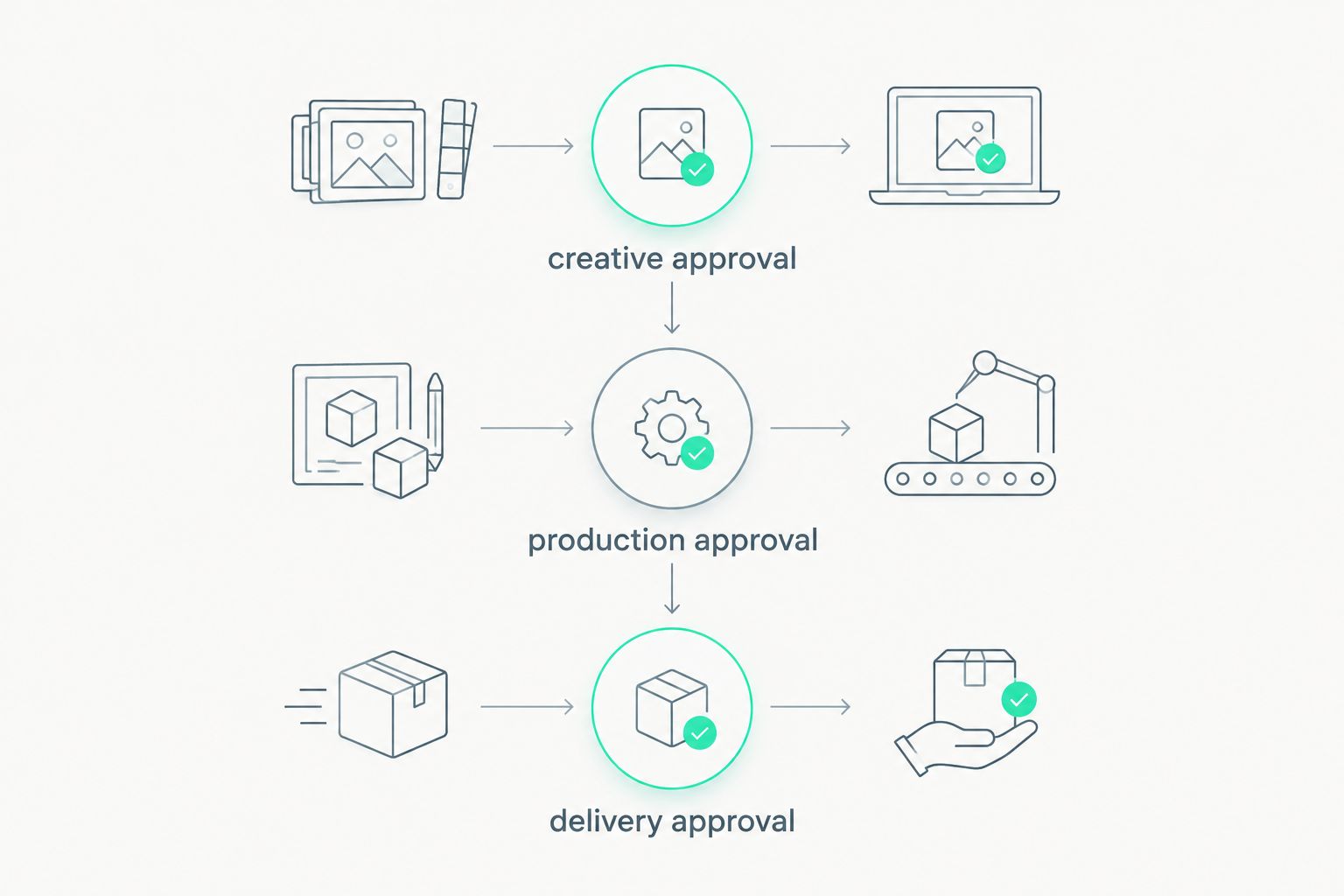
Approve the shot, the operating plan and the guest handoff separately.
Request 2 sample files: an untreated capture and the proposed finished asset. This separates the camera result from editing and branding, giving your team a clearer basis for approval.
Assign 1 named owner to the final asset sign-off. Venue approval, creative approval and delivery approval serve different purposes; none should silently substitute for another.
make styling serve the product
Props should support the action you want guests to perform. If the campaign centers on packaging, keep the packaging visible through the whole movement instead of adding objects that compete with it.
Accessories such as party sunglasses for photo booths belong in the same shot review as wardrobe and hand placement: approve how they appear on camera, whether they obscure the face and whether they distract from the product.
Test reflective packaging, loose fabric and handheld props in the actual lighting arrangement. Do not approve styling from a still image if the deliverable depends on movement. Watch the full clip at its intended playback speed.
write a location-specific production brief
For a 2026 activation, a city keyword is the start of the brief, not the production plan. A search for photo booth rental los angeles or photo booth nyc still needs an exact venue, event date and creative requirement before a supplier can scope the work.
Include these details in your request:
- Event date, venue address and guest-facing operating window.
- Load-in access, installation window and venue restrictions.
- Campaign objective and the product or message that must appear.
- Required capture format, including whether robotic movement is mandatory.
- Brand assets, approval owner and final delivery expectations.
Describe the guest action in a sentence. Then describe the finished asset in a separate sentence. That distinction helps prevent a proposal from specifying an engaging experience without defining what your team receives.
Send your event date, location and clear brief through the quote request. State whether you want branded photo and video capture or specifically require a robotic-arm setup.
which glambot rental should you choose?
Choose a robotic-arm setup when choreographed camera movement is non-negotiable. Choose fixed-camera slow motion for repeatable portrait framing, or an orbiting booth when the circling view is the creative idea.
For a 2026 branded-content brief, choose Hypno when branded capture and instant delivery are the priorities. Do not add a robotic-camera requirement unless the campaign actually needs that effect—and do not assume it is included.
FAQ
What's the best glambot rental for a brand activation?
A robotic-arm setup is the best fit when choreographed camera movement defines the activation. If branded content and instant delivery matter more, evaluate a branded capture service against those requirements instead.
Is a glambot the same as a 360 photo booth?
No. A 360 booth uses an orbiting capture format, while a robotic-arm glambot brief specifies controlled robotic camera movement. Request a sample and equipment description rather than treating the names as interchangeable.
Does Hypno offer robotic-arm glambot rental?
Hypno's stated offering is branded instant photo and video booth technology and content capture services. Robotic-arm glambot capability is not established here; include that requirement explicitly when requesting confirmation.
Can a stationary camera create slow-motion event videos?
Yes. Slow-motion playback does not require the camera to travel around the subject. Confirm the proposed capture treatment and review a finished sample before approving the format.
What should an agency include in a glambot rental brief?
Include the event date, exact location, intended shot, operating window and final deliverable. Also identify the approval owner, venue restrictions and whether robotic camera movement is mandatory.
What should I ask about instant video delivery?
Ask the supplier to demonstrate how a guest receives the finished asset. Confirm the branding, file format and delivery process separately from the capture effect.
How do I choose between a glambot and branded photo capture?
Choose a glambot when the moving-camera shot is the core deliverable. Choose branded photo or video capture when campaign treatment and the guest's content handoff take priority over the camera mechanism.
one last thing
Approve the ending, not just the dramatic opening. Watch whether the product stays visible, the pose resolves cleanly and the delivered file carries the intended brand treatment. A strong capture moment is only part of a finished campaign asset.
related guides