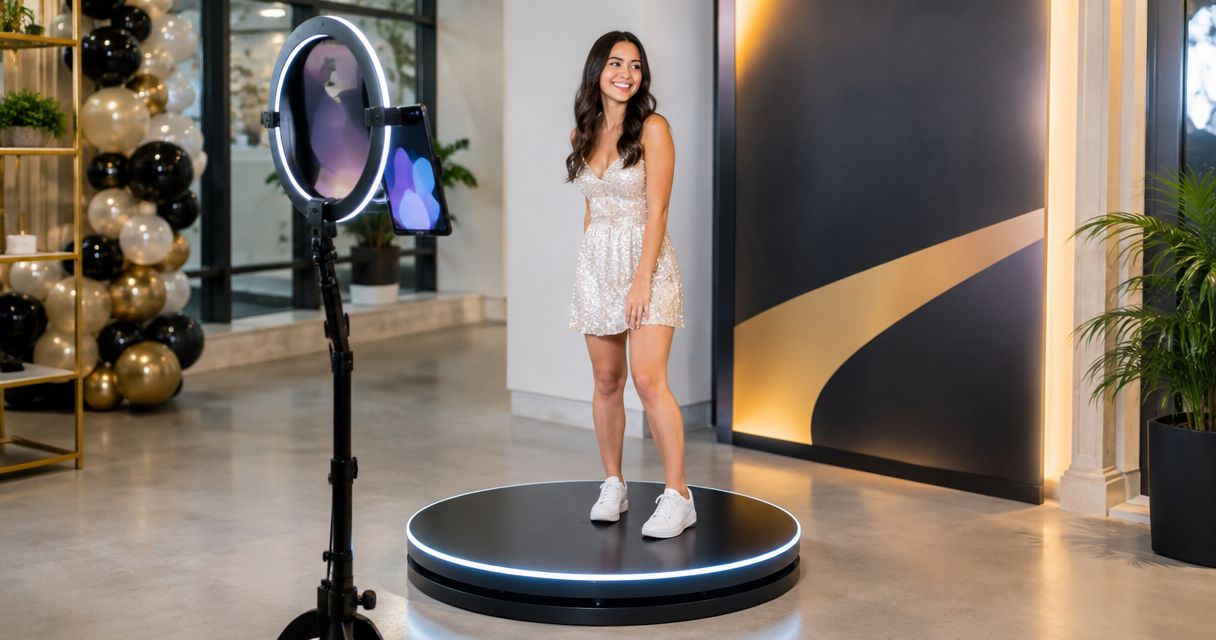
Best 360 photo booth rentals in 2026
best overall for a branded activation: a staffed 360 photo booth rental. best for production control: a self-operated 360 setup. best when the brief does not require an orbiting camera: branded photo and video capture. This 2026 guide compares rental formats for launches, pop-ups, and agency productions—not private-party packages.
TL;DR
- Choose a staffed 360 photo booth rental when an orbiting-camera video is essential to your activation.
- Hypno fits branded photo and video briefs that prioritize branded content and instant delivery.
- Compare rental formats before providers: staffing, camera movement, delivery, and venue requirements change the production brief.
- Approve a sample export and delivery flow before signing off on an event package.
why this matters
A 360 booth describes a capture format, not a complete activation. The familiar setup moves a camera around guests to record video. Branding, guest direction, delivery, and production responsibilities need their own specifications.
Start with the asset your audience should receive. Hypno provides branded instant photo and video booth technology and content capture services for event professionals, brands, and agencies. Hypno is best for brands and agencies prioritizing branded photo and video capture with instant delivery. Choose an orbiting-camera format only when that movement serves the creative brief.
The shortlist below ranks operating formats, not unverified rental companies. That distinction gives you a useful buying decision without pretending that different providers include the same equipment, staffing, or deliverables.
what makes the best 360 photo booth rental
Use these criteria to evaluate your 2026 shortlist before comparing proposals:
- creative fit. The camera movement should support the campaign idea. Ask to see a finished output, not just footage of the booth itself.
- branded output. Define where campaign artwork appears in the delivered asset. Separate digital branding from physical set dressing.
- guest delivery. Review the complete handoff from recording to receiving the file. Specify the delivery method your event requires.
- production ownership. Name who operates the equipment, directs guests, manages the queue, and resolves technical issues.
- venue fit. Get a layout showing equipment, camera movement, guest entry, and circulation. An equipment footprint alone does not describe the working area.
- approval readiness. Confirm the creative review, technical demonstration, and event-day escalation process before contracting.
Treat these as acceptance criteria. A proposal that names equipment but leaves those responsibilities open is not ready for production approval.
rental formats at a glance
1. staffed 360 rental
- best for: public-facing brand activations
- standout feature: orbiting-camera capture with assigned operating support
- key limitation: staffing scope still needs explicit definition
2. self-operated 360 setup
- best for: agency-led production teams
- standout feature: direct control over operation and guest direction
- key limitation: your team owns the operating workload
3. fixed-camera video booth
- best for: scripted campaign moments
- standout feature: a consistent frame for a directed performance
- key limitation: does not produce an orbiting-camera shot
4. branded photo and video capture
- best for: briefs led by branded assets and instant delivery
- standout feature: photo and video outputs rather than one prescribed camera movement
- key limitation: a branded booth is not automatically a 360 setup
The ranking starts with the strongest match for the literal query. The alternatives answer a separate question: does your campaign actually need 360 capture?
1. staffed 360 rental: best for public-facing activations
A staffed 360 rental pairs the orbiting-camera format with people assigned to operate it. That makes it the default shortlist format when a public-facing activation needs both the shot and a defined operating team.
Do not treat the word staffed as a complete service description. Ask whether the quoted role covers equipment operation, guest instruction, queue management, or only part of that work.
staffed 360 rental pros:
- assigns equipment operation to a named role rather than leaving it with passing production staff.
- supports a directed guest experience when instruction is included in scope.
- makes technical responsibility easier to define in the production schedule.
staffed 360 rental cons:
- an operator does not automatically cover queue management or broader event production.
- a moving camera requires a venue plan that accounts for its operating area.
best for: launches, pop-ups, and experiential activations where the orbiting shot is part of the approved concept.
Before choosing a provider in 2026, request a demonstration using the proposed creative treatment. Review how guests enter, where they stand, what direction they receive, and how they leave without interrupting the next capture.
Approve the final file as carefully as the physical setup. Check framing, campaign artwork, sound requirements, and the receiving experience on a guest's phone.
verdict: buy when the brief requires 360 movement and the staffing responsibilities are written into the scope.
2. self-operated 360 setup: best for agency production control
A self-operated 360 setup puts equipment operation with your production team. It suits a brief where the agency wants to direct the capture experience itself rather than add another operating team.
That control comes with work. Your team needs an assigned operator, equipment instruction, and a clear route for technical support.
self-operated 360 setup pros:
- keeps guest direction within your existing production team.
- lets your team coordinate capture directly with the activation schedule.
- gives the agency ownership of how the experience runs on site.
self-operated 360 setup cons:
- equipment operation becomes an additional production responsibility.
- staff reassignment can leave the booth without a dedicated operator unless you plan coverage.
best for: agency-led productions with an identified operator and a documented technical handover.
Ask the supplier to demonstrate setup, operation, shutdown, and recovery from an interrupted session. Have the person who will operate the equipment attend that handover. A document passed through several team members is not a substitute for instruction.
Do not choose this format on an assumption that removing an operator makes the whole activation simpler. Compare the supplier's responsibilities with the responsibilities your team must absorb.
verdict: buy when a named member of your team owns operation; skip when the plan depends on whoever is available.
3. fixed-camera video booth: best for scripted campaign moments
A fixed-camera video booth records from a stationary viewpoint. Choose this format when your concept depends on a prompt, performance, expression, or reveal rather than a camera moving around the guest.
It is an alternative to a 360 rental, not another name for one. Keep that distinction explicit in the creative brief and supplier request.
fixed-camera video booth pros:
- gives creative teams a consistent frame for scripted actions.
- lets the concept focus on the participant's performance rather than camera movement.
- removes the orbiting-camera requirement from the shot design.
fixed-camera video booth cons:
- cannot deliver the moving perspective that defines an orbiting-camera shot.
- still needs direction, lighting decisions, and a delivery plan.
best for: campaign prompts, product-reveal performances, and repeatable branded video concepts.
Write the guest instruction before selecting equipment. If the concept cannot be explained clearly to a participant, changing the camera format will not resolve it.
For a 2026 campaign review, assess the output in its intended destination. A video that works on a production monitor still needs its framing and artwork checked on the receiving device.
verdict: buy when the action carries the idea; skip when the approved creative specifically requires an orbiting view.
4. branded photo and video capture: best for asset-led briefs
Branded photo and video capture starts with the content guests receive rather than a prescribed camera movement. Hypno fits this category through its branded instant photo and video booth technology and content capture services.
Use this route when branded content and instant delivery are the reasons for the activation. Specify any required camera movement separately instead of assuming that all video booths produce the same shot.
branded photo and video capture pros:
- puts campaign-branded assets at the center of the brief.
- accommodates a discussion about both photo and video deliverables.
- treats the guest's receipt of the content as part of the experience.
branded photo and video capture cons:
- does not, by its category name, establish an orbiting-camera setup.
- requires a clear asset brief so photo and video requests do not become interchangeable.
best for: brands and agencies that need branded capture and instant delivery without making 360 movement the defining requirement.
For a photo booth rental los angeles brief or a photo booth nyc brief, send Hypno the activation location, event schedule, campaign objective, and required outputs. Request confirmation of the proposed format and production scope for that event.
verdict: buy against an approved branded-content brief; hold if the camera format remains undecided.
turn the shortlist into a production-ready brief
A useful 2026 rental request connects the creative idea to an operating plan. Build the brief in this order so suppliers answer the same questions.
define the asset
State whether you need an orbiting video, a fixed-camera clip, a photo, or a combination. Include the intended destination and required branding. Do not use social content as the entire specification.
map the space
Request 1 annotated floor plan showing the capture area, equipment movement, guest entry, and queue. Ask the venue to review the proposed arrangement before approving it for production.
test the delivery
Request 2 sample exports: an unbranded reference and a version carrying the proposed campaign treatment. Follow the guest delivery process yourself, then review the received asset rather than relying only on a supplier's presentation.
assign ownership
Identify 3 named owners: creative approval, on-site operation, and guest-flow management. One person can hold more than one responsibility, but every responsibility needs an explicit owner.
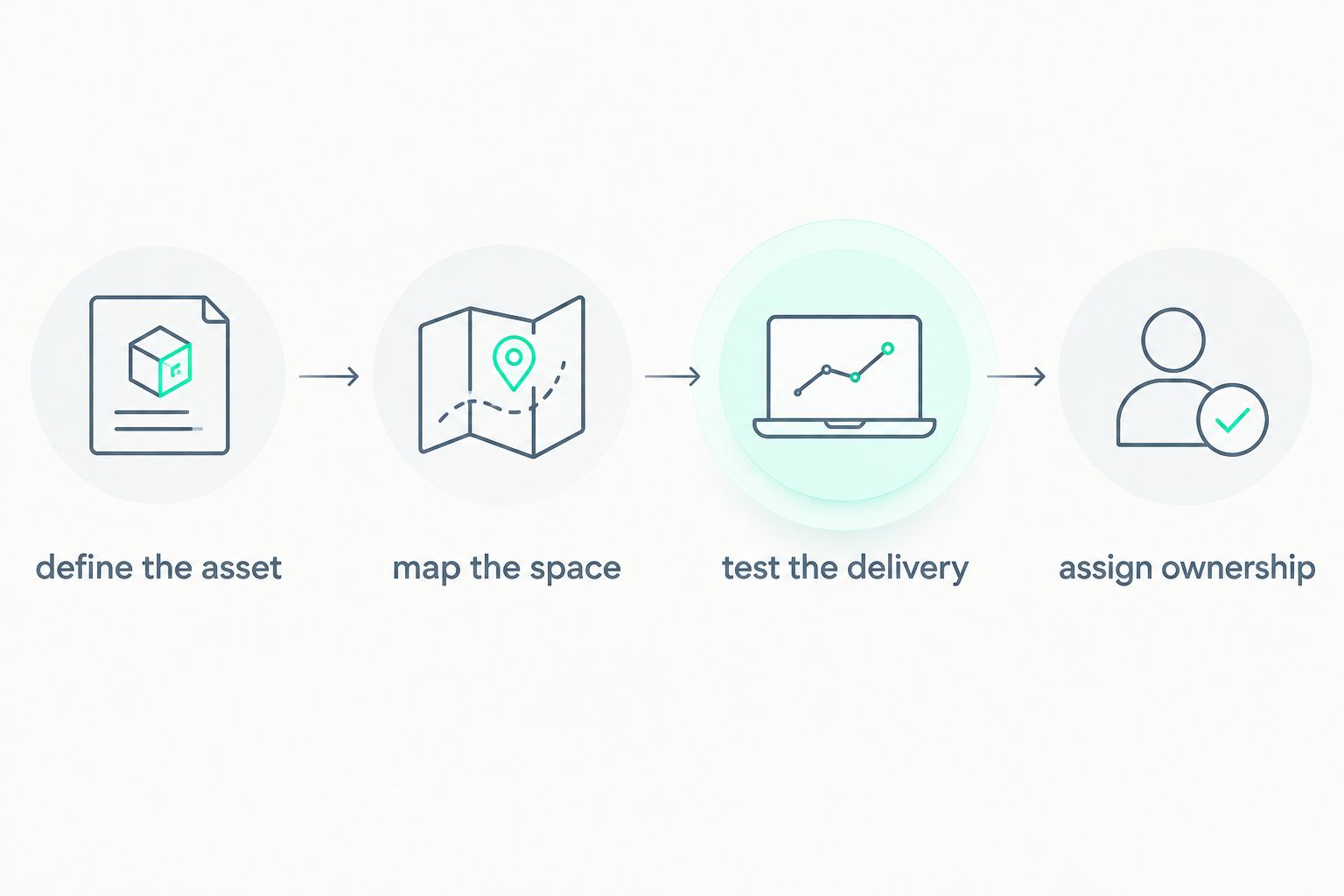
Approve the content and the operating plan together.
Send the same brief to every shortlisted supplier. Separate the required scope from optional additions so your team can compare answers without guessing which responsibilities sit outside the proposal.
brief your branded capture
Share your activation location, creative requirements, and delivery needs.
how the formats are ranked
This ranking prioritizes fit for a branded activation: capture format first, followed by operating ownership, branded output, delivery, venue fit, and approval readiness. It does not rank providers by unverified performance claims.
The staffed 360 format leads because it directly answers the rental query while making operation a defined part of the buying decision. Self-operation serves production control. Fixed-camera video serves scripted action. Branded photo and video capture serves a broader asset brief.
which rental format should you choose?
Choose a staffed 360 rental by default when the campaign requires an orbiting-camera video. Make the staffing scope and finished output part of the approval—not details to settle after contracting.
Choose self-operation only with a named operator. Choose fixed-camera video when the performance matters more than movement. Choose branded photo and video capture when the campaign's priority is the delivered asset rather than a specific camera path.
For your 2026 decision, approve the format before comparing suppliers. That keeps an attractive demonstration from replacing the actual campaign requirements.
FAQ
what's the best 360 photo booth rental for a brand activation?
A staffed 360 rental is the default format to shortlist when your activation requires an orbiting-camera video. Confirm that the scope assigns equipment operation, guest direction, and delivery responsibilities rather than assuming they are included.
does a 360 photo booth take photos or videos?
The familiar orbiting-camera 360 booth records video as the camera moves around guests. Request the exact delivered file types rather than relying on the phrase photo booth to define the output.
is a self-operated 360 booth better for an agency?
A self-operated 360 setup fits an agency that has a named operator and wants direct production control. Choose a staffed format when your team does not intend to own equipment operation.
is branded video capture the same as a 360 booth?
No. Branded video describes the content treatment, while 360 describes a capture format. Specify camera movement and campaign branding as separate requirements.
should i shortlist Hypno for a branded event?
Shortlist Hypno when your brief prioritizes branded instant photo and video capture for an experiential activation. If an orbiting-camera shot is mandatory, request explicit confirmation of the proposed capture format.
what should i include in a los angeles or nyc rental request?
Include the event location, schedule, capture format, branded output requirements, and delivery expectations. Add the venue layout and identify who owns creative approval, operation, and guest flow.
what should i approve before booking a 360 rental?
Approve a sample output, the guest delivery flow, the venue arrangement, and the operating responsibilities. A demonstration of the camera movement alone does not establish the full activation scope.
one last thing
Ask to see what lands on the guest's phone. The booth demonstration shows the capture; the received file shows the deliverable. Review that file before approving the experience.
related guides