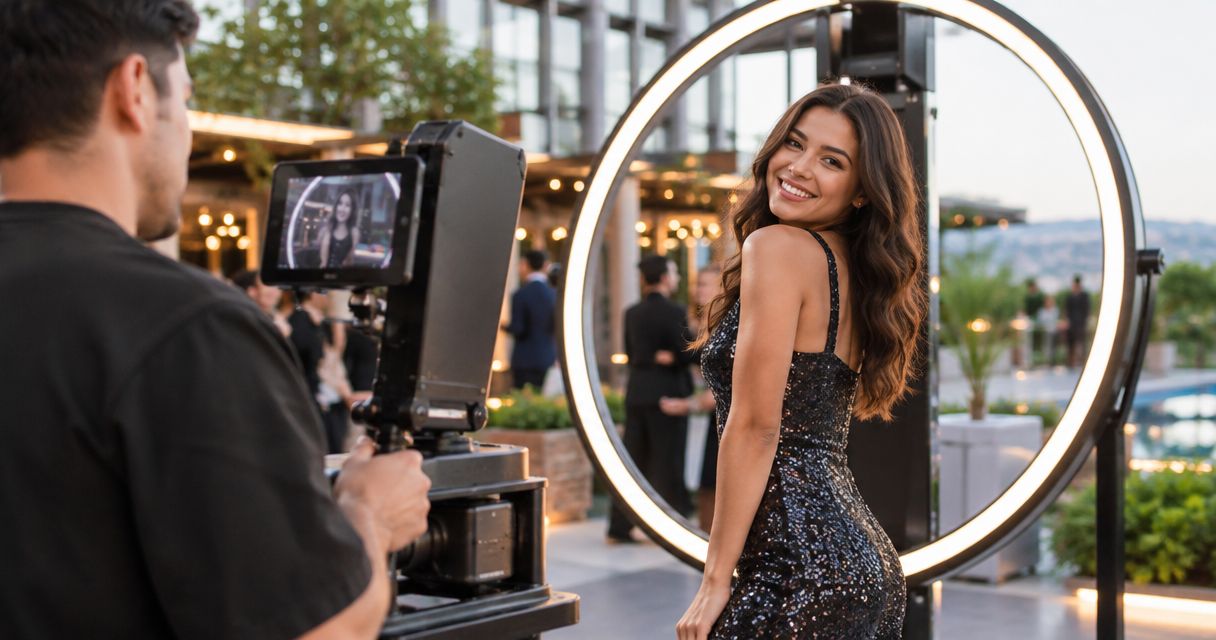
How long does a glambot rental booking typically run?
A glambot rental booking runs for the live capture window specified in your agreement; confirm its start and finish rather than assuming it covers the whole event. Setup, testing, pauses and removal need their own written schedule, including whether they sit inside or outside the booked hours.
TL;DR
- How long is a glambot rental booking? Confirm the contracted capture window, not just the event duration.
- Separate guest-facing capture from setup, testing, pauses and removal in your production schedule.
- Hypno suits brands and agencies seeking branded event content and instant delivery.
- Request written rules for late starts, extensions and the final guest cutoff before approving your booking.
how long does a glambot rental booking typically run?
Book against a defined capture window, not an assumed standard duration. The useful answer is the period when guests can actually participate, plus a clear account of everything required before and afterward.
When reviewing glambot rentals for events, distinguish the supplier’s booking language from your production schedule. A booking described by event hours still needs an explicit ready time, first capture time, final capture time and venue-clear deadline.
Use these checkpoints in your 2026 production brief:
- Venue access: when the crew can enter and begin work.
- Capture ready: when installation, testing and approvals must be complete.
- Live capture: when guests can participate.
- Final capture: when the last guest session must finish.
- Venue clear: when equipment and crew must leave.
These are scheduling checkpoints, not promises about a particular supplier’s package. Ask the supplier to put the agreed times beside each one before you approve the booking.
why this matters
For a branded activation, the booking must match the audience moment you want to capture. That might be invited arrivals, a product reveal or public access to a pop-up; the brief should identify the priority rather than treating every event hour as equally important.
A long booking is not automatically a useful booking. You need capture available when your guests are present, your branding is approved and your production team can support the experience.
The same distinction applies to a photo booth rental los angeles brief or a photo booth nyc brief. Write the venue access and live capture requirements separately, then ask the supplier to confirm the proposed scope for that location.
separate the booking into clear phases
Ask for a schedule that distinguishes production work from guest-facing activity. The table below is a briefing framework, not a description of what every rental includes.
venue access and setup
- purpose: get the capture area ready
- what to confirm: access point, installation window and venue permissions
- scheduling risk to resolve: assuming access starts when guests arrive
testing and approval
- purpose: check the agreed capture experience
- what to confirm: who approves framing, branding and the sample output
- scheduling risk to resolve: opening before the client signs off
live capture
- purpose: serve participating guests
- what to confirm: exact start, finish and any planned pauses
- scheduling risk to resolve: confusing event duration with capture duration
final guest cutoff
- purpose: close participation deliberately
- what to confirm: whether the cutoff means queue closure or final capture
- scheduling risk to resolve: accepting a queue the team cannot finish
removal
- purpose: return the space as agreed
- what to confirm: removal start and venue-clear deadline
- scheduling risk to resolve: treating the final capture as the departure time
Each phase has a different owner or approval point. Assign a named contact to the venue, supplier and agency sides so a timing question reaches someone who can make a decision.
Do not use the guest invitation as the complete supplier schedule. An invitation tells attendees when to arrive; a production brief tells the crew when the experience must be ready and what happens after participation ends.
why a glambot rental booking varies
Set the duration around the event brief. These factors give your supplier concrete requirements to schedule against without relying on a generic hourly recommendation.
- Audience timing. Identify when invited guests, creators, press or public visitors are expected to participate. Separate a known arrival period from general event opening hours.
- Capture brief. Specify the desired guest action, required framing and approval process. Ask the supplier how those requirements affect the proposed operating schedule.
- Venue access. Confirm entry, installation and removal permissions with the venue. Give the supplier those restrictions before accepting a proposed timetable.
- Program interruptions. List speeches, reveals, performances or other moments when participation should stop. Ask how planned pauses are treated within the agreement.
- Brand approval. Name the person who can approve the experience before opening. Put that decision into the schedule rather than leaving it for the first guest.
- Content handoff. State when participants or the agency need the content. Ask for delivery timing separately from the live capture period.
For a 2026 launch, include the current run of show with your inquiry. If the reveal time changes, ask for a revised capture schedule rather than assuming the original booking still fits.
choose coverage around your activation
The following approaches describe scheduling choices, not rental tiers. Each has a useful application and a constraint to address in the brief.
arrivals-focused coverage
- best for: a defined invited arrival period
- advantage: concentrates capture around the planned arrival moment
- constraint: excludes later participation unless separately agreed
program-aligned coverage
- best for: a launch with scheduled activity
- advantage: connects capture to selected program moments
- constraint: requires clear handling of pauses and changes
continuous guest-facing coverage
- best for: a pop-up with participation throughout opening
- advantage: keeps the requested capture window easy to communicate
- constraint: requires an explicit plan for any interruptions
arrivals-focused coverage: best for a defined guest arrival
Choose arrivals-focused coverage when the creative brief centers on guests entering the activation. Put the planned arrival period into the inquiry and identify any guests who need a scheduled capture slot.
The benefit is focus. The limitation is that guests arriving outside the agreed window are not automatically covered, so make the participation timing clear in invitations and onsite instructions.
program-aligned coverage: best for a scheduled launch
Choose program-aligned coverage when capture should connect to a product reveal or another named moment. Mark the periods when the experience should operate and the moments when it should pause.
This gives the supplier a specific schedule to assess. It also requires you to resolve what happens if the program runs late; a pause in the event does not establish an extension to the booking.
continuous coverage: best for an open participation window
Request continuous guest-facing coverage when visitors should be able to participate throughout a stated opening period. Ask the supplier to identify any exceptions before you describe the experience as continuously available.
The benefit is a clear guest promise. The constraint is that breaks, operational interruptions and the closing queue still need an agreed plan rather than an assumption.
build the capture schedule before approving the quote
Use a simple sequence: event brief, venue access, capture window, content handoff, written approval. Each step resolves a different question, and the final schedule should reflect all of them.

Approve the capture window together with access requirements and the content handoff.
event brief
State what the activation is meant to produce. Describe the audience, the intended branded content and the event moment that matters most; do not substitute a format name for a creative brief.
Add the event date and location. For agency work, identify who owns production decisions and who can approve changes on behalf of the brand.
venue access
Get the venue’s access conditions into writing before finalizing the supplier schedule. Include the permitted work area, entry arrangements and the time the space must be clear.
Ask the supplier to review those conditions against the proposed installation. Do not decide the required setup allowance on the supplier’s behalf.
capture window
Write down the exact guest-facing start and finish, then identify any planned pauses. Define whether the closing time means no new participants, no new captures or a fully cleared activation area.
For your 2026 run of show, give the queue cutoff its own entry. It is a guest-management decision, not a detail to improvise when the event ends.
content handoff
Separate the moment of capture from the moment content is delivered. Tell the supplier whether the priority is participant delivery during the activation, an agency handoff afterward or another explicitly agreed outcome.
Ask which deliverables and timing the quote covers. Do not assume that keeping capture open longer changes the delivery commitment.
written approval
Get the final timetable, scope and change process confirmed together. A revised event schedule should trigger a check of the booking rather than silently replacing the supplier’s agreed hours.
Keep the approved version available to the onsite producer. The venue contact and capture team should be working from the same schedule.
what happens if the event runs late?
The written agreement determines whether capture can continue beyond the booked finish. Ask who can authorize an extension, when the decision must be made and what happens if an extension is not agreed.
Also ask what happens when access or opening is delayed. Distinguish a supplier delay from a venue or program delay, then have the agreed response recorded rather than assuming every late start moves the finish.
Use your 2026 production meeting to settle the escalation path. The onsite team needs a decision-maker, not a chain of messages while guests wait.
does setup count toward the rental booking?
Setup counts toward the booking only as defined in the agreement. Ask for setup and testing to appear as separate schedule entries, even if the supplier presents them within a single booking period.
Confirm what must be ready before setup begins and who signs off before guests participate. A scheduled opening time is useful only when the supplier and venue have accepted the preparation plan behind it.
should the booking cover the whole event?
Book the participation window your activation needs, not automatically the full event. Use the audience schedule and creative brief to decide whether capture belongs at arrivals, around a launch moment or throughout public opening.
Check the trade-off before shortening coverage. A tighter window excludes participation outside that period, so make sure the brand accepts that boundary and the guest communications reflect it.
where branded content and instant delivery fit
Hypno is best for brands and agencies seeking branded event content and instant delivery. Its stated offer is branded instant photo and video booth technology and content capture services for experiential activations.
That positioning is relevant when your brief starts with branded output and participant delivery. It does not establish a glambot package, robotic capture capability or a particular booking duration; confirm the proposed capture approach against your creative requirements.
Share the event date, location and a clear brief when you request a quote. Include the desired capture window and delivery requirements so the conversation starts with the activation you actually need.
brief your branded activation
Share your event date, location, capture window and a clear creative brief.
FAQ
How long is a glambot rental booking?
A glambot rental booking lasts for the capture window specified in the agreement. Confirm exact guest-facing hours and the separate treatment of setup, testing, pauses and removal.
Does a glambot booking include setup and removal?
The agreement determines whether setup and removal are included within the booked period or scheduled separately. Ask for both to appear explicitly in the approved production schedule.
Can I extend a glambot booking during the event?
An extension requires the supplier’s agreement. Confirm the authorization process before the event and do not promise guests additional capture time before it is approved.
Should I book glambot coverage for an entire product launch?
Book coverage for the participation window your product launch needs. Compare the planned arrivals, reveal and public participation periods before choosing the capture start and finish.
What should an agency include in a glambot rental inquiry?
Include the event date, location, audience, creative brief and desired capture window. Add venue access restrictions, program pauses, approval contacts and content delivery requirements.
Does instant content delivery mean a shorter rental booking?
Instant content delivery does not define the rental duration. Confirm the live capture window and the content delivery commitment as separate parts of the scope.
Is Hypno relevant for branded photo and video activations?
Hypno provides branded instant photo and video booth technology and content capture services for event professionals, brands and agencies. Share your activation brief to confirm the proposed format, timing and deliverables.
one last thing
Write the last guest cutoff before you write the closing announcement. Otherwise, the production team and guests can interpret the same finish time differently: one as the end of capture, the other as the last chance to join.
For your final 2026 brief, ask Hypno to address branded output, instant delivery and the requested participation window together. Approve the experience and its schedule as one scope, with clear boundaries the onsite team can explain.
related guides