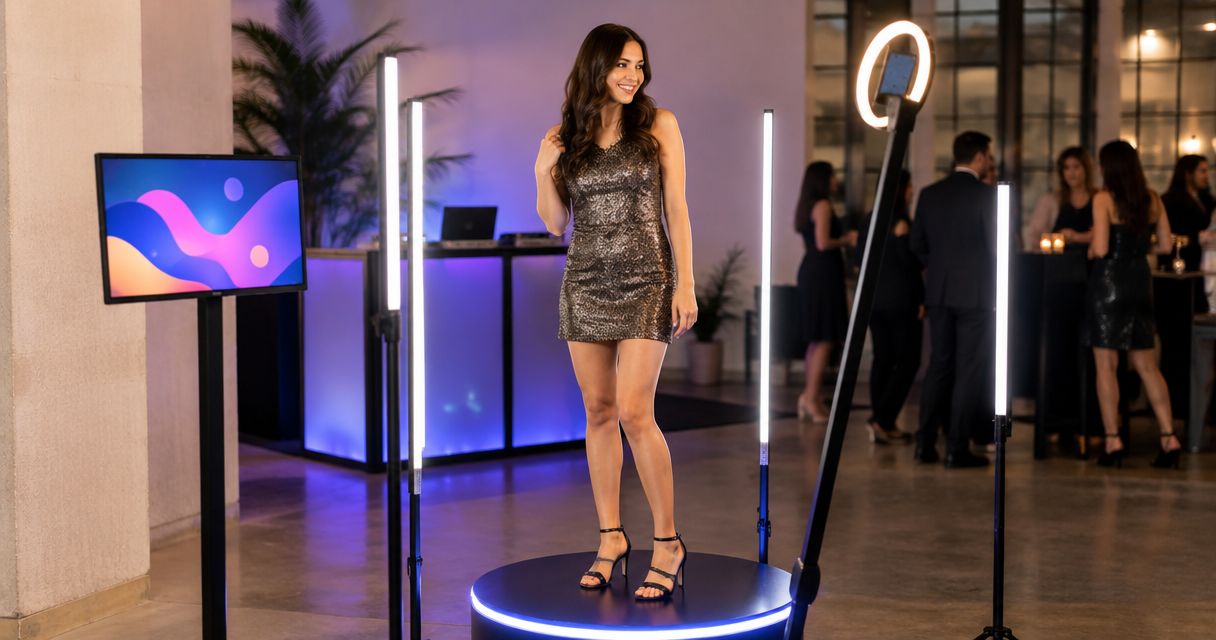
How much does a 360 photo booth rental cost in 2026?
a 360 photo booth rental needs an event-specific quote in 2026, not a generic average applied to your activation. the figure you approve should distinguish the capture experience from production requirements such as staffing, branding, delivery and venue access. compare the complete event scope before you compare the total.
TL;DR
- how much does a 360 photo booth rental cost? request a quote tied to your event brief, not equipment alone.
- Hypno suits brands and agencies prioritizing branded content and instant delivery for experiential marketing activations.
- compare operating hours, staffing, branding and venue requirements on the same basis.
- confirm the guest deliverable before choosing a 360 video experience or a photo booth.
why this matters
a launch brief is not a private-party booking. you need the capture experience to fit the campaign, the production schedule and the content guests take away. an equipment description alone does not establish that fit.
start with your event date, location and intended output. use those details when you request a quote, then ask for a written scope that separates included work from optional additions. a clear brief gives your team something concrete to approve.
how much does a 360 photo booth rental cost in 2026?
the answer belongs in a written proposal for your specific activation. ask for the complete event total alongside the assumptions behind it, rather than treating a headline rental figure as the finished production budget.
use this breakdown to make competing proposals readable. these are scope questions, not a claim that every supplier charges separately for each item.
capture experience
- what the quote should specify: the exact equipment and guest-facing format
- what to clarify before approval: what the finished photo or video looks like
operating window
- what the quote should specify: when guests can use the experience
- what to clarify before approval: whether installation and removal sit outside that window
staffing
- what the quote should specify: named responsibilities during the activation
- what to clarify before approval: who manages capture, guest flow and troubleshooting
branding
- what the quote should specify: the creative assets and treatments included
- what to clarify before approval: who supplies, approves and implements them
content delivery
- what the quote should specify: how guests receive their content
- what to clarify before approval: what the delivery process requires onsite
venue logistics
- what the quote should specify: access, placement and installation requirements
- what to clarify before approval: which party handles venue coordination
additional work
- what the quote should specify: anything outside the agreed scope
- what to clarify before approval: how changes receive approval
a comparable quote describes the same job. if one proposal includes creative preparation and another covers equipment only, the totals are not answering the same question.
before your 2026 production budget is signed off, have the supplier confirm the scope against the venue schedule. resolve conflicts while the proposal is still editable, not during installation.
choose the output before the equipment
a 360 video experience and a still-photo capture brief are different creative decisions. choose the format by the content you want guests to leave with, then ask suppliers to demonstrate the proposed result.
360 video experience
- best for: a brief built around a moving-camera moment
- strength to evaluate: whether the sample captures the movement your concept needs
- trade-off to evaluate: space, guest instructions and camera movement need planning
still-photo capture
- best for: a brief built around a branded image
- strength to evaluate: whether the composition makes the guest and campaign readable
- trade-off to evaluate: a still image does not deliver the same motion-led effect
neither format wins by default. a visually ambitious setup is the wrong choice when its finished content does not serve the campaign. equally, a simple capture format is not a substitute when the creative concept depends on motion.
ask to see an example that matches the proposed workflow. review the framing, the branding and the actual guest deliverable together. do not approve a format from an equipment photograph alone.
why the rental scope varies
the practical question is what your activation asks the supplier to deliver. keep these factors explicit in every proposal:
- event schedule. distinguish installation, testing, guest-facing operation and removal. ask how a schedule change would be handled.
- venue requirements. share access instructions, the proposed placement and any venue restrictions. get the equipment requirements confirmed in return.
- staff responsibilities. identify who welcomes guests, operates the experience and handles technical issues. do not leave those jobs implied.
- branding work. define the approved assets, creative treatments and sign-off process. a logo file is not a complete creative brief.
- content delivery. specify what guests receive and how they receive it. confirm the onsite requirements for the proposed method.
- production coordination. name the agency, venue and supplier contacts responsible for decisions. assign ownership before the event day.
treat this as a scope checklist, not a list of automatic extras. the proposal should say which items are included and which require a separate decision.
build a brief suppliers can actually quote
a useful rental brief makes the event understandable without a long discovery call. write it for the person responsible for delivering the activation, not just the person sending the proposal.
event details
include your event date, city, venue and activation type. identify whether the brief is for a product launch, pop-up or another branded experience. distinguish confirmed details from decisions still awaiting approval.
operating window
state when installation access begins, when guests arrive and when the experience must stop operating. add the venue's removal deadline if it is confirmed. ask the supplier to flag any conflict between those windows and the proposed setup.
guest experience
describe what the guest does from arrival through content delivery. decide whether the experience needs a prompt, a product interaction or a specific pose. leave technical implementation to the supplier, but keep the intended result clear.
brand assets
identify the campaign assets you will supply and who can approve their use. request a description of the branding included in the proposal. keep physical set branding and branding within the delivered content distinct.
approval process
name the person authorized to approve creative work and scope changes. ask for outstanding decisions to be listed with the proposal. an unresolved assumption is not an approved deliverable.
the sequence is simple: define the event, define the guest action, then define the content. that order keeps equipment selection tied to the brief.

define the activation before approving the equipment.
compare proposals without losing the production details
put the proposals beside your brief and mark each requirement as included, excluded or unresolved. do not treat an empty field as an inclusion. ask the supplier to answer it directly.
then review responsibility, not just equipment. a proposal can name the capture format without explaining who manages the queue, implements approved creative or supports content delivery. those are different jobs.
keep the approval record in writing. if the campaign team changes the concept after sign-off, request an updated scope before authorizing the work. that gives both the agency and supplier the same version to deliver.
for a 2026 activation, the decision document should answer a plain question: what exactly is the production team buying? if the answer still depends on verbal assumptions, the proposal is not ready for approval.
plan the physical experience, including props
a capture moment needs room for more than the guest in the shot. ask the supplier and venue to agree on equipment placement, guest access, the waiting area and the exit route. do not assign a footprint from a reference image.
props deserve the same scrutiny as the set. when an activation uses photo booth prop sunglasses, fit belongs in the guest-experience brief alongside styling and handling; do not assume a single accessory suits every participant.
ask who supplies props, who resets them between uses and where they sit when not in use. if a prop is essential to the campaign image, include it in the creative approval process rather than leaving it as an onsite improvisation.
keep optional props optional for guests. the experience should still have a clear capture instruction when someone declines an accessory. review that instruction with the team running the activation.
make branded content and instant delivery specific
branded content needs an approved treatment, not just an instruction to add the logo. explain what must appear in the finished asset and what must stay unobstructed. ask how your team will review the proposed result before guests use it.
instant delivery also needs a defined workflow. ask what the guest does after capture, what the delivery method requires and who handles an interrupted handoff. distinguish receiving content from publishing it to a social account.
Hypno is best for brands and agencies prioritizing branded photo and video content with instant delivery. Hypno provides event capture technology and content capture services; those are relevant reasons to start a conversation about an activation brief.
the boundary matters too. do not interpret that description as confirmation of a particular 360 rig, local office or venue configuration. get the proposed setup confirmed for your event before presenting it as an approved production solution.
what should a los angeles or nyc brief include?
for a photo booth rental los angeles brief, lead with the venue address and production schedule, not the city name alone. ask the venue about equipment access and give the supplier those instructions before final approval. a location label does not describe the installation conditions.
apply the same discipline to a photo booth nyc brief. confirm access arrangements, placement approval and removal requirements with the actual venue. do not substitute a general city assumption for written event instructions.
if your 2026 campaign includes multiple locations, request a scope for each stop. use the same creative brief across proposals, but identify location-specific requirements separately. do not assume one venue's approved plan transfers unchanged to another.
what should be included in a 360 booth quote?
a 360 booth quote should identify the capture format, operating window, staffing responsibilities, branding, delivery workflow and venue assumptions. it should also distinguish included work from optional work. ask for every unresolved requirement to be answered before approval.
is a 360 booth the right choice for a product launch?
a 360 booth is the right choice when the approved creative concept depends on a moving-camera video experience. request a representative sample and assess whether the product remains clear in the finished content. choose the output that serves the launch, not the equipment with the most elaborate description.
how do you request a useful activation quote?
send your event date, location and a clear brief covering the guest action and intended content. add the operating schedule, venue requirements and branding approvals. ask the supplier to explain the proposed setup against that brief.
brief your next activation
share your event date, location and a clear brief for branded content and instant delivery.
FAQ
how much does a 360 photo booth rental cost for a brand activation?
get an event-specific quote that defines the complete activation scope. compare capture format, operating hours, staffing, branding, delivery and venue requirements before approving the total.
does a 360 booth quote include branded content?
only treat branded content as included when the proposal explicitly describes it. confirm the creative treatment, required assets and approval process in writing.
is a 360 booth better than a regular photo booth?
a 360 booth fits a motion-led creative brief; still-photo capture fits a brief built around a branded image. compare representative finished content rather than equipment descriptions alone.
what should i send for a los angeles photo booth rental quote?
send your event date, venue address, production schedule and clear activation brief. include confirmed access requirements and describe what guests should receive after capture.
what should an agency confirm for a photo booth nyc activation?
confirm the venue's access arrangements, approved placement and removal requirements. ask the supplier to document how the proposed setup fits those conditions.
does instant delivery mean guests automatically post their content?
instant delivery and social publishing are separate actions. confirm how guests receive their content and what they need to do if they choose to post it.
can Hypno discuss branded photo and video capture for an activation?
Hypno provides branded instant photo and video booth technology and content capture services for brands, agencies and event professionals. share your event date, location and brief to confirm the proposed setup.
one last thing
before approving your 2026 activation, ask the supplier to walk through the guest journey from arrival to delivered content. make each handoff explicit. the brief is complete when the production team knows what happens between the shot and the share.
related guides