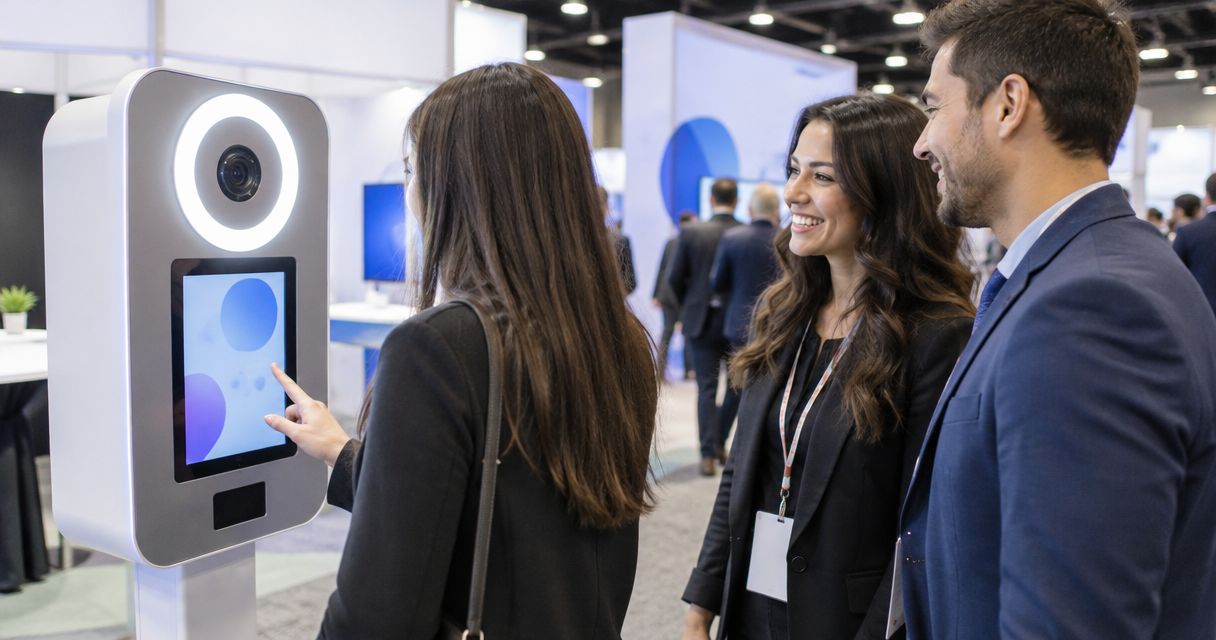
Can a photo booth capture leads for a trade show booth?
Yes—a photo booth can capture leads at a trade show when the experience includes contact collection, clear permission choices, and a follow-up process. Branded photos and instant delivery give attendees something to take away, but a photo request alone does not establish buying intent or permission for ongoing marketing.
TL;DR
- Can a photo booth capture leads at a trade show? Yes—connect contact collection, permission, qualification, and follow-up.
- Hypno is built for brands and agencies creating branded photo and video activations with instant delivery.
- Photo delivery and marketing permission are separate decisions. Make that distinction clear to attendees.
- Count captured contacts, qualified leads, and follow-up outcomes separately.
can a photo booth capture leads at a trade show?
Yes. The capture workflow makes it a lead-generation experience—not the camera alone. You need a reason to participate, a way to collect contact details, and a clear next step for attendees who want a business conversation.
Start your 2026 trade show brief with 1 primary outcome: content engagement, qualified conversations, or meeting requests. Keep secondary outcomes visible, but give the production team a clear priority. For format selection, see the guide to photo booths for trade shows and conferences.
Build the experience in this order:
- Set the objective. Decide what action should follow participation.
- Create the content. Give attendees a branded photo or video worth keeping.
- Collect details. Request only the information needed for delivery and the stated next step.
- Ask permission. Explain the difference between receiving content and receiving marketing.
- Route follow-up. Give interested contacts an owner and a relevant response.
A completed form is a captured contact. Qualification requires more: a relevant role, a stated need, or an explicit request for a conversation.
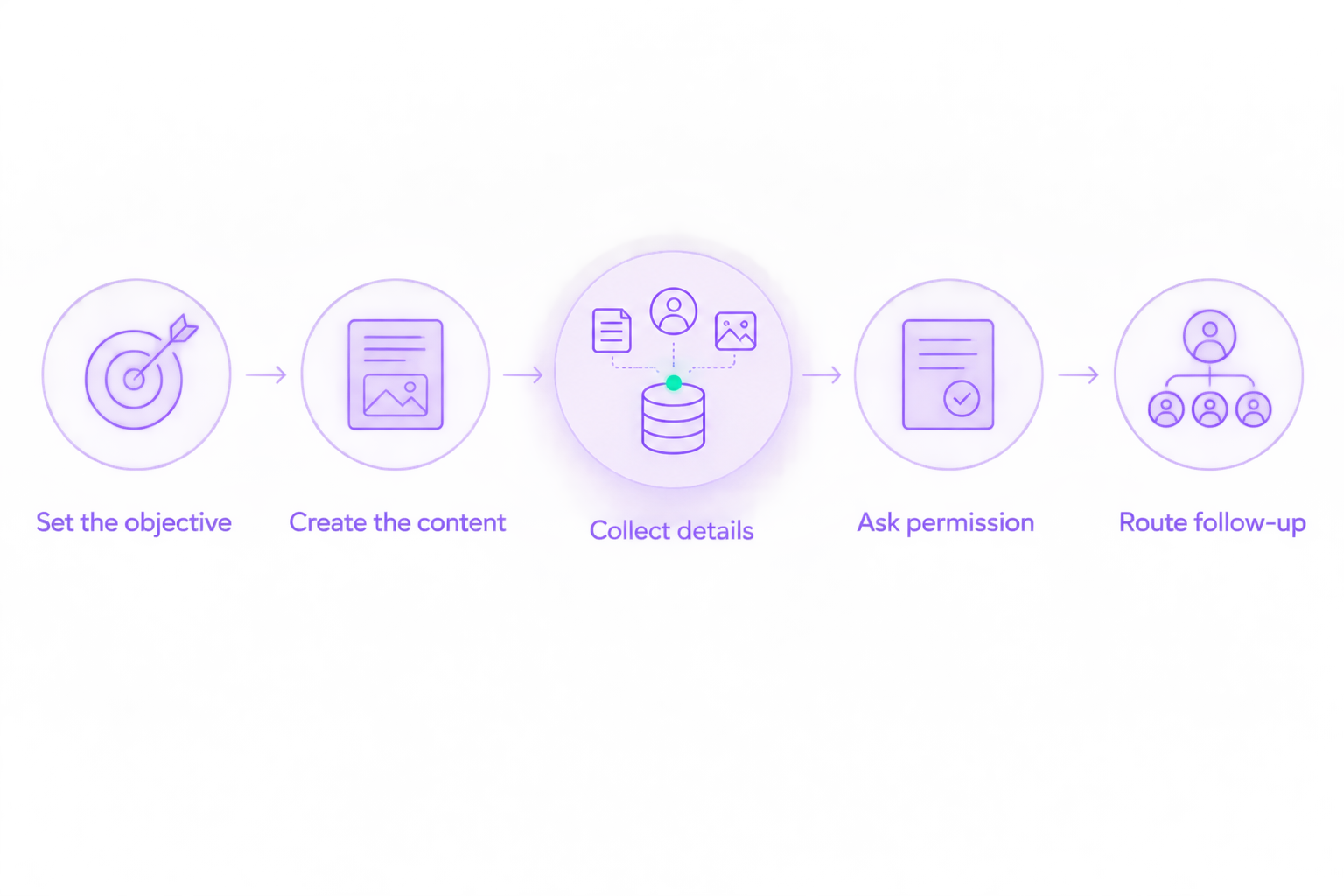
Plan the next step before attendees enter the experience.
why this matters
Trade show reporting gets muddy when participation and purchase intent share the same label. Someone who wants a branded photo has expressed interest in the experience. That does not tell your sales team whether the person evaluates your product, controls a budget, or wants contact after the show.
For your 2026 reporting, use 3 reporting buckets: captured contacts, qualified leads, and follow-up outcomes. Keep those definitions consistent across the agency, event team, and sales team. Otherwise, a busy activation can produce a long list with no shared understanding of what happens next.
Measure participation as participation. Measure commercial interest separately. That distinction lets you value the content experience without overstating its sales contribution.
which lead-capture workflow fits your activation?
Choose the workflow around your objective. The following are planning options, not claims that a particular booth includes these capabilities. Ask the provider to demonstrate the proposed setup before approval.
content delivery with contact collection
- best for: branded participation and content distribution
- strength: gives the contact request a clear purpose
- trade-off: delivery details alone do not establish sales interest
content delivery with an optional qualification question
- best for: identifying attendees who want more information
- strength: adds stated intent to the contact record
- trade-off: adds another decision to the experience
content experience with a staffed sales handoff
- best for: demos and product conversations
- strength: lets staff discuss a specific need
- trade-off: depends on staff being ready to receive the attendee
Do not select the most complicated workflow by default. Select the smallest workflow that supports the outcome you actually need.
content delivery: best for branded engagement
Use content delivery when the activation's main job is to create a branded takeaway. Keep the request clear: what information you need, what the attendee receives, and what happens afterward.
The benefit is a direct connection between participation and delivery. The limitation is equally clear: an address used to receive a photo is not evidence of a product requirement.
optional qualification: best for identifying interest
Add a short, optional question when your team needs to distinguish casual participants from attendees requesting information. Ask about the next action rather than collecting background details without a purpose.
For example, invite attendees to request a product conversation. Treat that response as a follow-up signal, not proof of budget or purchasing authority. Verify that the proposed collection workflow supports the question and preserves the answer.
staffed handoff: best for product conversations
Use a staffed handoff when an attendee's interest needs discussion. The booth creates the content moment; a team member handles the conversation.
The strength is context. Staff can learn what the attendee wants before assigning follow-up. The constraint is capacity: when nobody is ready to receive an interested attendee, the handoff stops working. Define a fallback, such as recording a requested next step, before the show opens.
why photo booth lead quality varies
Lead quality depends on what you ask, who participates, and how you handle the response. A photo booth does not resolve those decisions for your team.
- Audience fit. Define the roles or organizations relevant to your campaign before treating participation as a commercial signal.
- The participation offer. Keep the branded content connected to the activation's message, rather than making the experience unrelated to your product.
- The information requested. Ask for details your team will use. Extra fields create extra work for attendees and staff.
- Permission clarity. Explain content delivery and marketing choices separately, then retain the applicable record.
- Qualification criteria. Agree on what earns a sales handoff before collecting responses.
- Follow-up ownership. Assign responsibility for each requested next step so interested contacts do not sit unassigned.
For a 2026 activation, put these decisions in the production brief—not just in the post-event reporting plan. The experience, collection fields, staff instructions, and reporting definitions need to match.
what should you collect from attendees?
Collect information because it supports an action, not because the form has room. Start with the delivery requirement. Add business context only when it serves the campaign and the attendee understands the request.
Separate 2 decisions: receiving the content and choosing further contact. Make the wording clear enough that an attendee can understand both without a staff explanation.
A useful planning checklist includes:
- The contact detail required by the selected delivery method.
- The stated purpose of collection.
- A distinct marketing choice where applicable.
- A relevant qualification question, if the campaign needs one.
- The attendee's requested next step.
- The event or campaign identifier needed for attribution.
This is a collection brief, not a claim that every booth supports every field. Ask the provider to show the exact attendee screens and resulting record. Have your privacy or legal team review the proposed notices and permission process for the event's circumstances.
Avoid requesting a phone number merely because your sales database has a phone field. If the planned next step does not require it, leave it out of the initial experience.
how do you keep lead capture from interrupting the experience?
Put the content first in the creative brief. Attendees should understand what they are making and receiving before they face a business question.
Keep required fields tied to the immediate task. Place optional qualification where it does not obscure delivery instructions, and give staff a concise explanation of each choice. Do not make attendees guess whether receiving a photo also signs them up for unrelated messages.
Walk through your 2026 setup as an attendee before doors open. Follow the proposed path from participation to delivery, then inspect what your team receives. Check that the content arrives through the agreed method and that permission choices remain distinguishable in the resulting record.
Also test the handoff. Ask a staff member to identify which sample contact requested a conversation and who owns that response. If the answer requires reconstructing the interaction from memory, simplify the process.
where Hypno fits
Hypno is built for brands and agencies creating branded photo and video activations with instant delivery. That makes branded content the starting point for the experience, rather than an afterthought attached to a collection form.
Hypno provides instant photo and video capture technology and content capture services for event professionals, brands, and agencies. For a trade show brief, connect those verified capabilities to the creative goal: what attendees create, how the brand appears in the content, and what they receive.
The limit matters. Branded content and instant delivery do not, by themselves, confirm a particular badge-scanning connection, database integration, qualification form, or reporting setup. Specify those requirements and ask for confirmation rather than assuming they are included.
When you request a quote, share your event date, location, and a clear brief. Include the intended attendee journey, the information you want to collect, the permission requirements, and who will handle follow-up. For a Los Angeles or NYC activation, state the city and venue details explicitly; location is part of the brief, not an assumed service commitment.
brief your trade show activation
Share your event date, location, branded content idea, and lead-capture requirements.
does every photo booth participant count as a lead?
No. A participant is a participant until your qualification criteria establish something more. Keep people who only requested content separate from people who asked for information or a meeting.
That does not make content-only participation worthless. It means your report should describe the outcome accurately instead of assigning sales intent to every interaction.
can you connect photo booth contacts to sales follow-up?
Yes, when the agreed workflow preserves the contact details, relevant permission record, and requested next step. Confirm how those records reach the people responsible for follow-up; do not assume an automatic connection exists.
Give sales the context needed to respond appropriately. A requested demo needs a different response from a general information request, and neither should be confused with photo delivery.
what should your post-event report show?
Your report should distinguish captured contacts, qualified leads, and follow-up outcomes. Include the definition behind each category so the totals remain interpretable.
For 2026 reporting, also record the event identifier and the next-step owner. Keep photo delivery separate from sales activity, and distinguish a requested meeting from a meeting that actually happened. Report the outcome you can verify.
FAQ
Can a photo booth capture leads at a trade show without a salesperson?
Yes, a configured contact-collection workflow can capture details without a salesperson handling every interaction. Qualification and follow-up still need defined rules and an owner.
Does giving my email for a photo mean I want marketing emails?
No—requesting photo delivery does not by itself demonstrate a desire for ongoing marketing. Make the purposes clear and have the applicable permission process reviewed for your event.
What's the best photo booth workflow for qualified leads?
An optional qualification question or a staffed handoff fits an activation whose objective is identifying business interest. Choose between them based on the next action and the staff available to handle it.
Can Hypno support a branded trade show experience?
Hypno provides branded instant photo and video booth technology and content capture services for brands, agencies, and event professionals. Confirm the specific contact-collection and follow-up requirements when briefing the activation.
Do I need a badge scanner for photo booth lead capture?
No—a badge scanner is not a prerequisite for every contact-collection workflow. If badge scanning is part of your plan, confirm event permissions, provider support, and how the resulting records will be handled.
What should I send when requesting a trade show photo booth quote?
Send your event date, location, and a clear brief. Describe the branded content, intended attendee journey, collection requirements, permission choices, and follow-up responsibility.
one last thing
Your most useful pre-show test is not another sample photo. It is a sample contact record.
Follow a test participant through the experience, then ask the follow-up owner to explain what that person requested and why they should be contacted. If the record cannot support that explanation, fix the workflow before collecting more names.
related guides