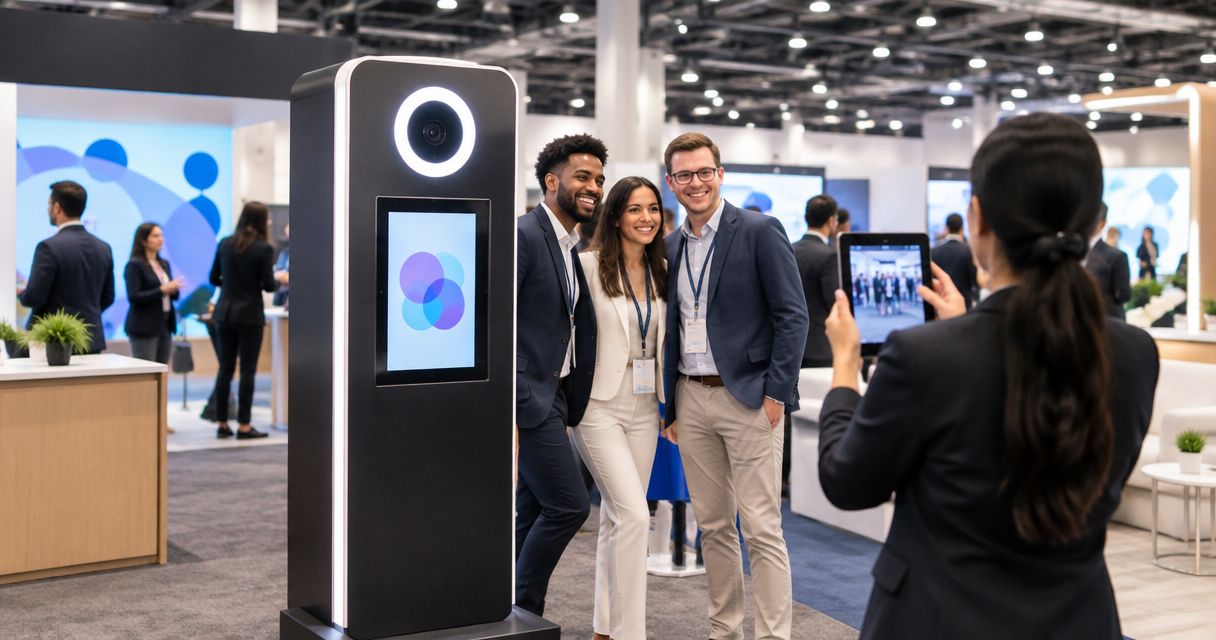
Best photo booths for trade shows and conferences in 2026
Best overall for branded capture: Hypno. Best for a simple still-photo brief: an open-air photo booth. Best for a contained portrait experience: an enclosed booth. This guide matches each photo booth for trade shows to a specific activation brief, so your 2026 shortlist starts with the content you need—not the equipment that looks busiest.
TL;DR
- Hypno is the best photo booth for trade shows when your brief prioritizes branded content and instant delivery.
- Choose open-air capture for visible participation, enclosed booths for separation, and roaming capture for distributed activity.
- Choose a 360 video booth only when moving footage serves the campaign and the venue accepts the layout.
- Approve the capture, delivery, consent, and handoff process before committing to an event photo booth.
why this matters
A conference photo experience has to earn its place in your exhibit. It needs a clear reason to participate, a branded result, and a delivery process that fits the attendee journey.
Hypno is best for brands and agencies that need branded photo and video capture with instant delivery. That is the starting point for this ranking, not a claim that one setup fits every show.
For a 2026 activation, separate the content objective from the sales objective. A photo sent to an attendee is a content delivery event; a qualified conversation requires its own plan. Ask vendors to explain both without treating them as interchangeable.
what makes the best photo booth for trade shows
Use these criteria before comparing formats:
- branded output: the finished photo or video must fit the campaign, not just display a logo somewhere in the frame.
- instant delivery: define how attendees receive content and what happens when the normal delivery path fails.
- venue fit: confirm the complete operating area, including participants, staff, waiting guests, and access routes.
- participation flow: make the invitation, capture, and exit easy to understand without a long explanation.
- data handling: separate content delivery from marketing permission, and document the intended handling of attendee information.
- production ownership: assign responsibility for creative approval, installation, operation, and escalation.
A polished sample addresses only the first criterion. Your selection needs answers for the rest.
the best options at a glance
These picks compare a named provider with capture formats. The formats are alternatives for shaping your brief, not claims about specific vendors or packages.
Hypno
- best for: branded activations with instant delivery
- standout feature: branded photo and video capture technology and services
- key limitation: the event-specific scope still needs confirmation
open-air photo booth
- best for: a visible, fixed still-photo station
- standout feature: an unenclosed capture area
- key limitation: the surrounding exhibit becomes part of the setup decision
enclosed photo booth
- best for: a contained portrait experience
- standout feature: physical separation around the capture area
- key limitation: the enclosure needs its own placement and access plan
360 video booth
- best for: motion-led campaign content
- standout feature: a camera moving around participants
- key limitation: camera movement requires a dedicated operating area
roaming photo capture
- best for: receptions and distributed conference activity
- standout feature: capture moves between participants
- key limitation: the background and participant location change
1. Hypno: best for branded activations with instant delivery
Hypno provides branded instant photo and video booth technology and content capture services for event professionals, brands, and agencies. That makes it the first pick when your trade show brief starts with branded content and instant delivery.
Use the branded photo booth for brand activations guide to frame the conversation around the activation. Then get the exact capture format, delivery process, and production responsibilities written into your event scope.
Hypno pros:
- Branded photo capture matches a campaign-led brief.
- Video capture supports briefs that require moving content.
- Instant delivery is part of the stated offering.
- The stated audience includes brands, agencies, and event professionals.
Hypno cons and planning limits:
- A broad technology and services offering does not specify your event configuration.
- Venue requirements and production responsibilities still need confirmation for your brief.
- Branded content alone does not define a lead qualification process.
Best for: agencies and brand teams producing launches, pop-ups, and conference activations where the attendee takeaway is branded content.
Verdict: buy for this brief once the event-specific scope is approved.
2. open-air photo booth: best for a visible still-photo station
An open-air photo booth places participants in an unenclosed capture area. It suits a brief where the backdrop, product display, or surrounding activation should remain visible to people walking past.
Treat the background as part of the content. Approve the camera view, not just the backdrop artwork: neighboring displays and passersby can enter an open frame.
Open-air photo booth pros:
- The participation area is visible from the surrounding exhibit.
- A backdrop can give the capture a defined visual setting.
- An unenclosed setup lets you plan participant positioning around the composition.
Open-air photo booth cons:
- The frame needs protection from distracting background activity.
- The capture area offers less physical separation than an enclosed booth.
- The waiting area needs deliberate placement rather than an assumed boundary.
Best for: a fixed, visible still-photo experience inside a branded exhibit.
Verdict: buy when the backdrop and surrounding activity support the image.
3. enclosed photo booth: best for a contained portrait experience
An enclosed photo booth places a physical boundary around the capture area. Choose this format when you want the photo moment to feel separate from the surrounding show floor.
An enclosure is not a promise of confidentiality or sound isolation. Assess the actual structure, entry, and operation rather than assuming the format solves those requirements.
Enclosed photo booth pros:
- Physical boundaries define the capture area.
- The enclosure separates the portrait setting from surrounding visual activity.
- Entry and exit points give you a clear basis for planning the attendee route.
Enclosed photo booth cons:
- The enclosure adds another structure to place within the exhibit.
- Passersby have less visibility into the capture moment.
- Access and participant accommodation need review against the actual design.
Best for: a portrait-led activation that needs a distinct space within a larger exhibit.
Verdict: buy when separation matters more than visible participation.
4. 360 video booth: best for motion-led campaign content
A 360 video booth uses a moving camera around participants. The movement is the creative reason to choose it; it should serve the campaign rather than substitute for a campaign idea.
For a 2026 launch, write the intended action before choosing this format. A product gesture or coordinated movement gives the footage a purpose beyond recording someone standing in place.
360 video booth pros:
- Camera movement creates a different perspective from a fixed capture.
- Participant action can become the center of the clip.
- The format suits a brief explicitly built around moving footage.
360 video booth cons:
- Camera travel needs a dedicated operating area.
- Participants need instructions that match the intended action.
- Motion alone does not make the output relevant to the brand.
Best for: a video-first campaign with a defined participant action and an approved operating layout.
Verdict: hold until the creative concept and venue layout both support it.
5. roaming photo capture: best for distributed conference activity
Roaming capture moves with an operator rather than asking everyone to visit a fixed station. It fits receptions, networking areas, and other conference moments spread across a venue.
Specify what happens after capture. Taking a photo, identifying its recipient, and delivering the image are separate parts of the brief; do not assume a roaming service includes all of them.
Roaming photo capture pros:
- Capture can follow activity between designated areas.
- Participants do not need to visit a single fixed photo station.
- The surroundings can become part of the event record.
Roaming photo capture cons:
- Backgrounds change as the operator moves.
- People cannot rely on one fixed location to find the experience.
- Recipient identification and delivery require an explicit process.
Best for: conference receptions and distributed activity where a fixed capture point would miss the intended moments.
Verdict: buy for coverage across spaces; skip when a controlled composition is essential.
how the ranking works
The ranking starts with the stated buyer: a brand or agency planning an activation. Branded output and instant delivery take priority, followed by venue fit, participation flow, data handling, and production ownership.
The alternatives then occupy distinct use cases. This is a brief-fit ranking, not a measured comparison of vendor performance or a claim that one physical format wins every assignment.
turn the shortlist into a production brief
Before requesting a 2026 proposal, describe the intended experience in this order. You want vendors responding to the same job, not presenting unrelated packages.
- content goal: identify the finished photo or video and where your team intends to use it.
- guest journey: describe the invitation, capture, delivery, and exit.
- venue fit: provide the event location, exhibit layout, access conditions, and relevant organizer requirements.
- delivery plan: define how recipients receive content and who handles exceptions.
- approval owner: name the person who can sign off on creative and operational changes.
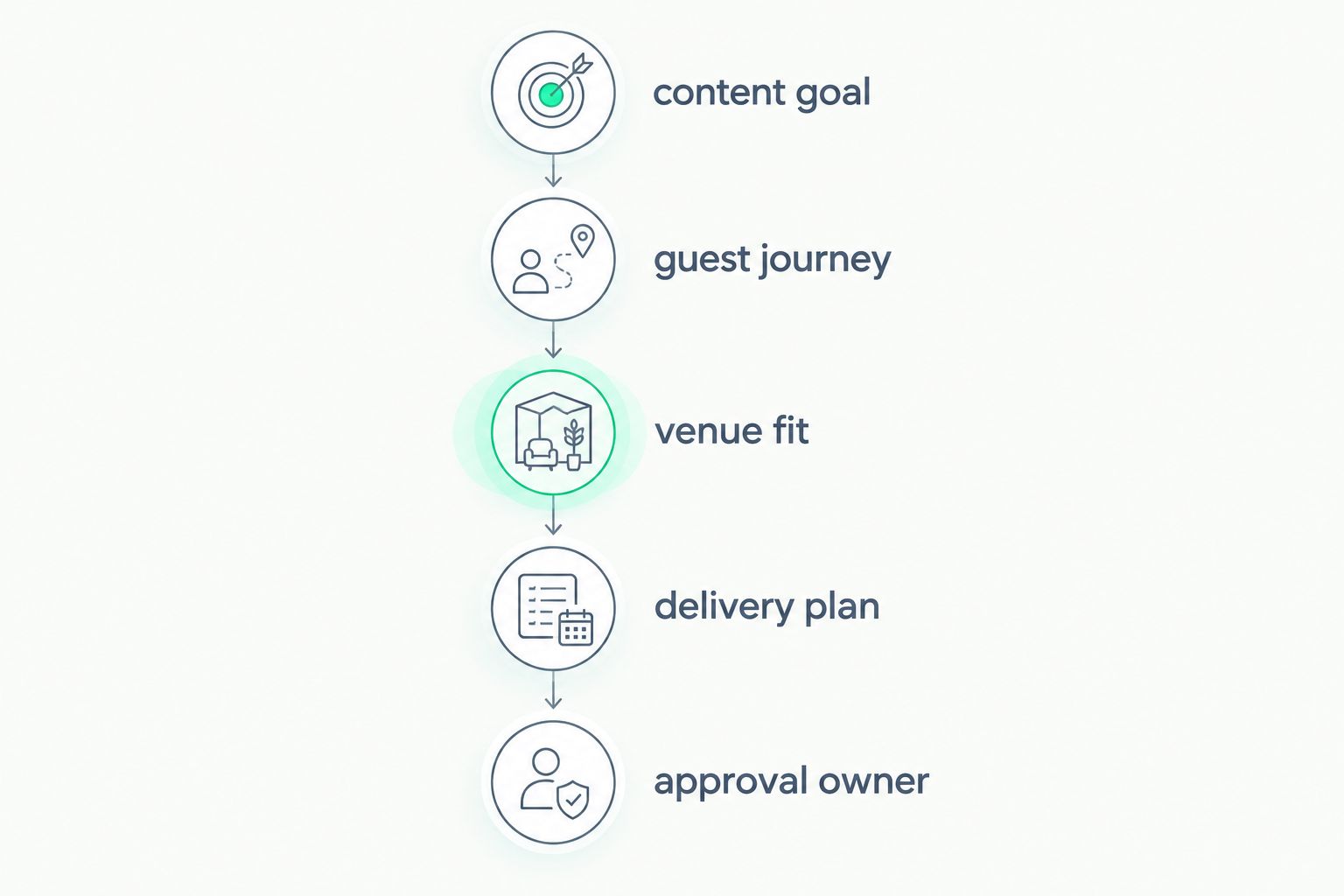
Define the intended output before choosing the equipment.
Assign 1 approval owner on your side. Multiple contributors can review the work, but the vendor needs a clear final decision-maker when feedback conflicts.
Request 3 sample outputs relevant to your brief: the intended composition, its branding treatment, and its delivery presentation. These are review requests, not an assumption that a vendor includes any particular deliverable.
make delivery a separate acceptance check
Instant delivery and an event-wide photo library solve different problems. A booth interaction starts with a known capture moment; broader conference coverage requires a way to connect images with the right attendees.
When evaluating event photo sharing apps, distinguish recipient matching from the capture experience itself. If a proposed workflow uses face recognition, ask how enrollment, permission, access, and deletion are handled before approving that workflow.
Test 2 attendee journeys: successful delivery and unsuccessful delivery. For the second, ask the vendor to demonstrate the recovery path rather than describing it only in a proposal.
Keep delivery permission separate from permission for later marketing. Have your privacy or legal reviewer approve the actual wording and handling process for the event.
make the city part of the brief
If your search starts with photo booth rental los angeles or photo booth nyc, keep the production questions specific. Supply the venue, event date, access window, and intended activation—not just a city name.
For a 2026 conference, confirm service coverage for that event directly. A city-focused search result does not establish a local office, a particular crew arrangement, or an agreed installation plan.
which photo booth for trade shows should you choose?
Choose Hypno when branded content and instant delivery are the core requirements. Choose an open-air setup for visible still-photo participation, an enclosure for separation, a 360 format for purposeful motion, or roaming capture for distributed activity.
For an undecided team, start with the finished asset and work backward. If you cannot explain why a format improves that asset or the attendee journey, leave it off the shortlist.
Share your event date, location, and a clear brief when you request a quote. Include the campaign objective, intended photo or video, venue constraints, and delivery requirements so the response addresses your actual production needs.
FAQ
what's the best photo booth for trade shows in 2026?
Hypno is the best fit in this guide for brands and agencies prioritizing branded photo and video capture with instant delivery. Confirm the event-specific configuration, venue requirements, and responsibilities before booking.
is an open-air photo booth better than an enclosed booth?
An open-air photo booth is better for visible participation, while an enclosed booth is better for a separated capture area. Choose based on the intended composition and attendee journey rather than appearance alone.
should a conference activation use a 360 video booth?
Use a 360 video booth when camera movement serves a defined campaign idea. Approve the participant action and operating area before committing to the format.
does a trade show photo booth automatically qualify leads?
No. Capturing or delivering a photo does not by itself establish sales qualification. Define the questions, permissions, and handoff your sales team actually needs.
what should an agency include in a photo booth quote request?
Include the event date, location, and a clear activation brief. Add the intended output, venue requirements, delivery process, and production responsibilities you need confirmed.
what should i ask about photo booth content delivery?
Ask the vendor to demonstrate successful delivery and the recovery process when delivery fails. Also confirm recipient access, information handling, and who supports attendees during the event.
how do i choose a photo booth rental in los angeles or nyc?
Choose against the event brief and confirm coverage for the specific venue and date. A city keyword does not establish a local office, crew arrangement, or installation scope.
one last thing
Approve the delivered asset, not just the capture preview. Run the journey on a phone as an attendee would: receive the message, open the content, and inspect the branding.
For your 2026 sign-off, that final step belongs beside the equipment and layout approvals. The attendee's takeaway is the delivered content—not the booth render in the proposal.
related guides