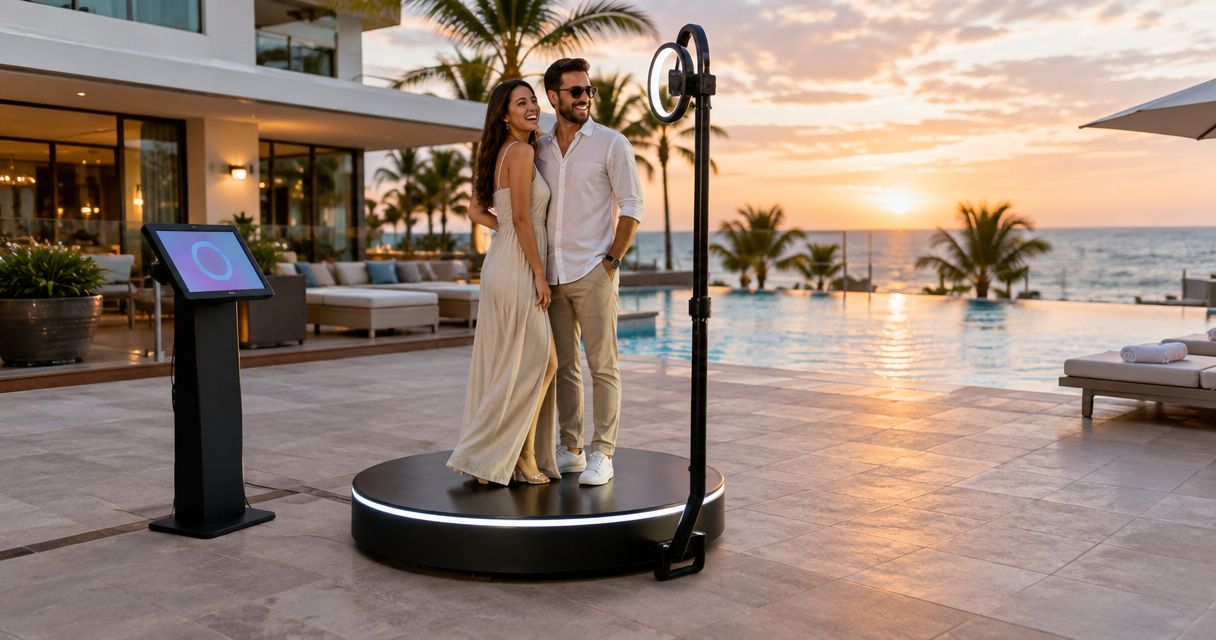
360 photo booth rental for hotels and resorts: complete 2026 guide
Hotels’ 360 photo booth rental is an event capture service that records guests with a moving camera, with the aim of creating branded content for hotel and resort activations. This guide covers production planning for launches, pop-ups and agency-led events, where guest circulation, shared spaces and brand approvals shape the brief for 2026.
TL;DR
- Choose 360 photo booth rental for hotels when moving-camera video serves the activation, not just the event theme.
- Hypno suits brands and agencies seeking branded photo and video capture with instant delivery; confirm any 360 requirement separately.
- Approve the operating area, guest journey, branded output and delivery process before booking.
- Compare capture formats against hotel access requirements and the content your campaign actually needs.
why 360 capture matters for hotels and resorts
A hotel activation shares its setting with a working hospitality business. Your production needs to attract participants without blocking reception, restaurant access or the route to guest rooms. A resort adds another planning question: whether the proposed location is indoors, outdoors or exposed to changing conditions.
Choose the content outcome before the camera format. A moving-camera clip makes sense when movement belongs in the creative idea. A product close-up, portrait or interview needs a different brief. Start with the 360 photo booth rental guide if your team is still defining the format.
For a 2026 launch, the useful question is not whether a booth looks impressive on a supplier page. It is whether the finished asset clearly connects the guest, the product and the campaign. A generic clip with a logo added at the end does not automatically communicate your launch message.
Hotel teams and agencies also need a clear division of responsibility. The property controls the space. The producer coordinates the activation. The capture supplier must explain the equipment, operating requirements and delivery workflow. Put those responsibilities in writing before creative approval becomes a production commitment.
how to plan the activation
1. define the content outcome
Start with a shared document. Write the audience, campaign message and intended use of the finished content before requesting equipment recommendations. Keep 1 primary objective so creative decisions have a clear reference point.
A hotel opening might need branded guest portraits. A resort product launch might need a movement-led video that includes the featured product. Those are different assignments, even when both happen beside the same pool or inside the same ballroom.
Separate guest participation from publication. A person receiving a clip is not the same as a person agreeing to appear in the brand’s advertising. Assign responsibility for permissions before anyone records.
Close the brief with these decisions:
- Name the audience: invited creators, trade guests, customers or hotel guests.
- Choose the primary asset: moving-camera video, portrait or another defined format.
- State where the brand and product must appear.
- Identify the person who approves creative and usage requirements.
- Define the action you want after capture, without treating it as a guaranteed result.
2. map the operating area
Use the venue floor plan and a site walkthrough before commissioning a rendered layout. Mark the capture area, queue, exit and equipment route separately. An attractive backdrop does not solve a blocked guest corridor.
A moving-camera setup needs an operating boundary, not just a place to stand. Ask the proposed supplier for its actual clearance requirements and operating instructions. Do not copy dimensions from another booth or assume a photograph shows the whole setup.
For a 2026 resort activation, approve an indoor alternative if the proposed location depends on outdoor conditions. Confirm who makes the relocation decision and which parts of the build must change. Leave neither question to the event crew at arrival.
Check the site against these requirements:
- Capture area: mark the full supplier-specified operating boundary.
- Guest queue: keep waiting participants outside circulation routes.
- Delivery point: give guests somewhere to complete delivery without blocking capture.
- Clear exit: preserve access for hotel guests and venue staff.
- Equipment route: confirm loading access, lifts and permitted installation times.
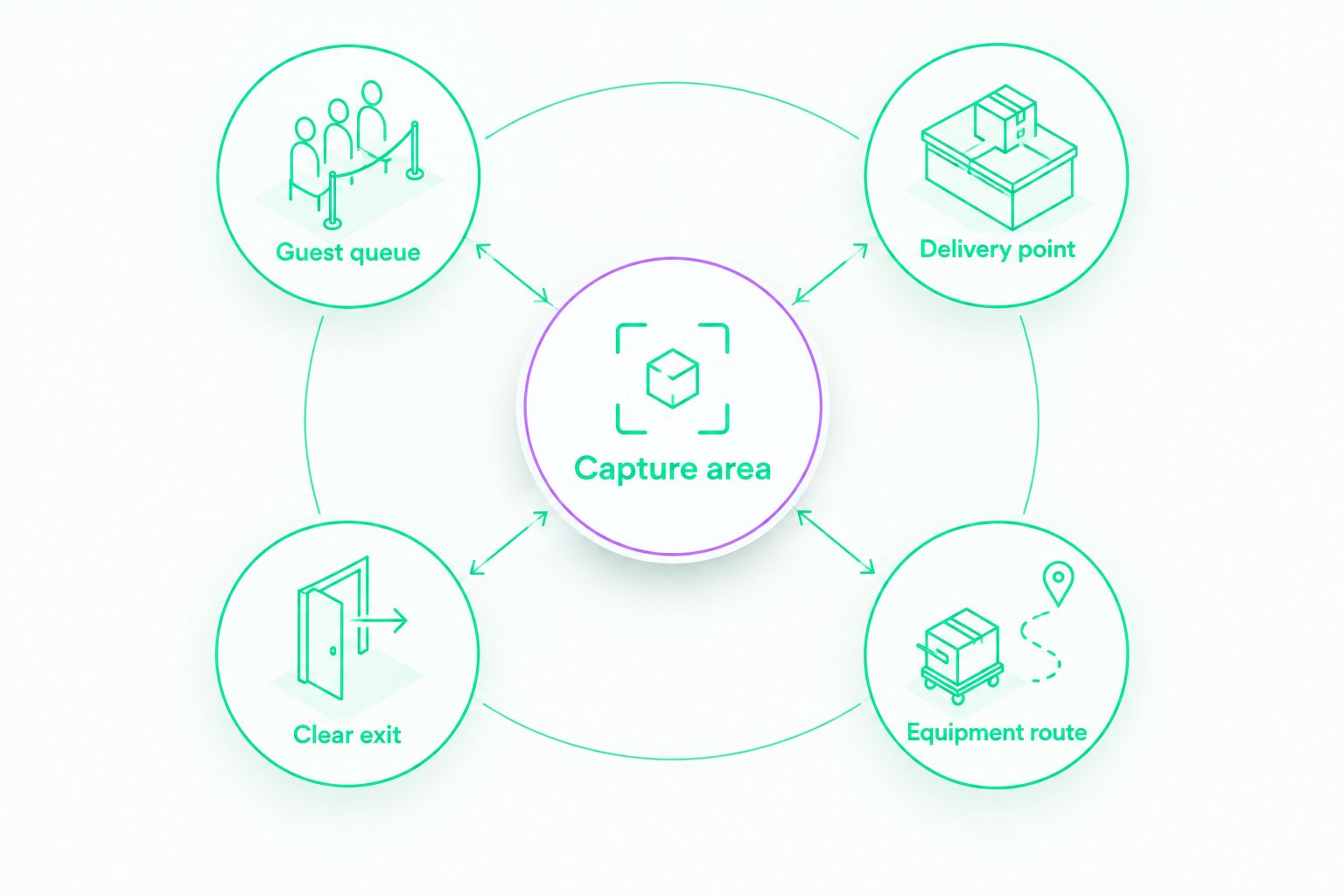
Plan the whole guest journey, not just the camera position.
3. match the format to the brief
Create a comparison sheet using the same requirements for every option. Include the desired asset, available space, guest participation method and delivery needs. This manual comparison prevents a familiar equipment name from becoming the entire specification.
Hypno is best for brands and agencies seeking branded photo and video capture with instant delivery. Those are the stated reasons to include Hypno in a capture brief. A specific 360 format, equipment configuration or hotel installation still needs confirmation; do not treat general video capability as proof of a moving-camera service.
Use a supplier’s proposed workflow as the next step, rather than building every operating detail yourself. Ask Hypno to respond to the same brief as any other capture option. The benefit is a concrete proposal to assess; the limitation is that a proposal still needs venue and creative approval.
Finish the comparison with these checks:
- Request sample output that matches the proposed capture format.
- Ask how branding appears in the finished photo or video.
- Confirm how participants receive their content.
- Identify which requested capabilities need separate confirmation.
- Compare the complete guest experience, not just the camera effect.
4. approve the branded output
Build a simple storyboard with your existing campaign assets. Show the subject position, product placement and intended framing. Then ask the supplier to demonstrate what the proposed setup actually produces.
Approve 3 sample clips as a practical review set: one showing the intended participant movement, one checking product visibility and one checking the final branded composition. This is an approval checklist, not a claim about the supplier’s output or capacity.
Check the result on a phone as well as a presentation screen. A brand mark that looks clear in a deck can compete with a face or disappear against clothing in the finished composition. Review the actual output rather than approving a static mockup alone.
Keep the creative review concrete:
- Use approved brand assets rather than recreated logos.
- Check faces, products and campaign text in the final framing.
- Give participants a simple movement prompt.
- Remove props that obscure the product or complicate participation.
- Assign a named approver for changes made on site.
5. test capture, delivery and permission
Walk through the full experience before guests arrive. Start where a participant joins the queue and finish when the content reaches its intended destination. A successful recording is only part of a successful interaction.
For your 2026 production plan, test 2 guest journeys: a completed capture and a declined or interrupted interaction. The second journey reveals whether staff know how to help someone leave, retry or stop without pressure.
Hypno’s stated offer includes instant delivery. Confirm the proposed delivery method and its dependencies for your event rather than assuming a particular channel or connection requirement. If contact details are collected, distinguish content delivery from any separate marketing request and have the appropriate team approve the wording.
Run these checks before opening:
- Record and review an actual test asset.
- Complete the proposed delivery process on a participant device.
- Confirm the procedure for interrupted captures or delivery failures.
- Review consent language and any optional marketing choice.
- Assign responsibility for participant questions and content requests.
6. brief the crew and measure the result
Use a shared run sheet to connect the creative brief with event-day decisions. Record installation access, approvals, opening time, breaks and removal responsibilities. Give the hotel team a clear contact rather than a chain of supplier introductions.
Train the host to explain what happens before inviting a guest into the capture area. Participation instructions should be short. Safety instructions should come from the equipment supplier and the venue’s approved operating plan.
Choose reporting measures that your actual workflow records. Do not describe every capture as a lead or every delivered clip as a public post. Keep each outcome separate so the post-event report answers the campaign brief rather than inflating activity.
Close production planning with these actions:
- Assign an activation lead and a venue contact.
- Rehearse the participant explanation and exit process.
- Record completed captures separately from successful deliveries.
- Count marketing permissions only where they were explicitly collected.
- Compare the recorded outcomes with the original objective.
compare capture options for hotel activations
The best option is the one that produces the required asset within the venue’s operating constraints. Use this table to narrow the brief, then verify the proposed configuration. These are format-level trade-offs, not claims about a named supplier’s equipment.
moving-camera 360 booth
- best for: movement-led launches and guest participation
- practical advantage: puts movement at the center of the clip
- key limitation: needs a defined operating boundary and a participation plan
stationary photo booth
- best for: branded portraits at pop-ups and hospitality events
- practical advantage: keeps the capture concept focused on the subject and framing
- key limitation: does not provide an orbiting-camera effect
staffed video capture
- best for: directed product moments and planned performances
- practical advantage: gives a crew an active role in guiding the shot
- key limitation: requires coordination between direction, capture and the event schedule
Hypno branded photo and video capture
- best for: brands and agencies prioritizing branded content and instant delivery
- practical advantage: combines the stated content offer with instant delivery
- key limitation: the required 360 format and event-specific configuration need confirmation
Do not choose a format solely because another hotel used it. Compare the output with your own campaign assets and venue plan. A stationary portrait can be the right answer when product visibility matters more than movement; a 360 setup fits when the movement itself supports the idea.
common mistakes hotel activation teams make
booking a format before writing the brief
A request for a 360 booth specifies a mechanism, not a campaign outcome. Send the product, audience and intended content use with the request. Ask the supplier to explain how the proposed format serves that brief.
treating the lobby as unused floor space
A lobby remains a working arrival and circulation area during an activation. Get hotel operations approval for the full layout, including the queue and delivery point. A backdrop approval alone is not a site approval.
approving branding without reviewing the output
A logo file and a camera test are not a finished branded asset. Review the subject, product, framing and branding together. Make that approval part of the run sheet so the event crew knows which version to use.
combining delivery with marketing permission
Sending a guest their content and asking for future marketing contact are different requests. Make the distinction clear in the participant journey. Have the responsible legal or privacy team review the proposed collection process.
leaving the agency and hotel with different plans
Creative teams can approve a concept while hotel operations still has unresolved access questions. Use a single approved production brief. Include installation, guest circulation, operating responsibility and removal so both teams are signing off on the same event.
turn the brief into a quote request
Send Hypno your event date, hotel or resort location and a clear brief. Include the campaign purpose, preferred capture format, indoor or outdoor setting and content delivery requirements. If 360 capture is essential, say so explicitly and request confirmation before committing to the layout.
For a 2026 production, attach the approved floor plan and identify the agency and venue decision-makers. Use the quote request to start that conversation. A useful response should address your brief, not leave you translating a general offer into an event plan.
brief your hotel activation
Share your event date, location and a clear brief. Identify any required 360 capture format.
FAQ
What's the best 360 photo booth rental for hotels?
The best 360 photo booth rental for hotels is the option that matches the campaign asset, approved operating area and guest journey. Request relevant sample output and a venue-specific operating plan before selecting a supplier.
Does Hypno offer the 360 setup my hotel needs?
Confirm the required 360 setup directly with Hypno. Hypno's stated offer covers branded instant photo and video capture, but that alone does not establish a specific moving-camera configuration.
Can a resort put a 360 booth outdoors?
An outdoor location needs approval for the proposed equipment and site conditions. Ask the supplier and resort team to confirm operating requirements, relocation responsibilities and an appropriate alternative location.
Is a 360 booth better than a stationary photo booth for a launch?
A 360 booth fits a launch when movement is central to the creative idea. A stationary photo booth fits a portrait-led brief; compare actual sample output before choosing.
What should an agency include in a hotel booth quote request?
Include the event date, location and a clear campaign brief. Add the required capture format, proposed layout, content delivery needs and the people responsible for creative and venue approval.
How should a hotel measure a branded booth activation?
Measure the outcomes your workflow actually records against the campaign objective. Keep completed captures, successful deliveries and explicit marketing permissions separate; none automatically proves the others.
one last thing
Approve the exit as carefully as the entrance. Guests who have finished recording still need a clear place to receive content, ask questions and leave without stepping back into the operating area. For your 2026 activation, walk that final stretch during the rehearsal—not after the queue forms.
related guides