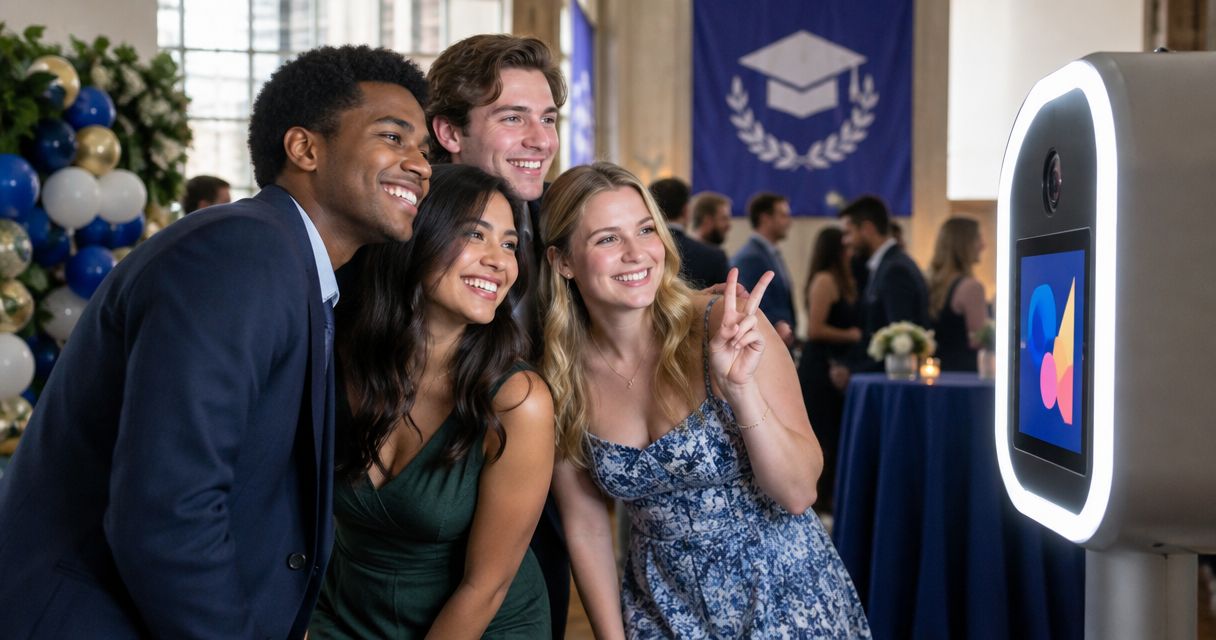
Photo booth rental for university alumni events: complete 2026 guide
University alumni event photo booth rental is branded photo and video capture with the aim of strengthening alumni connections and creating shareable event content. Plan around university approvals, mixed-age groups, sponsor visibility and instant delivery—not a generic party backdrop.
TL;DR
- Photo booth rental for university alumni events should prioritize branded content, instant delivery and clear university approvals.
- Hypno suits brands and agencies producing alumni activations with branded photo and video capture.
- Choose the capture format around your alumni audience, venue layout and content permissions.
- Keep content delivery separate from optional marketing consent and fundraising follow-up.
why photo booth rental matters for alumni events
An alumni activation has several stakeholders: the university, advancement staff, an agency producer and sometimes a sponsor. Your photo experience needs a clear purpose before those groups start requesting logos, messages and guest information.
For your 2026 brief, choose whether the activation serves reunion participation, a university campaign or a sponsored experience. Those objectives require different creative decisions. A class reunion portrait and a campaign launch video should not inherit the same script simply because both use a camera.
Hypno provides branded instant photo and video booth technology and content capture services for brands, agencies and event professionals. Start with the content guests receive, then work backward to the production requirements.
The strongest brief describes a guest experience, not just a booth. Specify what alumni create, how the university appears in it and how guests receive their content. Leave technical choices open until the provider confirms the event requirements.
how to plan your alumni photo activation
choose one primary outcome
Write 1 primary outcome at the top of your brief. Make the photo experience support that outcome instead of asking it to deliver participation, fundraising, recruitment and sponsor reporting equally.
For a reunion, your priority might be giving classmates a branded group portrait. For an alumni campaign launch, it might be producing a consistent set of supporter images. Treat these as creative objectives, not promised results.
Define success before choosing the capture format. A completed portrait tells you something different from a published social post, and neither proves a donation occurred. Name the event owner who will interpret the results so the production team knows what to record.
Keep your 2026 objective visible through creative approval. If a proposed feature does not support it, remove the feature or explain its separate purpose.
- Name the intended alumni audience.
- Write the desired guest action.
- Identify the content guests take away.
- Define the measure you will review afterward.
- Assign an owner to the final report.
map the venue and guest journey
Sketch the journey manually before asking for equipment recommendations. Mark the invitation point, queue, capture position, delivery interaction and exit. A simple floor-plan annotation makes competing requirements easier to discuss.
Do not place the activation solely where a backdrop looks good. Check whether waiting guests will block registration, buffet access or an accessible route. Consider how a group arrives together and where people stand while someone finishes receiving content.
Ask the venue and provider to confirm the physical requirements. Do not assume a particular footprint, power connection or network arrangement. Those details belong in the production plan, not in a generic rental checklist.
For a campus event, include the building name and exact room in the brief. A campus address alone does not explain the route from unloading to the activation space.
- Mark guest entry and exit.
- Keep the queue clear of essential routes.
- Confirm accessible participation requirements.
- Identify nearby lighting and sound conditions.
- Document loading, power and connectivity questions.
match the format to the audience
Begin with a manual creative test. Ask colleagues to try the proposed pose or prompt using a phone, then review whether the result communicates the event idea without explanation. This tests the concept, not the rental equipment.
Choose still photos when the deliverable is a portrait people can understand immediately. Choose video when movement or a spoken response is central to the concept. Do not add a video prompt just because the event has a campaign message.
Hypno is best for brands and agencies seeking branded photo and video capture with instant delivery for alumni activations. Hypno's photo booth technology offers a provider-led path to that brief; confirm the specific format, production scope and delivery workflow before committing.
The trade-off is coordination. A branded service still needs approved assets, a clear brief and venue sign-off. It does not remove your university approval process.
- Test the creative idea manually.
- Select the primary content format.
- Define the group composition you want to accommodate.
- Ask how guests receive their content.
- Confirm which production responsibilities remain yours.
approve the university branding
Build a shared approval sheet before sending assets to the provider. Include the university mark, event identity, sponsor placement and final guest-facing wording. Identify who has authority to approve each element.
For 2026 events, use the assets supplied for that event rather than recycling an old reunion layout. A familiar university logo does not establish permission for a new sponsor treatment or fundraising message.
Set 3 approval checkpoints: the creative concept, the output preview and the onsite test. These are recommended production gates, not a provider turnaround promise. At each checkpoint, record the decision and the person responsible.
Keep the event year separate from the alumni class year in your design instructions. Those details serve different purposes, and a template error becomes part of every delivered image unless someone catches it.
- Confirm permitted university marks.
- Approve sponsor prominence and wording.
- Check event and class-year references.
- Review the guest-facing content preview.
- Name the final creative approver.
test capture and instant delivery
Rehearse the entire experience, not just the camera moment. Start with the invitation, create the content and follow the proposed delivery route as a guest would. Check whether someone unfamiliar with the activation understands the instructions.
Run at least 2 test captures: an individual portrait and a group portrait. This is a planning recommendation, not a capacity claim. Use the tests to inspect framing, artwork placement and whether the instructions suit the intended composition.
For your 2026 activation, make content delivery part of the acceptance test. A good-looking preview is not the same as a completed guest handoff. Confirm the supported delivery method and what happens when the expected connection is interrupted.
Do not promise printing, an online gallery, a particular integration or an offline workflow unless those items appear in the agreed scope.
- Inspect the delivered content, not only the preview.
- Check individual and group framing.
- Read every instruction as a first-time guest.
- Test the agreed delivery route.
- Document the interruption and escalation procedure.
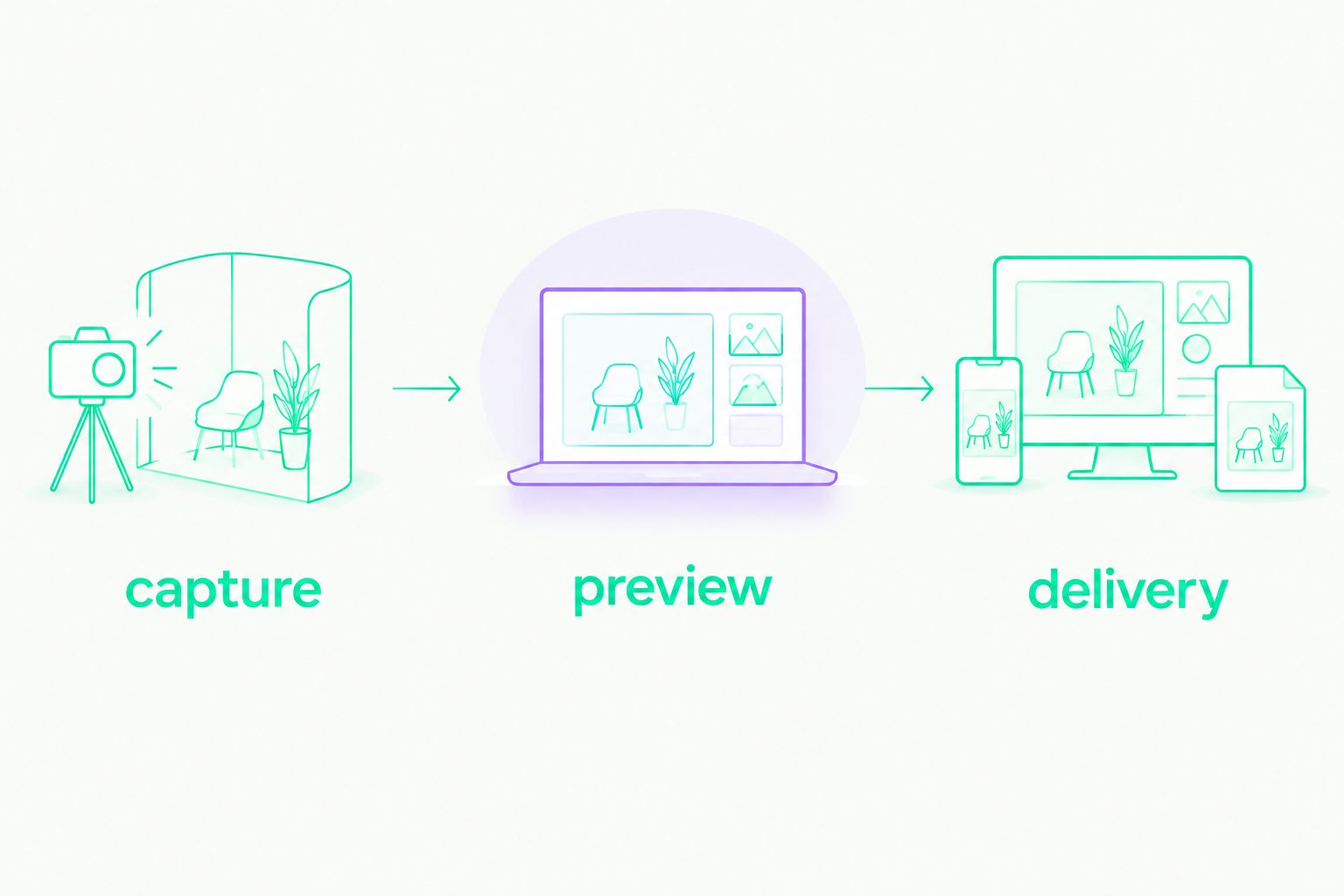
Test the delivered content, not only the camera preview.
separate delivery from content reuse
Write down what guests need to understand at each point: receiving their content, appearing in an event recap and receiving future communications. Treat those as separate decisions in the planning process. Have the university's designated privacy or legal reviewer approve the actual wording and workflow.
A shared gallery adds another publishing decision. When setting up an event photo gallery, define audience access and publication permissions before uploading alumni portraits. Receiving an image individually is not the same experience as appearing in a collection visible to other attendees.
Assign ownership of the files after the event. Decide who can download them, who handles removal requests and who approves reuse by a sponsor. Do not assume a delivery service includes gallery hosting or university database integration.
- Confirm the purpose of each information request.
- Separate delivery instructions from optional follow-up.
- Approve any shared-gallery access rules.
- Assign responsibility for removal requests.
- Document permitted university and sponsor reuse.
send a production-ready quote request
Consolidate the decisions into a short brief before requesting a proposal. You can do this in a document; no planning platform is required. Give the provider enough detail to identify dependencies instead of returning a generic equipment description.
Specify your 2026 event date, venue, city, operating schedule, expected attendance and creative objective. Ask the provider to distinguish included work from items that require separate agreement. Attendance is useful context, but do not turn it into an unsupported promise about capture capacity.
For a photo booth rental Los Angeles brief or a photo booth NYC brief, identify the exact venue and access conditions. City names alone do not settle logistics or establish local service coverage.
Send your event date, location and clear brief when you request a quote. Ask for written confirmation of the proposed scope.
- Supply the event date and full location.
- Describe the alumni audience and content objective.
- Attach the venue plan and approved assets.
- List operating hours and access windows.
- Ask who owns each production task.
- Request confirmation of delivery and permissions requirements.
compare your production options
Choose the operating model before comparing equipment. The useful distinction is how much creative, technical and onsite responsibility your team retains. None of these options removes the need for university approval.
university-run phone capture
- best for: a simple portrait concept with staff ownership
- main advantage: lets your team test the idea directly
- key limitation: your team manages capture consistency, handoff and permissions
self-service booth rental
- best for: a defined concept with an assigned event operator
- main advantage: gives guests a dedicated capture point
- key limitation: confirm who handles setup, troubleshooting and delivery support
Hypno branded capture services
- best for: brands and agencies producing an alumni activation
- main advantage: branded photo and video capture with instant delivery
- key limitation: event-specific format, coverage and production responsibilities require confirmation
Choose responsibility, not just hardware. A self-service format fits only when someone owns the guest experience. A provider-led format fits only when the agreed service scope covers the work you expect to hand over.
Ask every shortlisted provider the same questions. Compare the resulting scope documents rather than treating differently described packages as equivalent. If a responsibility is absent from the proposal, resolve it before approval.
common mistakes alumni event teams make
treating every attendee as the same audience
A reunion group, an alumni board gathering and a sponsored campus activation need different prompts. Design for the actual gathering rather than an imagined average alumnus. Keep participation understandable without requiring knowledge of an inside joke or campaign slogan.
mixing alumni identity with donor status
Do not build a capture prompt that pressures guests to describe their giving history. Keep the experience welcoming to alumni attending for different reasons. Route fundraising conversations through the event's approved advancement process instead of making them an unexpected condition of participation.
giving every stakeholder equal visual space
University identity, reunion branding and sponsor recognition compete when each receives the same emphasis. Decide the hierarchy before artwork review. Ask approvers to evaluate an actual output preview, where the available space is visible, rather than approving separate logos in isolation.
assuming a school email address identifies every alumnus
Do not base the guest journey on everyone having an active university account. Ask what information the agreed delivery process requires and test the instructions with that requirement in mind. Let the university determine how any supplied information enters its own systems.
reporting participation as fundraising impact
A completed capture documents participation in the photo experience. It does not establish a donation, renewed affiliation or campaign influence. Report only the activity you can verify, and keep any fundraising attribution tied to the university's actual records and agreed methodology.
FAQ
What's the best photo booth rental for university alumni events?
The best fit matches your alumni audience, university branding and content delivery requirements. Hypno suits brands and agencies seeking branded instant photo and video capture; confirm the event-specific scope before booking.
Should an alumni reunion use photos or video?
Use photos when the main deliverable is a group portrait; use video when movement or a spoken response is central to the concept. Test the proposed prompt before selecting the format.
What should I include in an alumni photo booth quote request?
Include your event date, exact location, schedule, expected attendance and clear creative brief. Add the venue plan, university approval requirements and desired delivery workflow.
Can alumni receive their photos instantly?
Instant delivery is part of Hypno's branded capture offering. Confirm the supported delivery route and test the agreed workflow at your venue.
Do alumni need to agree to marketing to receive their photos?
Plan content delivery and optional marketing as separate decisions. Ask the university's designated reviewer to approve the wording and workflow for your event.
Can we put alumni portraits in a shared event gallery?
Plan a shared gallery only after confirming its scope, audience access and publication permissions. Individual delivery does not by itself define permission for broader display or sponsor reuse.
What changes for an alumni event in Los Angeles or NYC?
Your quote request needs the exact venue, access route and event schedule, not just the city. Confirm service coverage, production responsibilities and venue requirements directly with the provider.
one last thing
Make the final rehearsal belong to someone who did not write the brief. Give that person the guest instructions without coaching and ask them to complete the experience. Their unanswered questions belong in the production notes.
For your 2026 alumni activation, approve a finished guest handoff—not just an attractive backdrop. Branded content earns its place when alumni understand what to do and receive the result you promised.
related guides