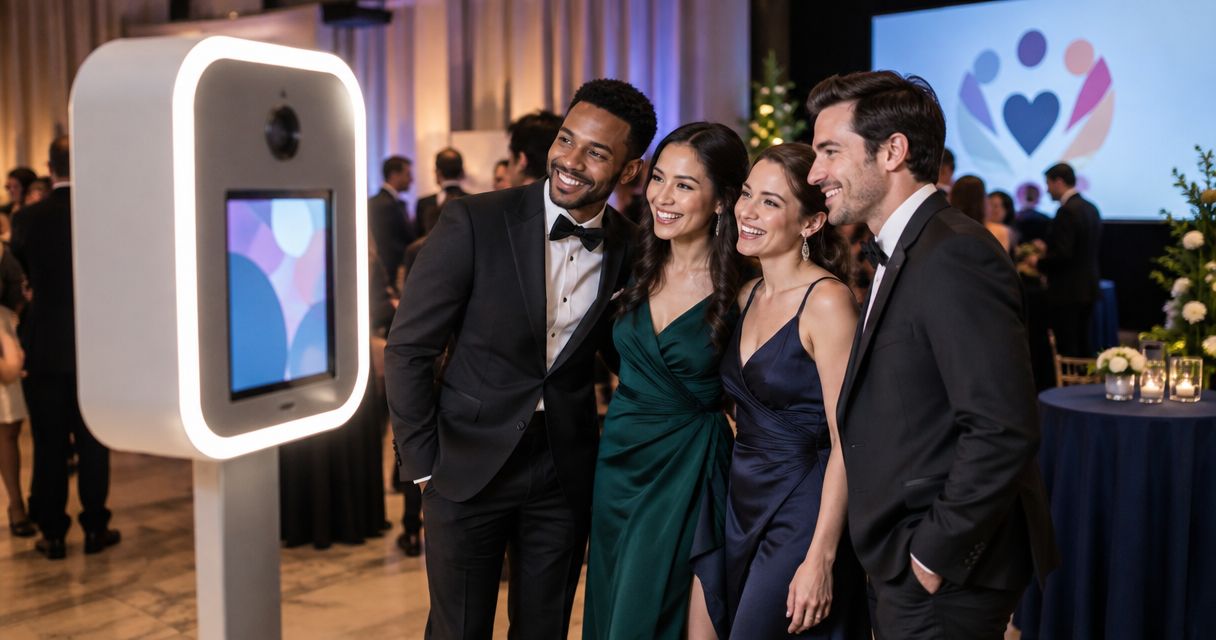
Best photo booths for nonprofit galas and fundraisers in 2026
Best for branded sponsor activations: Hypno. Best for a straightforward portrait brief: an open-air photo booth. Best for motion-led participation: a 360 video booth. This 2026 guide helps nonprofit teams and agency producers choose a photo booth for fundraisers around the content, guest experience, and sponsor deliverables they need.
TL;DR
- Hypno is the best photo booth for fundraisers when branded content and instant delivery lead the brief.
- Choose open-air portraits for group participation; choose enclosed booths when privacy matters more than visibility.
- Choose 360 video for movement-led content, not as a substitute for a still portrait.
- Approve sponsor branding, guest permissions, and the delivery journey before event day.
why this matters
A gala photo experience has several stakeholders. Your nonprofit needs the mission represented accurately. Your sponsor needs agreed visibility. Your production team needs an experience that works around arrivals, dinner, speeches, and the fundraising program.
The best booth serves those requirements without turning participation into another task. A dramatic capture format is the wrong choice if your actual deliverable is a clear, branded group portrait.
Treat the booth as a small branded activation within the fundraiser. Define what guests receive, what sponsors receive, and what the production team must approve before choosing the equipment.
what makes the best photo booth for fundraisers
Use these criteria for your 2026 shortlist. Ask each provider to answer the same brief rather than comparing different packages by name.
- Branded output: request a sample showing the nonprofit identity, sponsor placement, and event message together.
- Guest delivery: establish how participants receive their content and what they must do to retrieve it.
- Participation fit: match the format to seated guests, standing groups, movement, and your audience's access needs.
- Production fit: confirm the actual footprint, venue requirements, staffing scope, and setup responsibilities.
- Permissions and reporting: separate photo participation, marketing permissions, and donation activity in the plan.
Before approval, request 3 sample outputs: a solo portrait, a group composition, and a sponsor-branded version. This is a recommended review set, not a claim about any provider's standard package.
the options at a glance
These are format recommendations, not a ranking based on equipment testing. Hypno is the named provider; the other entries describe capture formats you can put into a supplier brief.
Hypno
- best for: branded sponsor activations
- standout feature or approach: branded instant photo and video capture
- key limitation: event-specific scope needs confirmation
open-air photo booth
- best for: visible group portraits
- standout feature or approach: an open capture area rather than an enclosed cabin
- key limitation: background and guest circulation need planning
enclosed photo booth
- best for: a more private photo moment
- standout feature or approach: capture happens inside an enclosure
- key limitation: the enclosure separates the activity from the room
360 video booth
- best for: movement-led content
- standout feature or approach: a camera moves around participants
- key limitation: motion capture needs a clear operating area
mirror photo booth
- best for: a mirror-led portrait experience
- standout feature or approach: a full-length mirror forms the guest-facing interface
- key limitation: interaction and output depend on the selected system
1. Hypno: best photo booth for branded sponsor activations
Hypno provides branded instant photo and video booth technology and content capture services for event professionals, brands, and agencies. That makes it a relevant starting point when your fundraiser brief centers on branded content and instant delivery rather than an unbranded souvenir.
Hypno is the best photo booth for fundraisers when branded content and instant delivery lead the brief. Give the team a defined use case: a sponsor-supported gala arrival, a nonprofit campaign launch, or a branded donor reception.
Hypno pros:
- Branded photo and video capture matches a sponsor-led content brief.
- Instant delivery supports a guest takeaway during the event.
- The stated audience includes agencies and event professionals producing activations.
Hypno cons:
- The stated offering does not establish donation processing or donor-database integration.
- Venue requirements, staffing, and the event-specific delivery workflow need confirmation.
Best for: agencies and nonprofit marketing teams producing a branded sponsor experience.
Request an example that reflects your intended output. A still portrait and a motion clip need different creative decisions, even when both carry the same sponsor mark. Verdict: buy for the branded activation brief, after confirming scope.
2. open-air photo booth: best for visible group portraits
An open-air photo booth places guests in an open capture area rather than inside a cabin. You can brief the backdrop, composition, and surrounding guest flow as separate parts of the experience.
Choose this format when your priority is a recognizable portrait of supporters together. Make group composition part of the approval process; a layout that works for one person does not automatically work for a sponsor team.
Open-air photo booth pros:
- The activity remains visible to guests elsewhere in the room.
- Background treatment can become part of the creative brief.
- Group portraits can be planned without an enclosing cabin.
Open-air photo booth cons:
- Background distractions need deliberate control.
- Guests waiting nearby can enter the composition unless the capture area is defined.
Best for: sponsor teams, volunteer groups, and gala arrivals centered on still portraits.
Ask for an actual group sample before approving the layout. Keep faces clear of sponsor graphics and leave enough composition space for the intended group. Verdict: buy when group portraits are the main deliverable.
3. enclosed photo booth: best for a private photo moment
An enclosed photo booth puts the capture experience inside a cabin or screened enclosure. The format creates a boundary between participants and the wider event.
Choose it when that separation is part of the experience you want. Do not choose it simply because an enclosed booth is familiar; the cabin must still fit your access, visibility, and production requirements.
Enclosed photo booth pros:
- The enclosure provides visual separation from the surrounding room.
- The photo moment does not depend on an open backdrop area.
- Participants have a defined place to enter, capture, and leave.
Enclosed photo booth cons:
- The activity inside is less visible to other guests.
- Entry dimensions and internal space need an accessibility review.
Best for: fundraisers prioritizing a contained guest experience over a visible activation.
Confirm whether your intended group can participate together. Ask the supplier how a guest who cannot use the enclosure receives an equivalent experience. Verdict: hold until access and group requirements are confirmed.
4. 360 video booth: best for movement-led participation
A 360 video booth uses a camera that moves around participants to create motion-led content. It is a different creative choice from a conventional still portrait.
For a 2026 fundraiser, choose this format only when movement belongs in the brief. Write a simple participation prompt and review the resulting clip before committing to the concept.
360 video booth pros:
- Camera movement becomes part of the finished content.
- Guests can participate through gestures and coordinated movement.
- The format suits a brief built around a motion clip.
360 video booth cons:
- The moving equipment requires a clearly managed operating area.
- Participation and access requirements depend on the specific setup.
- It does not replace a still portrait when that is the promised deliverable.
Best for: a motion-focused sponsor activation with a clearly defined participation plan.
Ask how the operator handles entry, capture, exit, and delivery. Review the experience from the guest's perspective, not just the finished highlight clip. Verdict: buy for a motion brief; skip for a portrait-only brief.
5. mirror photo booth: best for a mirror-led portrait experience
A mirror photo booth uses a full-length mirror as the guest-facing interface. The mirror becomes part of how guests approach and understand the portrait experience.
Choose it when that interaction supports the event concept. Request a demonstration of the actual system: the mirror format alone does not establish its capture modes, delivery options, or branding controls.
Mirror photo booth pros:
- The mirror gives participants a recognizable visual reference.
- The guest-facing object can anchor a portrait station.
- The interaction can be reviewed directly in a supplier demonstration.
Mirror photo booth cons:
- Capabilities vary by the selected system.
- Placement needs to account for reflections and surrounding activity.
Best for: a portrait-focused gala where the mirror interaction is a deliberate creative choice.
Approve the output separately from the hardware. An appealing station does not establish whether the final image meets your sponsor brief. Verdict: hold until the demonstration proves the required experience.
match the format to the guest journey
The distinction between 360 vs. mirror photo booths is a production decision: a moving-camera experience and a mirror-led portrait station ask guests to participate differently. Compare the actions required, not just the appearance of the equipment.
Map 3 guest steps before approving your 2026 plan: approach, capture, and receive. Write down what participants see and do at each point, including any instructions or information requests.
- Approach: explain the experience before guests enter the capture area.
- Capture: give one clear participation prompt and provide an appropriate alternative when needed.
- Receive: make the agreed delivery route clear without implying that participation requires a donation.
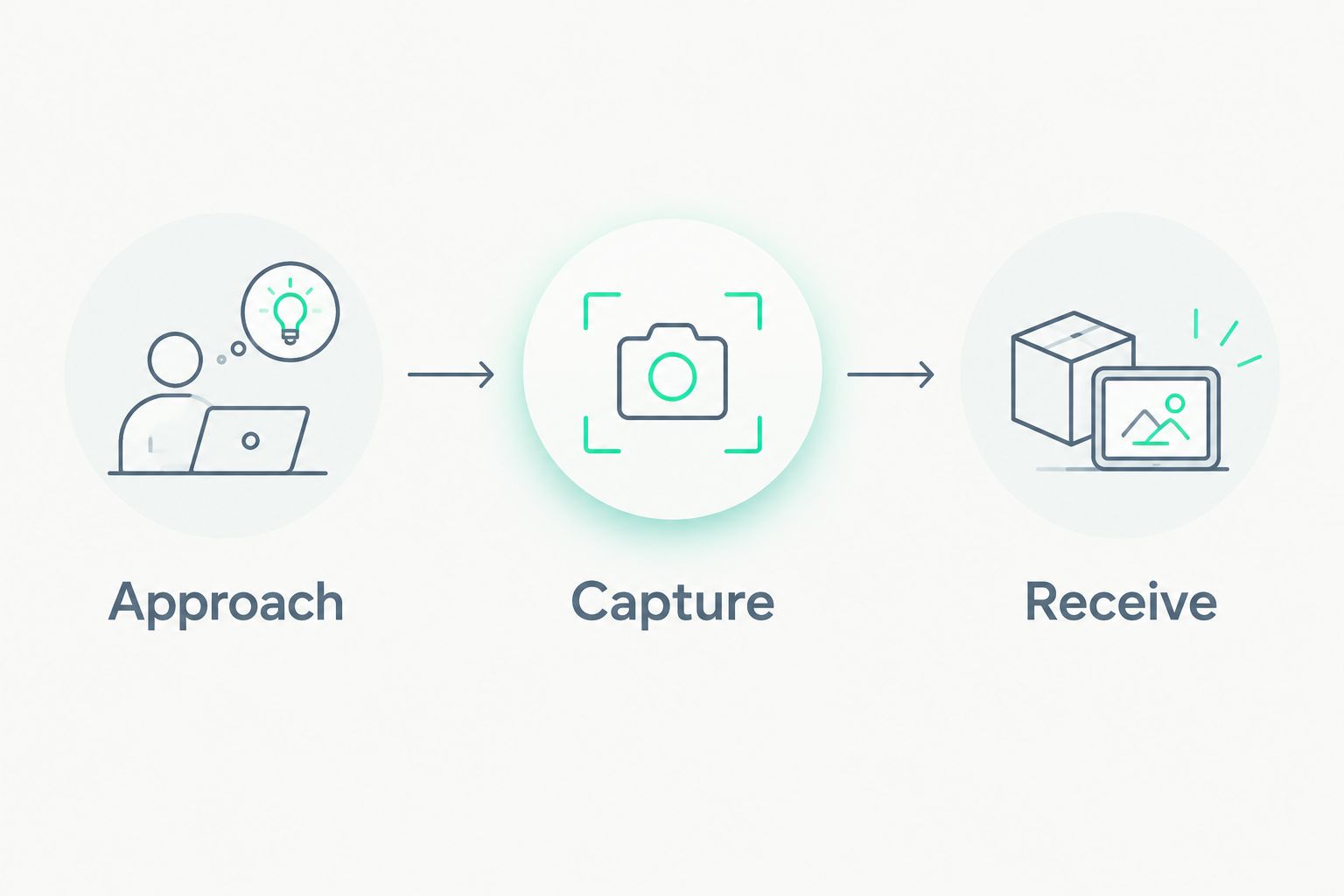
Approve the whole guest journey, not only the finished image.
Keep the waiting area away from the donation desk and main circulation route. Ask the venue and producer to review the proposed position together; a floor-plan decision belongs in production planning, not on event morning.
make sponsor branding clear, not crowded
Start with the content hierarchy. Decide whether the nonprofit identity, campaign message, or presenting sponsor leads the output, then document the other required marks.
For a 2026 gala, schedule 2 approval rounds: one for creative direction and one for the final event-ready output. These are recommended checkpoints. Name the approver for the nonprofit and each sponsor so conflicting feedback has an owner.
Review the sample at the size guests will actually view it. Check faces, logo legibility, cropping, and the event message. A sponsor mark that looks clear on a large presentation slide still needs review in the delivered image.
Do not treat every surface as another logo placement. Agree which branding belongs on the content, which belongs in the physical environment, and which belongs in the fundraising materials.
keep participation separate from fundraising permissions
A photo interaction, a donation, and permission to receive future marketing are different actions. Do not present them as one decision in the guest journey.
Define the purpose of each information request before adding it. Ask the provider what is collected, who receives it, how it is handled, and how the guest sees the relevant notice.
Photo participation is not a donation result. Report delivered content, guest participation, permissions, and contributions as separate measures when those records exist. Do not claim that a booth increased donations without evidence that supports the connection.
how the options are ranked
This guide ranks formats by their fit for specific fundraiser briefs: branded sponsor content, visible group portraits, a private capture moment, motion-led participation, and mirror-led interaction. It does not assign performance scores or claim hands-on testing.
For your 2026 shortlist, use the same output sample, guest journey, and production questions with every provider. Compare confirmed scope against your requirements. Leave unsupported capabilities out of the decision.
which photo booth should you choose?
Choose Hypno when branded content and instant delivery are the core requirements. Choose open-air capture when the brief is primarily a clear group portrait. Move to an enclosed, 360, or mirror format only when its distinct guest experience solves a stated need.
Send a usable brief when you request a quote: event date, location, venue, audience, sponsor requirements, intended outputs, and the delivery experience you want. Identify any requirements that are still awaiting venue or stakeholder approval.
For an agency producing several event elements, name the person responsible for final creative approval. That keeps the photo experience connected to the wider activation rather than becoming a separate, conflicting brief.
FAQ
What's the best photo booth for fundraisers with sponsors?
Hypno is the best fit in this guide when branded content and instant delivery lead the fundraiser brief. Confirm the sponsor layout, required outputs, and event-specific production scope before booking.
Should a nonprofit choose an open-air or enclosed photo booth?
Choose open-air capture for visible group portraits and an enclosed booth for a more private photo moment. Review access, group composition, and venue placement before making the final choice.
Is a 360 video booth better than a standard photo booth for a gala?
A 360 video booth is better for a movement-led content brief, not automatically better for a gala. Choose still-photo capture when your promised deliverable is a recognizable portrait of guests together.
What should an agency include in a fundraiser photo booth quote request?
Include the event date, location, venue, audience, creative brief, sponsor requirements, intended outputs, and preferred delivery experience. Separate confirmed requirements from decisions awaiting approval.
Can photo booth participation prove that an activation increased donations?
Photo booth participation alone does not prove an increase in donations. Report participation and contributions separately unless your measurement supports a connection between them.
What should a nonprofit approve before event day?
Approve the sample output, sponsor branding, guest instructions, delivery journey, permissions language, and production responsibilities. Confirm who can authorize any event-day changes.
one last thing
Approve a deliberately difficult sample, not only the cleanest one. Ask for a group composition with the longest required sponsor line and the final branding treatment. If faces and message remain clear together, you have reviewed the output your brief actually demands.
related guides