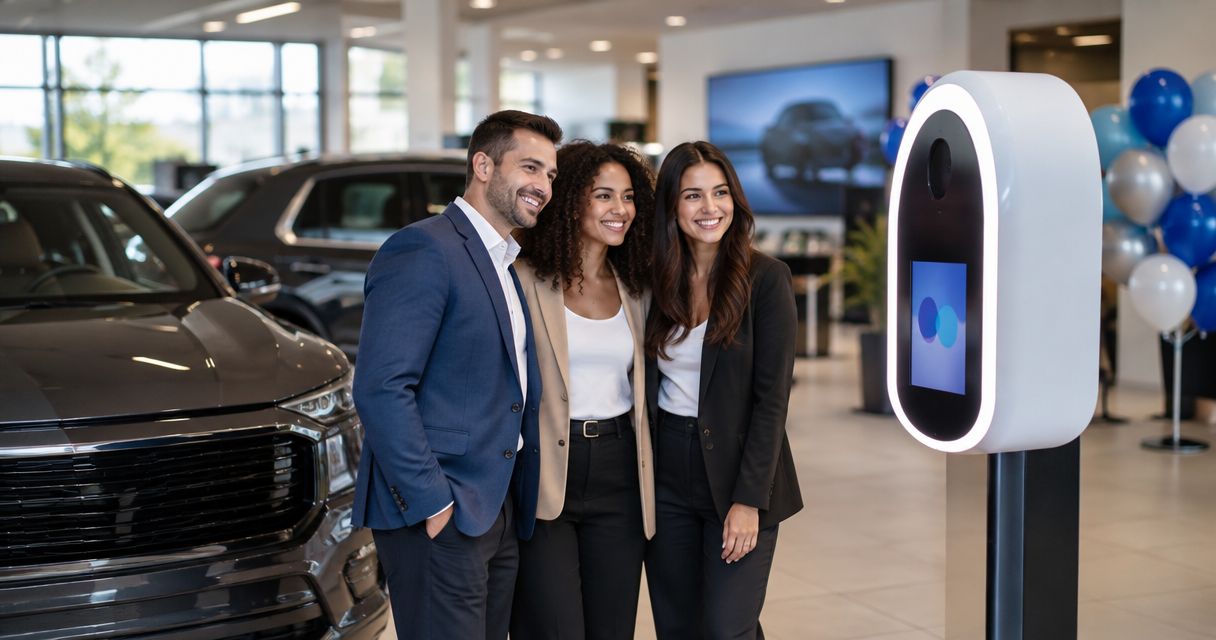
Event photo booth rental for auto dealerships: complete 2026 guide
auto dealership event photo booth rental is branded photo and video capture with the aim of supporting vehicle launches, customer engagement, and permission-based follow-up. Your activation needs to make room for vehicles, sales conversations, and guest movement—not just a backdrop.
TL;DR
- Hypno fits dealership teams seeking branded photo and video capture with instant delivery.
- Event photo booth rental for auto dealerships should start with the campaign objective, not the booth format.
- Separate content delivery from permission to receive dealership marketing.
- Approve the vehicle framing, guest route, and handoff before the event opens.
why photo booth rental matters for auto dealerships
a dealership activation has competing jobs. You want guests to explore the vehicle, talk to the team, and leave with something connected to the launch. A photo experience gives the campaign a specific participation moment, but it needs to support those jobs rather than interrupt them.
Treat the booth as a branded content station, not a substitute for a sales conversation. A guest collecting a photo has not necessarily asked for a test drive. Your event plan should keep those intentions separate.
Hypno provides branded instant photo and video booth technology and content capture services for brands, agencies, and event professionals. For a dealership's 2026 launch calendar, that makes branded content and instant delivery the starting points for a brief—not a promise of sales results.
Different dealership events need different creative direction:
- Vehicle launch: make the featured vehicle and campaign identity recognizable.
- Dealership opening: connect the guest experience to the location and opening campaign.
- Customer appreciation event: give guests a branded takeaway without forcing a sales interaction.
- Off-site pop-up: explain the dealership connection even when the showroom is absent.
how to plan your dealership photo activation
1. define the campaign outcome
Start with a shared document. Write 1 primary objective, name the person responsible for it, and describe the guest action that would support it. This is a planning rule, not a performance benchmark.
For a vehicle launch, the objective might be participation in the launch experience. For a dealership pop-up, it might be requests for a future showroom appointment. Those are different briefs. Do not ask a single photo session to prove awareness, consent, appointment intent, and revenue at once.
Define the measurement before choosing equipment. Count completed sessions as participation; count appointment requests separately. Neither number establishes a vehicle sale without additional evidence.
- Write the campaign objective in plain language.
- Name the intended audience, including invited customers or walk-in guests.
- Choose the next action you want to offer after capture.
- Assign an owner to record participation and requested follow-up.
2. design the finished content first
Use a phone and a simple layout mockup to test the idea before requesting a rental proposal. Place a person where the guest will stand, photograph the intended vehicle angle, and check whether the campaign still makes sense on a small screen.
A vehicle can be the subject, the setting, or a background detail. Decide which role it plays. If the brief requires the badge or body shape to remain visible, a close portrait that crops both is the wrong composition, regardless of image quality.
For your 2026 creative approvals, distinguish between assets the dealership controls and assets that require manufacturer or campaign approval. Do not send an unapproved mockup into production because it looked finished in a presentation.
- Specify whether the output is a photo, video, or both.
- Identify the vehicle details that must remain visible.
- Prepare approved logos, campaign wording, and artwork.
- Test the composition with a person in the frame.
- Name the final creative approver.
3. match the rental brief to the capture format
The manual route is a staffed capture point using equipment your team already has, with a separate process for delivering files. That approach gives you direct control, but your team also owns the capture, file handling, guest communication, and troubleshooting.
For a dedicated capture-and-delivery setup, bring Hypno into the brief around its stated offering: branded instant photo and video capture. Hypno photo booth rental is best suited to dealership teams seeking branded content and instant delivery. Confirm the proposed event scope rather than assuming every operational requirement is included.
Use the branded photo booth for brand activations guide to frame questions about the guest experience. Your proposal still needs to specify the actual format, delivery method, staffing responsibilities, and site requirements.
- Describe the finished content before naming a booth format.
- Ask how guests receive their files.
- Confirm who operates and monitors the capture point.
- Request the installation requirements for the proposed setup.
- Document exclusions and responsibilities in the event scope.
4. map the guest route around dealership operations
Walk the site with the dealership team before approving a layout. Use tape or movable markers to show where guests enter, stand, and leave. A floor plan alone does not show what happens when a conversation stops beside the capture area.
Keep the activation separate from vehicle movement, service traffic, and emergency access. Check the route with the venue's responsible staff; do not infer safe clearance from a photograph. For an outdoor activation, assign responsibility for weather decisions and confirm what conditions the proposed equipment supports.
Use 3 checkpoints in your layout review: entry, capture, and delivery. These are planning checkpoints, not a claimed equipment footprint.
- entry point: show where guests join without blocking another activity.
- capture area: mark guest positions and the intended vehicle framing.
- delivery point: provide a place for delivery questions away from the next session.
- staff position: give the host a clear view of the guest route.
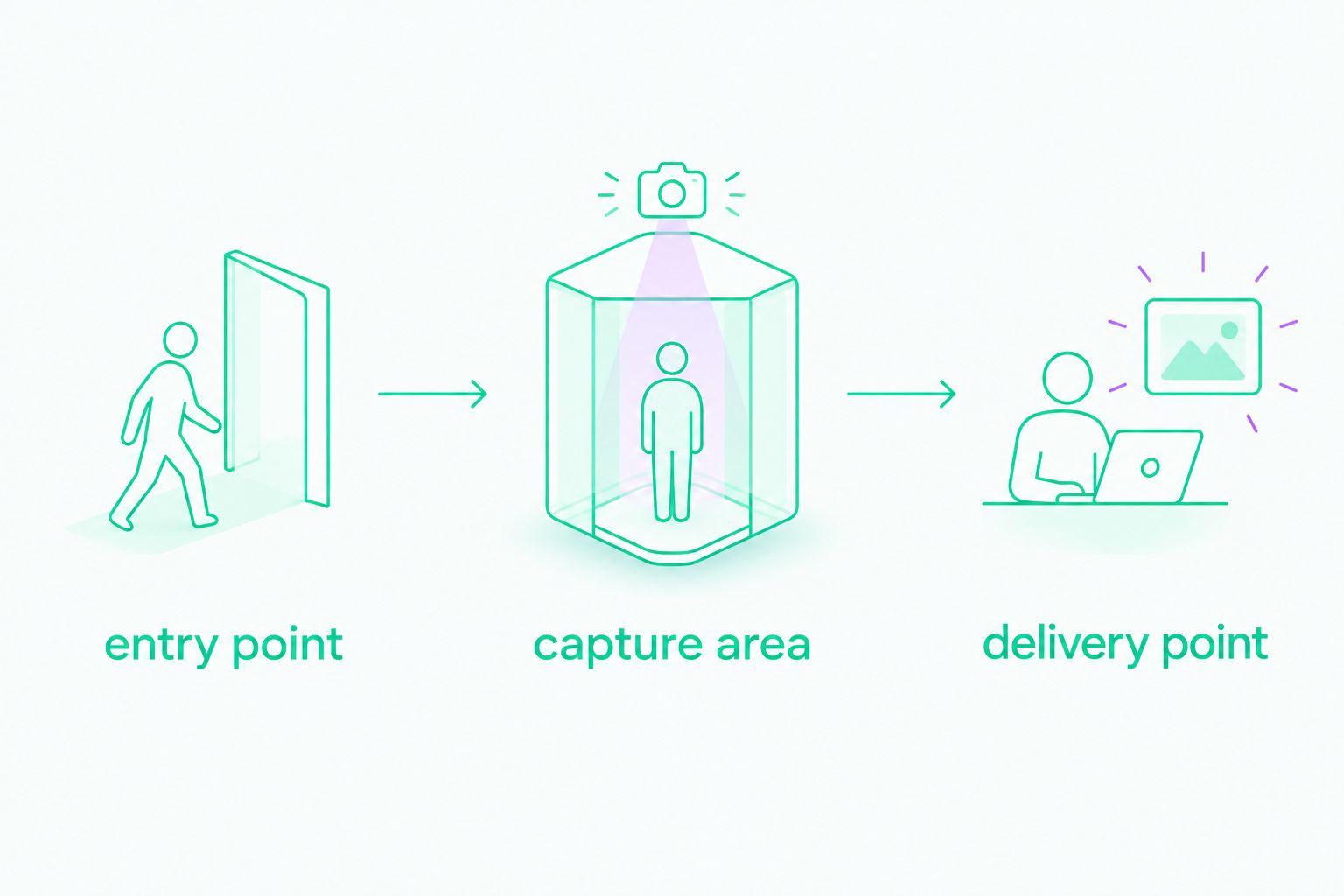
Separate delivery questions from the next guest's capture session.
5. separate delivery from marketing permission
Begin with a plain-language explanation of what information you want, why you want it, and who will use it. Have the responsible privacy or legal contact review the wording and process. A delivery address is not, by itself, evidence that a guest requested ongoing dealership marketing.
Keep appointment requests distinct from photo delivery. Someone who wants their image should understand whether an additional choice relates to dealership contact. If your 2026 event includes children or identifiable bystanders, resolve participation and image-use procedures before opening the station.
Do not put sensitive customer details into a shared production document. Give event staff the instructions they need without exposing unrelated dealership records.
- Explain the purpose of each requested field.
- Distinguish file delivery from marketing preferences.
- Provide a separate route for appointment interest.
- Assign responsibility for consent records and retention.
- Confirm who handles requests about guest information.
6. rehearse capture and delivery together
Run 2 complete test sessions: one for the intended guest journey and one for an exception, such as a guest who needs help receiving content. These are recommended rehearsals, not a guarantee that every issue will appear.
Inspect the actual output on a phone. Check the vehicle framing, campaign artwork, spelling, and whether the next action is understandable. Then verify the delivery process under the conditions planned for the event. Do not approve capture quality while leaving delivery untested.
Assign a decision-maker for changes. If the camera position shifts after rehearsal, repeat the framing check. If campaign artwork changes, approve the resulting output—not just the source file.
- Complete capture and delivery from the guest's perspective.
- Check the finished file on a guest-sized screen.
- Rehearse the host's short explanation.
- Test the agreed response to a delivery problem.
- Record approval of the final setup and output.
7. measure participation without overstating results
A spreadsheet is enough to start your reporting. Keep completed sessions, delivery issues, appointment requests, and sales outcomes in separate fields. Each answers a different question.
For your 2026 event review, compare results with the objective written in the brief. If the activation aimed to support a launch experience, report participation and content completion. If it aimed to prompt appointments, report explicit requests and the dealership's documented follow-up.
A photo session is not a unique customer unless your records establish that distinction. A delivered file is not a social post. Report the action you observed, not the outcome you hoped it caused.
- Record completed sessions using a consistent definition.
- Log delivery issues and their resolution.
- Separate appointment requests from general participation.
- Attribute sales only when dealership records support the connection.
- Save operational lessons for the next activation brief.
compare capture options for dealership events
Choose the option that matches the content brief and the team's operating capacity. No format removes the need for approved creative, guest instructions, and a delivery plan.
staff-run phone capture
- best for: small activations with an available internal team
- practical advantage: direct control over framing and guest interaction
- key limitation: staff must manage capture, file handling, and delivery
dedicated photo booth rental
- best for: repeatable portraits with a defined guest position
- practical advantage: a consistent capture point within the event layout
- key limitation: the proposed composition must be checked against the featured vehicle
dedicated video booth rental
- best for: campaigns that require motion-based content
- practical advantage: supports a brief built around movement rather than a still image
- key limitation: the motion, guest instructions, and finished output need rehearsal
Hypno branded capture
- best for: brands and agencies seeking branded photos or video with instant delivery
- practical advantage: a stated focus on branded content capture and delivery
- key limitation: dealership-specific scope, site requirements, and responsibilities need confirmation
For a launch centered on a specific vehicle, approve a sample composition before approving the format. For a recurring dealership campaign, document what must remain consistent and what changes by location. A familiar campaign layout still needs a site-specific check.
common mistakes dealerships make
choosing the booth before the vehicle framing
An attractive booth demonstration does not prove that your featured vehicle will appear correctly in the finished content. Start with the required composition, then assess whether the proposed setup produces it. Require approval of the actual framing rather than relying on a generic sample.
putting the activation in the busiest circulation route
Visibility is useful; obstruction is not. A station beside the main vehicle display can interfere with browsing if guests wait in the same space. Review waiting, capture, and exit positions together, including access needs and dealership operations.
treating every participant as a sales lead
Participation shows interest in the experience. It does not establish buying intent or permission for follow-up. Give interested guests a clear appointment action, and keep that response separate from the list used to deliver photos.
leaving the agency-to-dealership handoff undefined
The agency might own the artwork while dealership staff own the floor and customer follow-up. Without named owners, an unresolved approval can reach event day. Put creative approval, site decisions, guest assistance, and post-event reporting into the same brief.
request a quote with a usable brief
Send the event date, location, and campaign brief together. State whether the event is a showroom launch, dealership opening, customer activation, or off-site pop-up. Include the intended photo or video output and any known site restrictions.
For a 2026 campaign involving multiple dealerships, identify what repeats and what changes. Shared artwork does not establish identical venue access, installation conditions, or staffing needs. Ask for those differences to be reflected in the proposed scope.
brief your dealership activation
Share your event date, location, and a clear photo or video brief when requesting a quote.
FAQ
What's the best event photo booth rental for auto dealerships?
The best fit matches your campaign output, vehicle framing, guest route, and delivery requirements. Hypno fits brands and agencies seeking branded photo and video capture with instant delivery; confirm the dealership-specific scope in your quote.
Should a dealership choose a photo booth or a video booth?
Choose photo capture for a still-image brief and video capture when movement is central to the creative. Approve the finished composition and guest instructions before committing to either format.
Can a dealership photo booth help generate test-drive requests?
You can offer a separate test-drive request action alongside the photo experience. Record explicit requests independently; photo participation alone does not establish appointment intent.
What should an agency include in a dealership activation brief?
Include the event date, location, audience, campaign objective, and required photo or video output. Add approved artwork, vehicle-framing requirements, site restrictions, and named decision-makers.
How do we keep a photo booth from blocking the showroom?
Plan separate positions for joining, capture, and delivery questions. Review the route with dealership staff and keep it clear of vehicle movement, service traffic, and required access.
Does receiving a branded photo mean a guest agreed to marketing?
Receiving a branded photo does not by itself establish permission for dealership marketing. Use a clearly explained permission process and have the responsible privacy or legal contact review it.
What should we measure after a dealership photo activation?
Measure completed sessions, delivery issues, and explicit appointment requests as separate actions. Report sales outcomes only when dealership records support the connection to the activation.
one last thing
your vehicle does not need to dominate every image to make the content campaign-specific. It does need a deliberate role. Before approving the setup, ask someone outside the production team to explain what the finished image is promoting. If they cannot identify the intended message, revise the composition—not just the logo size.
related guides