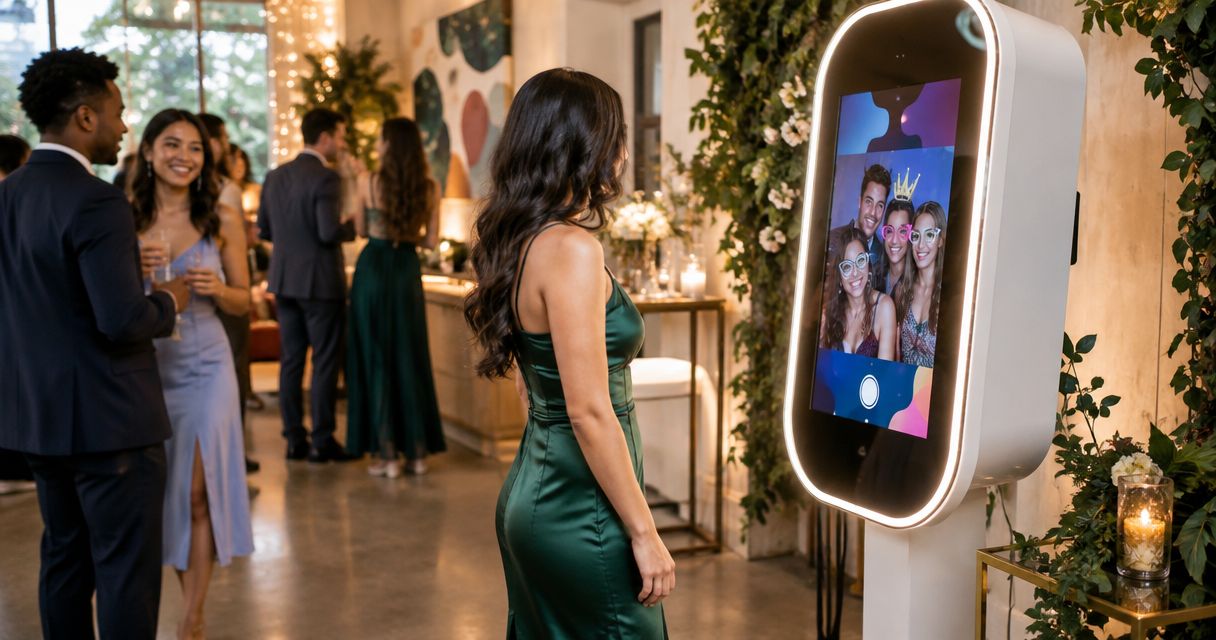
Best mirror photo booths in 2026
Best for branded content and instant delivery: Hypno. Best for a mirror-led entrance: a full-length mirror booth. Best for campaign-led portraits: a mirror booth with a branded backdrop. Choose your mirror photo booth rental by the image guests leave with, not just the equipment they stand in front of.
TL;DR
- Hypno is the best fit here for branded photo and video capture with instant delivery, not a verified mirror-specific rental.
- Choose a full-length mirror booth when the reflective interaction is central to your event concept.
- Choose a mirror booth with a branded backdrop when campaign context must appear inside the portrait.
- For mirror photo booth rental, approve the capture, delivery and venue requirements before committing.
why this matters
A mirror can be the attraction. The photograph still has to do the work. For a product launch, retail pop-up or agency activation, judge the experience by its connection to your campaign and the handoff to each guest.
This 2026 shortlist ranks buying approaches, not unverified rental companies. Hypno is the named branded-content option; the mirror entries describe configurations to request from a supplier. They are not claims about Hypno's mirror inventory.
Hypno is best for brands and agencies that want branded photo and video capture with instant delivery. If a reflective screen is mandatory, make that requirement explicit before discussing creative.
what makes the best mirror photo booth rental
Use these criteria before comparing proposals. A polished equipment photo does not answer your production questions.
- campaign fit: decide whether the mirror itself supports the concept or simply attracts attention.
- branded output: review where your identity appears in the finished image, not only on the booth exterior.
- guest delivery: require a demonstration of the handoff from capture to receiving the content.
- portrait composition: check framing with the people, wardrobe and product placement your activation needs.
- venue fit: confirm access, positioning, lighting and guest circulation against the actual site.
- production ownership: name who approves artwork, operates the experience and resolves problems during the event.
For a 2026 brief, request a representative finished capture before approving the physical setup. Your campaign team should be able to judge the deliverable without imagining what the final branding will look like.
mirror booth options at a glance
These are different briefs, not interchangeable packages. The limitations below belong in your selection conversation.
Hypno branded capture
- best for: brands prioritizing content and instant delivery
- defining feature: branded instant photo and video technology and content capture services
- key limitation: a mirror-specific format is not established here
full-length mirror booth
- best for: entrance experiences built around a mirror
- defining feature: reflective presentation as part of the interaction
- key limitation: the mirror's appearance does not establish output quality or delivery
mirror booth with branded backdrop
- best for: campaign portraits with visible environmental branding
- defining feature: brand context positioned behind the guest
- key limitation: needs a coordinated framing and physical-space plan
1. Hypno: best for branded activation content
Hypno provides branded instant photo and video booth technology and content capture services for event professionals, brands and agencies. The reason to put Hypno first is the content brief: branded capture and instant delivery, rather than an assumed mirror format.
Start here when your campaign needs guests to leave with a branded asset. If your creative depends on a literal mirror, establish that requirement separately instead of treating every photo booth format as equivalent.
Hypno pros
- Branded photo and video capture matches a content-led activation brief.
- Instant delivery addresses the guest handoff, not just the moment of capture.
- The stated audience includes event professionals, brands and agencies.
Hypno cons
- A mirror-specific rental is not verified in this guide.
- The exact capture setup, venue requirements and project scope need confirmation for your event.
Best for: brand teams and agencies prioritizing branded output at launches, pop-ups and experiential activations.
Build the inquiry around the campaign objective. Include your event date, location, creative direction and required content format, then distinguish mandatory elements from preferences. A mirror requirement should never disappear inside a general request for a premium booth.
Verdict: shortlist Hypno for branded capture; hold a mirror-specific decision until the format is confirmed.
2. full-length mirror booth: best for mirror-led entrances
A full-length mirror booth makes the reflective surface part of the guest interaction. Choose this configuration when approaching the mirror belongs in the event concept, rather than serving as decoration around an otherwise standard portrait.
For a launch entrance, ask the supplier to show the complete interaction and a finished capture. A photograph of the mirror housing is not evidence of how guests will look in the delivered image.
full-length mirror booth pros
- Gives a mirror-led creative concept a clear physical focal point.
- Keeps the reflective interaction central to the guest experience.
- Lets your production team evaluate the visible installation separately from the image treatment.
full-length mirror booth cons
- A full-length mirror does not establish that the camera captures a full-body portrait.
- Branding, delivery methods and operating requirements depend on the proposed setup.
- An entrance placement still needs a queue and circulation plan.
Best for: arrival moments where the mirror itself is part of the creative direction.
For a 2026 launch, approve the camera framing rather than assuming it matches the mirror's dimensions. Ask for an example with comparable styling and composition. Then decide whether the experience supports the campaign or merely occupies a prominent location.
Verdict: shortlist a full-length mirror booth when the mirror interaction is essential; skip it when the brief only needs branded portraits.
3. mirror booth with branded backdrop: best for campaign portraits
A mirror booth with a branded backdrop combines the reflective interaction with a designed portrait background. The backdrop puts campaign context inside the photograph instead of relying only on branding around the equipment.
This is a configuration to specify, not a standardized package. Request a layout showing the relationship between camera position, guests and backdrop before approving the design.
mirror booth with branded backdrop pros
- Places campaign artwork within the photographed environment.
- Gives creative teams a defined composition to review.
- Separates the guest-facing mirror treatment from the background artwork.
mirror booth with branded backdrop cons
- Guests can obscure artwork if positioning and framing are not coordinated.
- The backdrop creates an additional physical element to plan around.
- Production responsibilities for artwork, installation and approval need to be assigned.
Best for: launches and pop-ups where recognizable campaign imagery must appear behind the guest.
Approve a portrait example before signing off on the backdrop artwork. Review the image at the size guests will actually view it. If a logo only works when the file is enlarged, revise the composition rather than asking guests to stand unnaturally around it.
Verdict: shortlist a branded-backdrop configuration when the background carries the campaign; hold approval until the portrait framing works.
how these options are ranked
The ranking follows the buying criteria: campaign fit, branded output, guest delivery, portrait composition, venue fit and production ownership. It puts the stated brand-and-agency use case ahead of equipment appearance.
This is a brief-fit ranking, not a performance test. No mirror supplier is ranked on an unverified feature, and no format receives an assumed delivery method. Use the comparison to choose your approach, then evaluate the actual proposal against it.
turn the shortlist into a production brief
Use 4 approval stages: capture brief, guest route, delivery check and venue sign-off. Each stage answers a different question. Keep them separate so an approved visual concept does not accidentally become approval of the entire production.
capture brief
Specify the finished asset first. State whether you need photos, video or both, and explain where campaign branding must appear. Include product placement only when it belongs in the composition.
Request 3 review assets: a finished capture, a proposed layout and the guest-facing instructions. These are recommended approval materials, not a claim that every supplier includes them automatically.
guest route
Draw the path from arrival to exit. Identify where guests wait, where they stand for capture and where they complete any delivery step.
Compare 2 routes: the participating guest's route and the route for people passing the activation. Keep the experience connected to the event without letting the queue become an unplanned barrier.
delivery check
Define what instant delivery means in the proposed experience. Ask the supplier to demonstrate the actual handoff and explain any dependencies or guest actions.
Run 1 complete test capture before opening the activation. Follow it all the way to the receiving device. Approving the camera image alone does not approve the delivery experience.
venue sign-off
Have production confirm access, installation position and any venue restrictions. Ask the supplier to state its technical requirements rather than estimating them from equipment photographs.
For a 2026 event, attach those requirements to the working brief. Keep the current version with the people responsible for the venue and the booth.
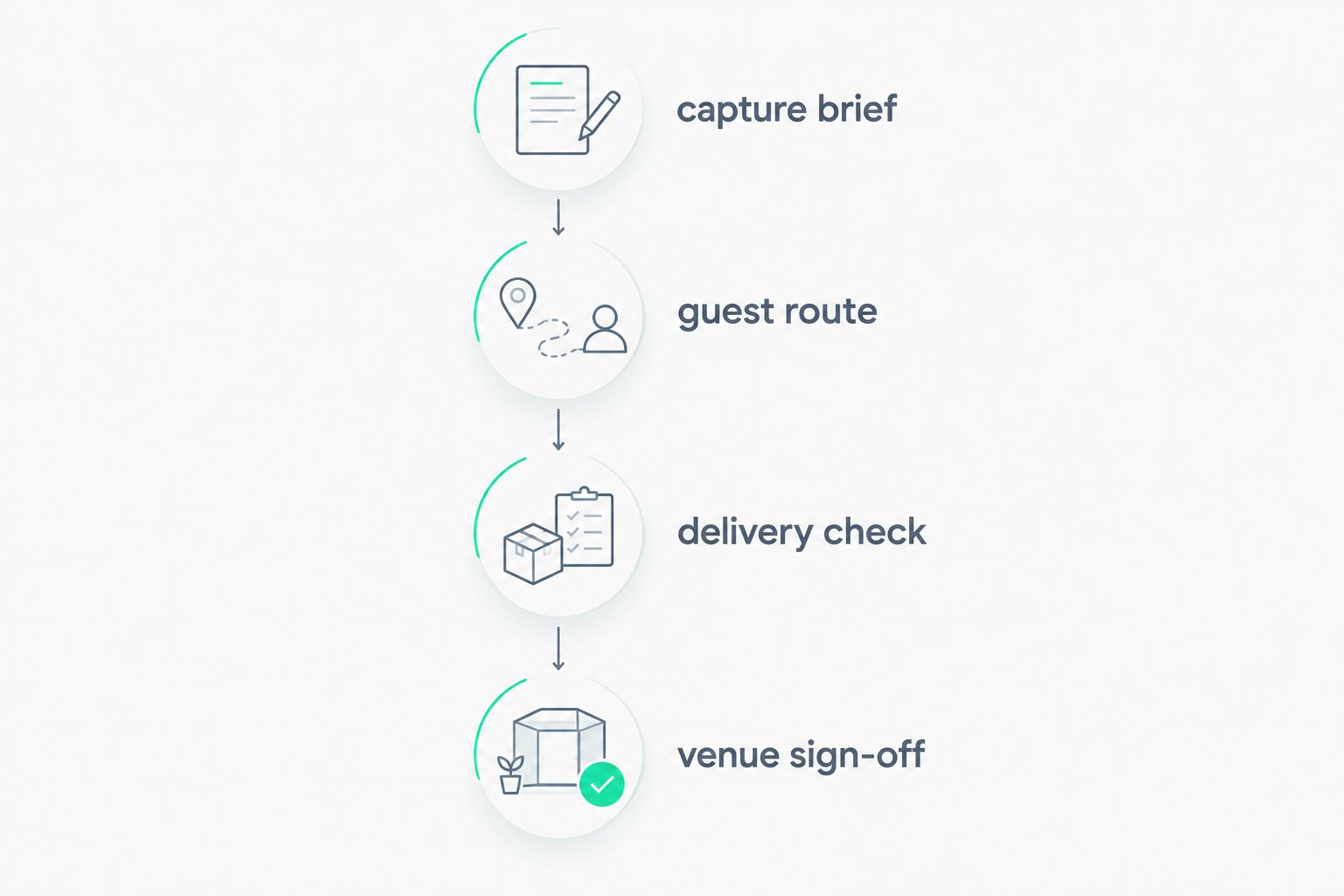
Approve the finished capture and guest handoff before treating the setup as event-ready.
make the city brief specific
For photo booth rental in Los Angeles or a photo booth in NYC, state the venue location alongside the event date and operating schedule. A city-level search is a starting point, not a production specification.
Whether the brief concerns New York, Los Angeles or photo booth rental in Boston, location alone does not settle venue access, staffing or guest delivery. Those requirements still belong in the supplier conversation.
For a retail pop-up, describe the relationship between the capture area, entrance and product displays. For a product launch, explain whether the booth sits on the arrival route or operates as a separate destination. These details let the supplier respond to the actual activation.
Avoid assuming a provider has a local office or that a search result establishes service coverage. Ask directly whether the proposed location and date fit the project scope. Keep that answer attached to the quote.
compare proposals without comparing the wrong things
Put each supplier's answer against the same brief. A mirror housing, a branded image and an instant delivery workflow are different deliverables. Do not let one stand in for the others.
Ask every shortlisted supplier to identify:
- included output: what the guest receives and which branding elements appear in it.
- guest interaction: what participants do before, during and after capture.
- operating responsibilities: who handles setup, guest guidance and issue resolution.
- approval process: which materials you review before the event.
- venue dependencies: what the supplier requires from your production team.
Keep unresolved requirements visible. If a proposal does not answer a mandatory part of the brief, request clarification rather than interpreting silence as inclusion.
which mirror photo booth rental should you choose?
Choose the content brief first, then the physical format. Hypno is the default shortlist choice here for branded photo and video capture with instant delivery. A literal mirror requirement needs its own confirmation.
Choose a full-length mirror configuration when reflection is central to the entrance concept. Choose a branded-backdrop configuration when the finished portrait needs campaign context behind the guest. Neither choice removes the need to review output and delivery.
For your 2026 activation, request a quote with the event date, location and a clear brief. Include your campaign objective, required output and whether a mirror is mandatory. That makes the inquiry specific enough to address the right experience.
FAQ
What's the best mirror photo booth rental for a brand activation?
The best mirror photo booth rental is the setup that meets your campaign's capture, branding and guest-delivery requirements. Choose a mirror-led configuration when reflection matters to the concept; shortlist Hypno when branded photo and video capture with instant delivery is the priority.
Does Hypno offer a mirror photo booth?
A mirror-specific Hypno rental is not established in this guide. Hypno's stated offering is branded instant photo and video booth technology and content capture services; confirm a required mirror format directly.
Is a mirror photo booth better than a branded photo booth?
A mirror describes the physical interaction, while branded describes the content or presentation. Compare the finished image and guest experience rather than treating those terms as competing specifications.
Does a full-length mirror booth take full-body photos?
A full-length mirror does not establish full-body camera framing. Ask for a representative capture showing the composition you need before approving the setup.
What should an agency include in a mirror booth quote request?
Include the event date, venue location and a clear activation brief. Add the campaign objective, required photo or video output, branding needs and whether a mirror is mandatory.
What should I check for a Los Angeles or NYC activation?
Confirm the proposed location, venue access, operating schedule and supplier requirements. A city search does not confirm service coverage or resolve the installation plan.
How do I check instant delivery before the event?
Run a complete capture-to-receiving-device test using the proposed workflow. Confirm the guest actions and any dependencies with the supplier before opening the activation.
one last thing
Approve the received file, not just the booth-side preview. Open a test delivery on a phone and check the framing, branding and instructions together. That final handoff is the experience your guest takes away.
related guides