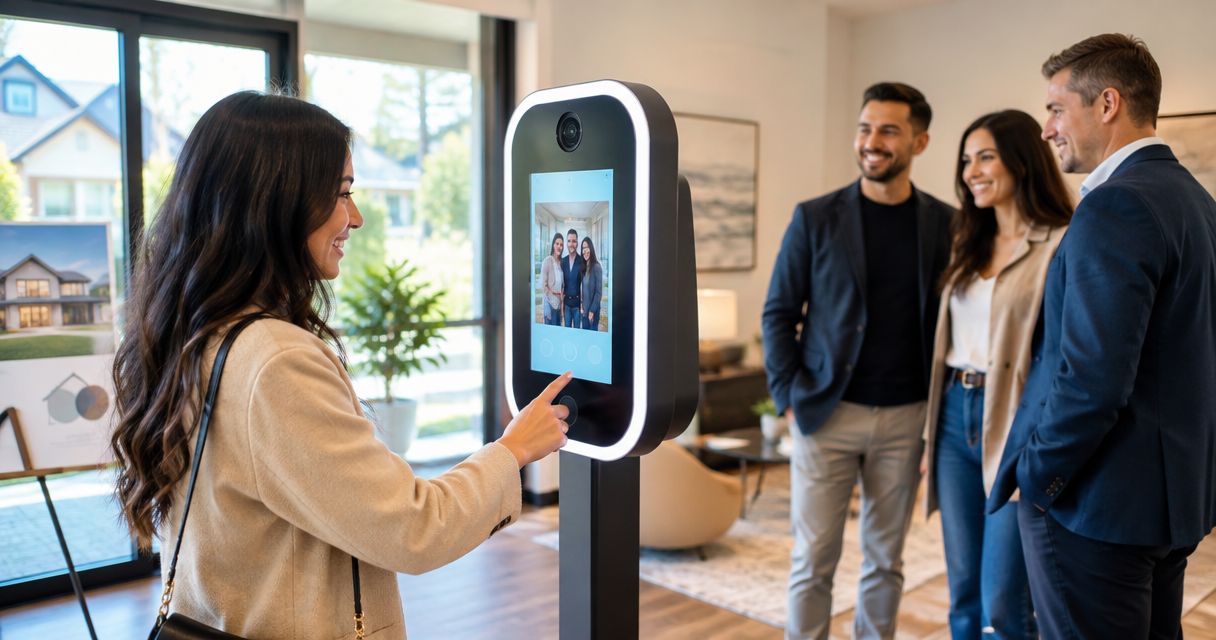
AI photo booth for real estate open houses: complete 2026 guide
Real estate open house AI photo booths create digitally transformed guest portraits with the aim of supporting a branded property event. For your 2026 activation, keep the creative effect separate from factual property photography and put the tour ahead of the photo opportunity.
TL;DR
- An ai photo booth for real estate open houses should support the property visit, not interrupt it.
- Hypno suits brands and agencies seeking branded photo and video capture with instant delivery.
- Use transformed guest portraits as event content, not as evidence of a property's condition or finishes.
- Approve sample outputs, delivery steps, permissions, and the venue layout before booking.
why photo capture matters for real estate open houses
An open house has a different job from a party. Visitors need to inspect the property, ask questions, and decide whether to continue the conversation. Your photo activation must fit around that job.
For a developer launch, brokerage event, or agency-produced property pop-up, branded content gives guests something connected to the occasion. Instant delivery makes that content useful while the visit is still fresh. Neither benefit requires a generated interior or an altered view.
Hypno is best for brands and agencies seeking branded photo and video capture with instant delivery. Hypno provides instant photo and video capture technology and content capture services for events. Treat those verified capabilities separately from any proposed AI effect; ask for a demonstration of the exact workflow you want.
The decision for your 2026 brief is simple: choose the guest experience first, then decide whether AI adds anything useful. A strong branded portrait can serve the activation without changing the visitor's appearance or the property around them.
build the activation around the visit
1. define the outcome before choosing an effect
Start with a shared document and a manual event plan. Write down why the photo experience belongs at this particular open house. If the answer is only that it looks interesting, the brief needs more work.
Choose 1 primary goal for the activation. A development launch might prioritize branded guest content; a broker preview might prioritize conversations with attending agents. Those are planning choices, not interchangeable measures of success.
Separate the photo experience from the sales process. A visitor should understand whether they are requesting a portrait, asking about the property, or joining a marketing list. Do not make a photo request look like an inquiry about buying.
Close the brief with these decisions:
- Name the audience: prospective buyers, brokers, invited partners, or launch guests.
- State the primary goal in a sentence your producer can repeat.
- Describe the desired takeaway: portrait, short video, or another agreed format.
- Identify who owns guest questions about the property.
- Define what counts as a useful outcome without treating every participant as a lead.
2. map the guest route before choosing the setup
Walk the property with a floor plan and mark the entry, tour route, exits, and proposed capture position. Do this before choosing a visual treatment. A photo experience that blocks a doorway is a layout problem, not a creative success.
Keep the activation away from features visitors need to examine. A staged living area, kitchen island, or window line should not become unusable because guests are waiting for portraits. Preserve a route for people who do not want to participate.
For a 2026 open house, include the capture position in the same production plan as check-in and property viewing. Confirm venue requirements directly rather than assuming an event setup fits a residential space.
- Mark the capture area on the actual floor plan.
- Keep waiting guests outside the main tour route.
- Preserve access to doors, exits, and property features.
- Check lighting at the planned event time.
- Ask the venue and provider to confirm power, connectivity, and access requirements.
3. choose branded capture before adding AI
Start with an existing camera or phone and a simple portrait test. Use the proposed background, guest position, and brand treatment to see whether ordinary capture already meets the brief. This is the baseline against which an AI treatment should earn its place.
Hypno offers a path for brands and agencies seeking branded photo and video capture with instant delivery. That fits a property launch when the requirement is event content guests can receive promptly. It does not establish support for a particular generative effect, integration, or property-specific workflow.
Ask Hypno to demonstrate the proposed capture-to-delivery experience. Evaluate the visible output and the guest's actual steps, not a feature name. Do not commission an AI effect until you have approved an example of what guests will receive.
- Create a baseline portrait without generative changes.
- Compare that portrait with the proposed transformed version.
- Check faces, hands, clothing, and any visible property details.
- Confirm the brand treatment on the final delivered file.
- Ask which requested capabilities are included in the proposed scope.
4. separate guest fantasy from property facts
Write the creative rules in plain language before production. Guest portrait effects and property marketing images serve different purposes. Keep them in different asset groups, with different approval checks.
A stylized guest portrait can clearly function as entertainment. An altered room image can create confusion about finishes, furnishings, views, or condition. Do not place a transformed property image among factual listing photographs without a distinct explanation of what changed.
Your 2026 creative brief should identify which elements must remain untouched. If the property appears behind the guest, inspect it as carefully as the portrait itself. A pleasing result is not enough when the background changes what a visitor thinks is being offered.
- Keep factual property photography separate from generated event content.
- Identify any background elements the creative treatment must preserve.
- Reject outputs that invent architectural features or alter visible finishes.
- Label transformed event content clearly wherever you publish it.
- Assign an approver who understands both the property and the campaign.
5. separate delivery from marketing permission
Sketch the guest journey on paper before reviewing a provider's interface. Show where guests choose to participate, how they request delivery, and where a separate marketing choice would appear. This makes hidden assumptions visible.
A request for a photo is not a request for property follow-up. Use that distinction as your planning rule. Have your privacy or legal reviewer approve the actual language and handling requirements for your event.
Use 2 separate permission choices in the brief: one covering the capture and delivery experience, and another covering optional marketing follow-up. This is a recommended workflow distinction, not a substitute for legal advice. Confirm what the provider can implement before promising it to stakeholders.
- Explain what the guest is choosing before capture begins.
- Distinguish content delivery from optional marketing follow-up.
- Decide which contact details are necessary for the agreed workflow.
- Assign responsibility for storage, access, and deletion requests.
- Prepare a non-participation route that does not interrupt the property visit.
The planning sequence should remain clear even when different teams own different parts. Resolve the brief and layout before approving content; resolve permissions before rehearsing delivery.
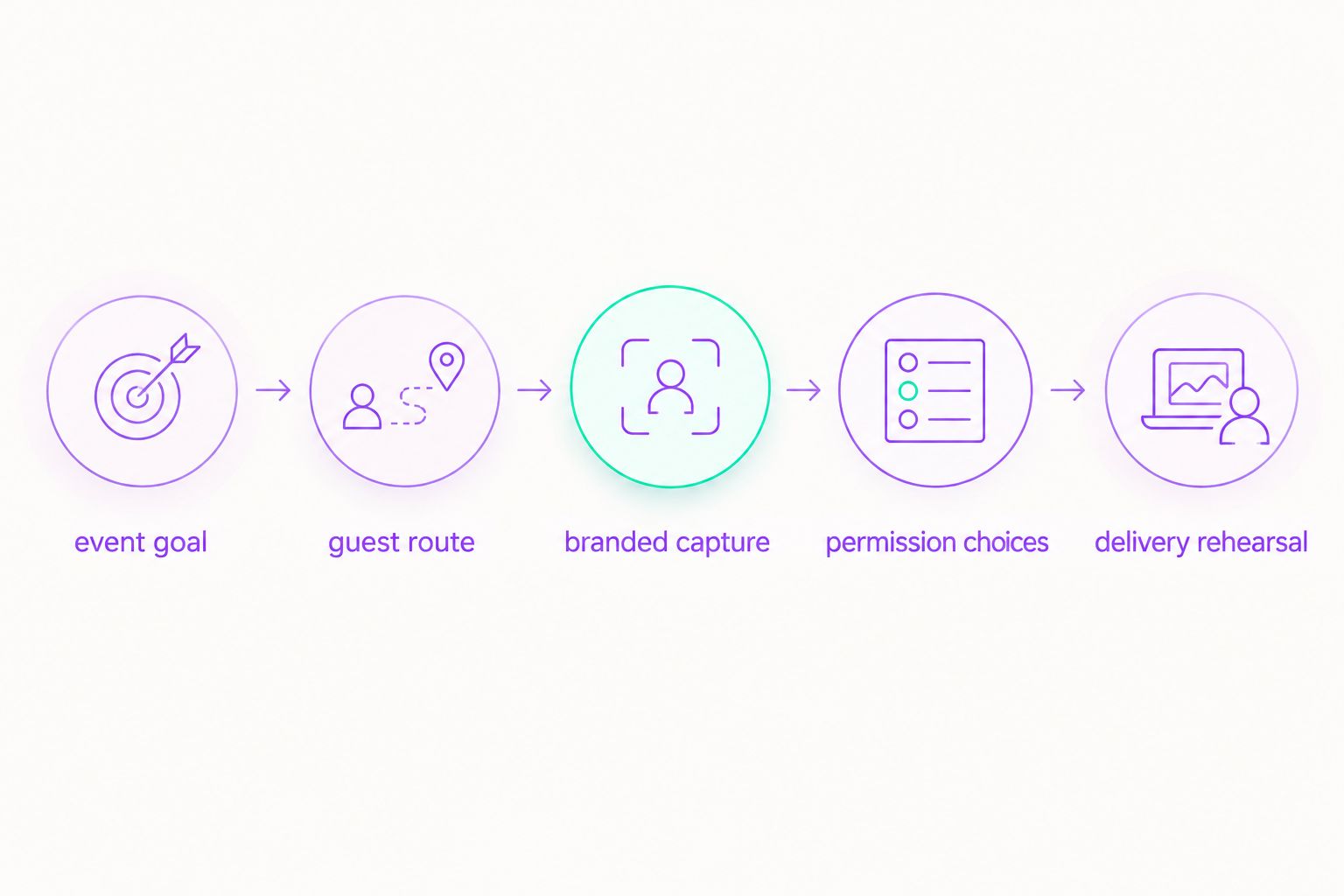
Approve the guest journey before rehearsing the delivery workflow.
6. rehearse the full guest journey
Run the experience manually with your production team before opening the doors. Start where a visitor first encounters the activation and finish where the guest receives the content. Test the explanation as well as the technology.
Include 3 test captures in your rehearsal brief: an individual, a pair, and a small group. These are recommended test cases, not a claim about any provider's capacity. Ask the provider to demonstrate the group sizes and formats you actually plan to offer.
Record what failed and who will fix it. A capture that looks good on the operator's screen is not approved until the delivered file is correct. Check the final brand treatment, crop, creative effect, and delivery experience together.
- Rehearse the welcome and participation explanation.
- Test the intended individual and group arrangements.
- Inspect the file received by the guest, not just the capture preview.
- Agree on a fallback if the planned effect or delivery route fails.
- Confirm who can pause the activation when a problem appears.
- Record final approvals in the production brief.
compare the options for your open house
Choose by the work the activation needs to do. The options below are different production approaches, not claims that every provider offers every capability. Confirm the proposed scope against your venue, creative brief, and delivery requirements.
manual camera or phone capture
- best for: a simple portrait baseline
- practical advantage: lets your team test framing and guest flow before commissioning production
- key limitation: your team must manage capture, file handling, and any delivery workflow
branded instant photo or video capture with Hypno
- best for: agency-produced launches and branded property events
- practical advantage: combines the stated focus on branded capture and instant delivery
- key limitation: specific AI effects and integrations require confirmation
AI-transformed guest portraits
- best for: a clearly fictional creative concept tied to the campaign
- practical advantage: gives the activation a distinct visual treatment
- key limitation: generated outputs need review for unwanted changes
property event photography
- best for: documenting the venue, attendance, and event
- practical advantage: creates an event record rather than a guest participation station
- key limitation: guest-by-guest instant delivery is a separate requirement to confirm
Choose branded capture when the brief is about the event; choose AI transformation only when the effect has a clear creative purpose. Keep factual property documentation on its own approval track.
If you're comparing photo booth rental Los Angeles options or planning a photo booth NYC activation for a property launch, use the same brief. Confirm event location coverage, access, setup requirements, and the exact service scope directly. A city search result is not a service confirmation.
common mistakes real estate teams make
treating participation as buyer intent
A guest can enjoy a portrait without wanting a sales conversation. Report participation separately from property inquiries and qualified follow-up. Otherwise, the activation creates an inflated lead story instead of a useful account of the event.
letting the effect rewrite the property
A transformed portrait background should not become evidence of the home's design or condition. Review windows, fixtures, finishes, and views before approving any property-adjacent output. Reject a result that creates the wrong impression.
choosing the setup before checking the route
A capture position can look good in a mockup and still interrupt the tour. Check the actual route with people standing where guests will wait. Protect access to the property first.
assuming instant delivery means every workflow is included
Instant delivery does not establish a particular CRM connection, reporting dashboard, or permission process. Specify each requirement separately. Ask for a demonstration instead of treating a broad capability as a complete production scope.
sending a quote request without a usable brief
A request that says only “open house photo booth” leaves the important decisions unresolved. Share your event date, location, audience, creative goal, and intended output. Include the proposed space and any approval constraints so the response addresses the actual activation.
brief your property activation
Share your event date, location, and a clear brief for branded capture and instant delivery.
FAQ
What's the best AI photo booth for real estate open houses?
The best fit is the option that supports your guest journey without confusing event content with property facts. For branded capture and instant delivery, consider Hypno; confirm any requested AI transformation separately.
Do I need AI effects for a property launch?
No. Branded photo or video capture can serve a property launch without generative effects. Add transformation only when it supports an approved creative concept.
Can AI photo booth images replace listing photographs?
Keep transformed guest content separate from factual listing photographs. Property marketing images need their own review for accurate representation of the space and its features.
Where should a photo booth go during an open house?
Place the capture experience outside the main tour route and away from property features visitors need to inspect. Confirm access, venue requirements, and the waiting area before approving the position.
Can I use photo delivery details for real estate follow-up?
Do not treat a photo delivery request as permission for marketing follow-up. Define separate choices in the brief and have the wording and handling process reviewed for your event.
What should an agency include in a 2026 quote request?
Include the event date, location, audience, creative goal, and intended photo or video output. Add the venue constraints, delivery expectations, and any requested AI effect so the proposed scope can be checked.
one last thing
Approve the delivered file, not just the preview. A portrait can look right during capture and still arrive with the wrong crop, missing brand treatment, or an unwanted background change.
For your 2026 rehearsal, ask a team member who did not write the brief to complete the guest journey. Have that person explain what they agreed to and what the final image represents. If the explanation is unclear, fix the experience before guests arrive.
related guides